-
E-mail
15093177890@163.com
-
Phone
15093177890
-
Address
B06-1 Qidi Zhenghang Intelligent Manufacturing Industrial Park, Intersection of Xinxiang Road and Luoning Road, Shangjie District, Zhengzhou City, Henan Province
Product Categories
- Fruit freeze dryer
- Multi manifold cover type freeze-drying machine
- Low temperature coolant circulation pump
- Experimental freeze dryer
- Electric heating stainless steel reactor
- In situ freeze dryer
- Fruit and vegetable freeze-drying equipment
- Explosion proof high and low temperature circulation device
- Pet food freeze dryer
- Cover type freeze-drying machine
Zhengzhou Kewangda Biological Instrument Co., Ltd
Stainless steel electric heating reactor
NegotiableUpdate on 01/04
- Model
- Nature of the Manufacturer
- Producers
- Product Category
- Place of Origin
Overview
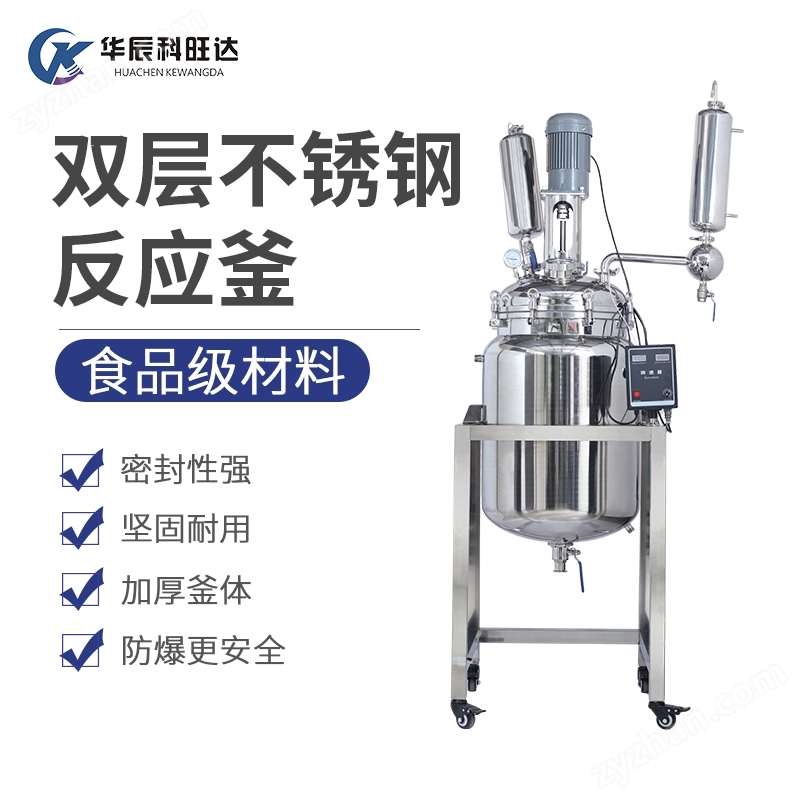
The structure of an electrically heated stainless steel reactor consists of multiple key components, each of which plays a crucial role in ensuring the stability and safety of the reactor under complex conditions such as high temperature, pressure, and stirring. The structural design of stainless steel electric heating reaction kettle should not only meet the requirements of the reaction process, but also ensure the stability and durability of the equipment.
Product Details
The structure of an electrically heated stainless steel reactor consists of multiple key components, each of which plays a crucial role in ensuring the stability and safety of the reactor under complex conditions such as high temperature, pressure, and stirring. The structural design of stainless steel electric heating reaction kettle should not only meet the requirements of the reaction process, but also ensure the stability and durability of the equipment. The following are the main structural parts of an electrically heated stainless steel reactor:
1. Reactor body
Material: The main body of the reaction vessel is usually made of stainless steel (such as 304, 316, etc.) because stainless steel is corrosion-resistant and high-temperature resistant, making it suitable for use in chemical reaction processes.
Shape: The common shape of a reaction vessel is cylindrical or elliptical, with an upper cover and a bottom. The cylindrical design is conducive to uniform heating and stirring.
Thickness: Depending on the working pressure and temperature of the reactor, the wall thickness of the reactor is usually between 5mm and 20mm to ensure its structural strength and safety.
2. Electric heating system
Electric heating tube: An electric heating tube installed on the outer or inner wall of a reaction vessel, which converts electrical energy into thermal energy and is used to heat the materials in the reaction vessel. Electric heating tubes are generally made of stainless steel material, which has good thermal conductivity and corrosion resistance.
Heating method: Electric heating can be achieved through surface heating, jacket heating, or coil heating. The heating system adjusts power through a power controller to ensure stable heating temperature of the material.
3. Mixing system
Agitator: Agitator is one of the important components in the reactor, usually made of stainless steel material. Common types of agitators include paddle type, anchor type, screw type, impeller type, etc. Choosing a suitable agitator can ensure uniform mixing of reactants.
Electric motor and frequency converter: The mixer is driven by an electric motor, and the speed of the mixer is adjusted by a frequency converter to provide flexible speed control. The frequency converter can accurately adjust the stirring speed according to the needs of the reaction to improve reaction efficiency.
Mixing shaft and sealing device: The mixing shaft connects the mixer and the motor, and usually requires an efficient sealing device to prevent material leakage. Common sealing methods include mechanical seals and packing seals.
4. Jacket
Jacket design: The outer wall of the reaction vessel is often equipped with a jacket for circulating heating or cooling. Introduce steam, hot water, or coolant into the jacket to assist in controlling the temperature of the material. Jackets can effectively and uniformly heat or cool materials, avoiding local overheating or overcooling.
Jacket connection: The inlet and outlet of the jacket are designed to facilitate the control of the flow of heating fluid, and the material is kept within the required temperature range through a temperature control system.
5. Safety valve and pressure gauge
Safety valve: In order to prevent excessive pressure inside the reactor, a safety valve is usually installed on the reactor. When the pressure inside the reactor exceeds the set value, the safety valve will automatically exhaust to ensure the safety of the equipment.
Pressure gauge: used for real-time monitoring of the pressure inside the reactor. By displaying pressure information on the screen, operators can adjust reaction conditions in a timely manner.
6. Temperature control system
Temperature sensor: Temperature control inside the reactor is very important. The temperature sensor is used to monitor the temperature inside the reactor in real time, ensuring the smooth progress of the reaction process.
Temperature control instrument: The temperature control instrument is used in combination with sensors to adjust the power of the electric heating system according to the actual reaction temperature, ensuring that the material reacts at a constant temperature.
7. Inlet and outlet
Feed inlet: The feed inlet of the reaction vessel is used to add reaction materials into the reaction vessel. The feed inlet is usually designed as a sealable structure to avoid contamination from external substances.
Discharge port: The discharge port is used to discharge the reacted material. Valves are usually equipped to control the discharge of materials when needed.
8. Cooling system (optional)
Cooling coil: Some reaction processes may require rapid cooling of the material after the reaction is complete, so cooling coils are configured. Cooling water flows through the coil, taking away the heat of reaction and reducing the temperature of the material.
Cooling jacket: The cooling jacket helps regulate temperature through the flow of coolant.
9. Mixing shaft sealing device
Sealing device: In order to prevent material leakage, sealing technology is often used for the connection between the stirring shaft in the reaction kettle and the external motor. Common sealing devices include mechanical seals and packing seals.
10. Control system
PLC controller: Stainless steel electric heating reaction vessels are often equipped with PLC control systems, which can achieve automatic control and adjustment of parameters such as temperature, pressure, and stirring speed. Operators can monitor and adjust the reaction process accurately through touch screens or remote control systems.
Display screen and alarm system: The control system is equipped with a display screen that displays various working parameters (such as temperature, pressure, speed, etc.). At the same time, there is an alarm system that will sound an alarm when the equipment runs abnormally, reminding operators to take measures.


Electric heating stainless steel reaction vessels are usually equipped with a variable frequency LCD digital speed control system. This system can not only accurately control the stirring speed, but also dynamically adjust the speed according to the specific needs of the reaction, thereby optimizing the reaction effect.
The advantages of variable frequency LCD digital speed regulation:
1. Accurately control the mixing speed
The variable frequency LCD digital speed control system can accurately control the speed of the mixer according to actual needs, avoiding excessive or insufficient speed affecting the reaction effect. Accurate speed regulation can effectively improve reaction efficiency, promote uniform mixing of materials, and ensure the smooth progress of the reaction.
2. Optimize the reaction process
The requirements for stirring speed vary at different stages of the reaction process. Variable frequency speed regulation can dynamically adjust the stirring speed according to different stages of the reaction, thereby improving the uniformity and stability of the reaction. For example, in the early stage of the reaction, low-speed stirring is helpful for heating and mixing the materials, while in the later stage of the reaction, higher stirring speed may be required to promote the progress of the reaction.
3. Energy conservation and consumption reduction
The frequency converter speed control system can effectively reduce energy consumption and avoid energy waste in traditional constant speed mixing systems when high speed is not required by optimizing the working state of the motor. The frequency converter automatically adjusts the speed of the motor according to the needs of the reaction, reducing unnecessary energy consumption and thus improving the energy efficiency of the equipment.
4. Improve operational stability
The variable frequency speed control system can provide stable stirring speed throughout the entire reaction process, reducing speed fluctuations caused by voltage fluctuations or load changes. This stability is crucial for many fine chemical reactions, ensuring consistent product quality.
5. User friendly interface
The introduction of LCD digital display screens makes device operation more intuitive, allowing operators to clearly view various parameters and make adjustments. Through a simple user interface, users can easily set process conditions such as mixing speed, temperature, and time, improving the usability of the equipment.