-
E-mail
sales2@airs-tech.com
-
Phone
18939760017
-
Address
Room 703, Building 35, C2 International Zone, Lane 1555, Jinshajiang West Road, Jiading District, Shanghai
Anruis (Shanghai) Technology Co., Ltd
GBZ/T 300.1-2017 "General Principles for the Determination of Toxic Substances in Workplace Air" consists of 160 parts
Date: 2025-04-25Read: 5
InThe chemical industry,Due to the particularity of chemicals, combustionExplosion accidents are highly likely to occur. whileMany universities, research institutions, or industrial enterprises have chemistry laboratories that also involve various chemicals.
In laboratory research, experimental operations, chemical storage, and other processes, various types of reagents, liquids, and gases are used. Among them, many volatile gases are flammable, explosive, toxic, and harmful gases, such as methane, hydrogen, hydrogen sulfide, etc. These gases may be generated during the experimental process or leaked from steel cylinders, causing accidents such as explosions and poisoning, threatening the safety of experimental personnel.
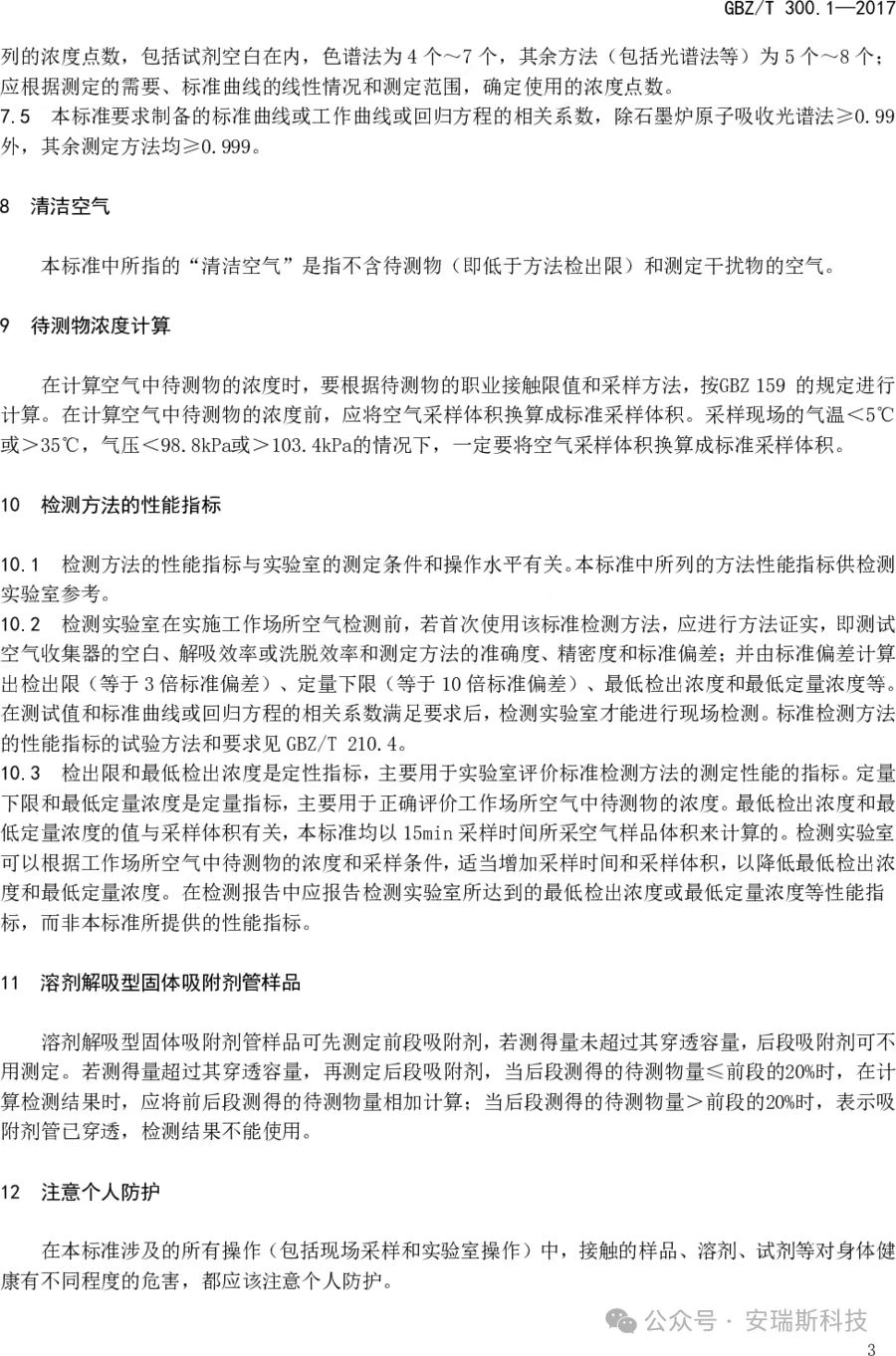
On November 9, 2017, the National Health Commission releasedGBZ/T 300.1-2017 "General Principles for the Determination of Toxic Substances in Workplace Air" was implemented on May 1, 2018.

The GBZ/T 300.1-2017 "Determination of Toxic Substances in Workplace Air Part 1: General Principles" series of standards replaced some of the standards in the GBZ/T 160 series released in 2004 and 2007, but did not completely replace them. Currently, there are still multiple GBZ/T 160 series documents that have not been abolished and are currently valid.
The following section is the general principles of the GBZ/T 300.1-2017 series of standards, which clarify the basic principles, requirements, and precautions for detecting toxic substances in workplace air. This series of standards consists of 160 parts.