-
E-mail
sales2@airs-tech.com
-
Phone
18939760017
-
Address
Room 703, Building 35, C2 International Zone, Lane 1555, Jinshajiang West Road, Jiading District, Shanghai
Anruis (Shanghai) Technology Co., Ltd
Regarding laboratory air safety
Date: 2025-03-27Read: 7
Laboratory air safety
Laboratory Air Safety
In a chemistry laboratory at a regular university, junior student Xiao Zhang is wearing a mask to process experimental waste liquid. The pungent smell made him furrow his brow, but considering the progress of the experiment, he still chose to continue operating. Three months later, he frequently experienced symptoms of dizziness and coughing, and was diagnosed with chronic respiratory injury when seeking medical attention. This scenario is not fictional - China's annual occupational health problems caused by laboratory air pollution exceed 100 million cases, and many hidden dangers are hidden in those commonplace experimental operations. In 1990, the US Federal Occupational Safety and Health Administration (OSHA) released statistical data showing that laboratory personnel lived 10 years less than the average life expectancy of normal people.
01
The 'legal shield' in the laboratory
Occupational Disease Prevention and Control Law of the People's Republic of China
This law clarifies the main responsibility of laboratory managers: it requires all laboratories involving toxic and harmful substances to be equipped with ventilation systems (Article 15) and to organize at least one occupational health examination annually (Article 34).
In 2023, a certain biotech company was fined 250000 yuan and suspended for rectification due to five employees being poisoned by benzene caused by failure to install exhaust gas treatment equipment in accordance with regulations.


GBZ 2.1-2019 Occupational Health Standards
This standard specifies the contact limits for 189 chemical substances in detail. For example, the common acetone in the laboratory has an 8-hour average allowable concentration of 900mg/m ³, which is equivalent to triggering an alarm when 10 milliliters of liquid evaporate in a 30 cubic meter laboratory. However, in practical operation, about 40% of laboratories are not equipped with real-time monitoring equipment, and it is difficult to accurately prevent and control by relying solely on manual recording.

GB/T 18883-2022 Indoor Air Quality Standard
This seemingly ordinary standard is actually hiddenprofound mysteryThe formaldehyde limit (0.08mg/m ³) is six times stricter than the occupational health standards, and the daily average carbon dioxide concentration must not exceed 0.1%. A State Key Laboratory, due to design defects, has long exceeded 50% of the CO ₂ concentration in the office area, leading to frequent headaches and decreased attention of staff.

02
The Three Major Threats to Laboratory Air
1. Chronic erosion caused by chemical substances
Volatile organic compounds such as formaldehyde and benzene are like invisible killers. The research shows that the incidence rate of respiratory diseases of the experimenters who have been exposed to 0.3mg/m3 formaldehyde for a long time (not reaching the national standard limit) has increased by 40% within five years. Even more dangerous is that certain substances, such as dimethylformamide, can directly penetrate latex gloves and cause liver and kidney damage through skin penetration. The TSCA (Toxic Substances Control Act) list of approximately 90000 chemicals by the US Environmental Protection Agency (EPA), with less than 0.01% of chemicals passing toxicity tests.
2. Bioaerosol latency
In the microbiology laboratory, aerosol particles with a diameter less than 5 μ m can directly reach the alveoli. A certain disease control center once caused the spread of Brucella due to a malfunction of a biosafety cabinet, resulting in three infections. The current standard requires P2 level and above laboratories to be equipped with a dual person dual lock biological waste treatment system, but the compliance rate of grassroots laboratories is only 65%.
3. Unknown risks of new materials
The hazards of emerging substances such as nanomaterials and graphene have not yet been addressedcompletelyto make clear. After working unprotected for 3 years, a researcher in a certain nanotechnology laboratory experienced abnormal shadows on lung CT scans, which is driving the dynamic update of the standard system.
03
Future Development Trends of Laboratory Air Safety
With the rapid development of biotechnology and the normalization of the COVID-19 epidemic, the demand for drug research and development, biological experiments, inspection and other fields has increased sharply, making the intellectualization of laboratories a research hotspot. With the development of 5G, Internet of Things, artificial intelligence, and big data, laboratories are moving towards intelligence.
Intelligent construction reduces laboratory costs and increases efficiency through automation, informatization, and digitization.
In recent years, more and more medical laboratories have begun to attach importance to intelligent construction, such as replacing repetitive mechanical and manual operations with automated equipment or production lines, digitizing laboratory data through information technology construction, reducing manual input errors, and improving experimental efficiency through digital construction.
In the field of medicine, various types of laboratories including clinical laboratory testing, drug research and development, and biological experiments have also begun to try to make laboratories "smart" from multiple dimensions through the construction of automation, informatization, and digitization.
04
Anruis Laboratory Air Filtration Integrated Solution

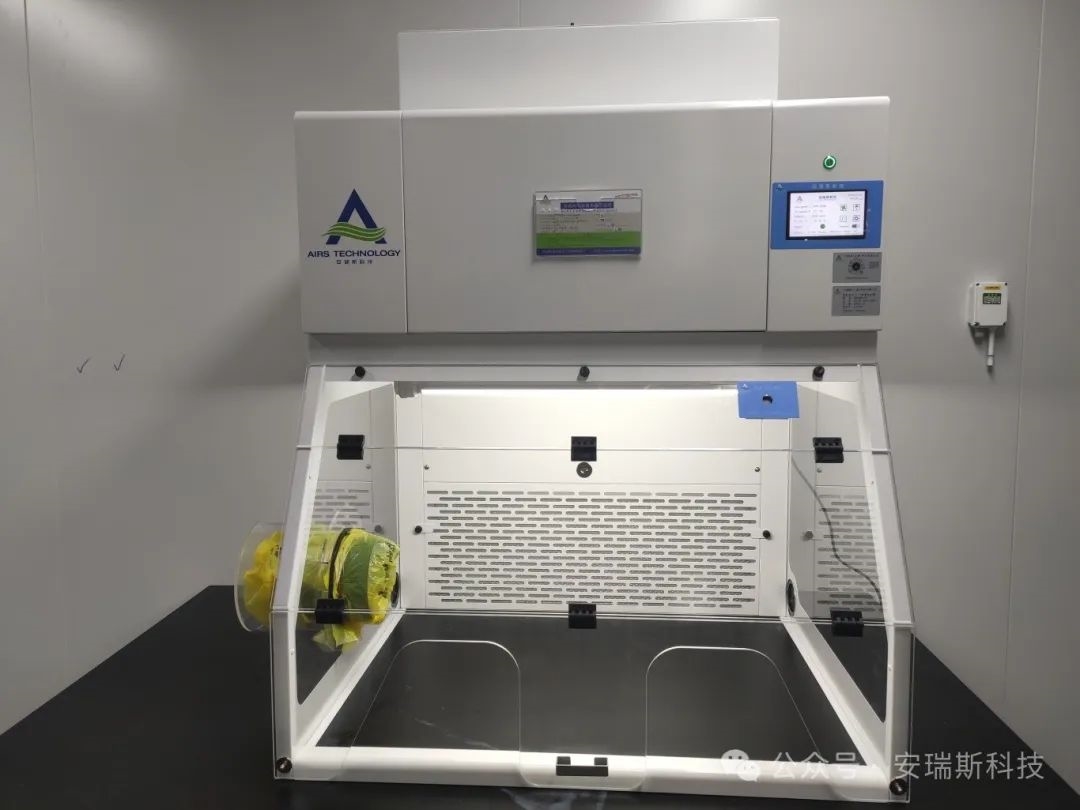
On the basis of learning from the development experience of European and American laboratories, and combining with the characteristics and current situation of Chinese laboratories, Anruis continuously innovates through research and development, using self purification without air ducts as the core technology, and applies it to independently developed laboratoriesPipeline free clean air type fume hood、Balance safety weighing cover、Clean gas chemical storage cabinet、Intelligent chemical management cabinetandLaboratory specific air purifierWaiting for laboratory filtration and protection equipment, and using it as a comprehensive solution for sustainable laboratory development, starting from the source to solve laboratory pollution problems, committed to making the laboratory air cleaner, making the laboratory safer, achieving free breathing in the laboratory, and contributing to China's sustainable laboratory development and achieving carbon neutrality in the laboratory field.
05
Case Study
|
|
|
|
| |
|
| |
|
|
|
|
|
|
|
| |
|
| |
|
| |
|
| |
|
|
|
|
| |




Next Article: Balance weighing cover bag in bag out