-
E-mail
Maxzhang1130@outlook.com
-
Phone
18601373008
-
Address
No. 12 Jinxing Road, Daxing Industrial Zone, Beijing
Beijing Tianli Hengcheng Technology Co., Ltd
What are the environmental characteristics of traditional Chinese medicine crushers?
Date: 2025-07-22Read: 0
With the continuous improvement of environmental awareness, traditional Chinese medicine crushers are paying more and more attention to environmental characteristics in their design and application, in order to reduce their impact on the environment and meet the needs of the modern pharmaceutical industry. Here are its main environmental features:
1、 Dust control and recycling
During the process of crushing traditional Chinese medicine, a large amount of dust is easily generated, which not only pollutes the environment but may also pose a health hazard to the operators. Modern crushers are usually equipped with efficient dust collection systems, which can effectively reduce the overflow of dust. For example, some equipment adopts a dual bag aggregate design, which collects and recycles dust through negative pressure operation, with a collection rate of over 99%. This design not only reduces dust pollution, but also reduces raw material loss.
2、 Low noise design
Traditional crushers often generate significant noise during operation, causing certain interference to the operating environment and personnel. Modern crushers significantly reduce operating noise by optimizing structural design and using noise reducing materials. For example, the laboratory traditional Chinese medicine grinder adopts a direct drive structure with a motor spindle, which runs smoothly and has low noise. This low-noise design provides a more comfortable working environment for operators.
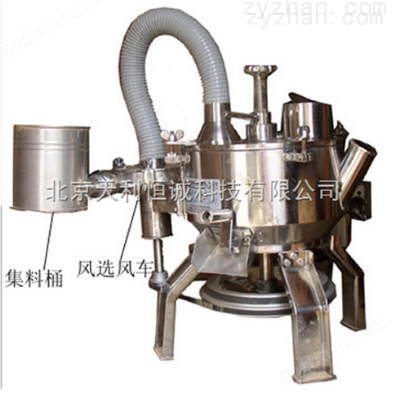
3、 Low temperature crushing technology
Low temperature crushing technology is one of the important environmental characteristics of modern crushers. By grinding in a low-temperature environment, it is possible to effectively avoid the damage of high temperature to the active ingredients of traditional Chinese medicine, while reducing the heat and exhaust gas generated by high-temperature friction. For example, a low-temperature crusher uses liquid nitrogen as a cold source to cool the material to a low temperature before crushing it, which not only retains the effective ingredients of the medicinal herbs, but also reduces the risk of oxidation and pollution.
4、 Energy saving and efficiency
Emphasize energy conservation and efficient operation in the design. For example, some devices use frequency conversion regulation technology to automatically adjust motor power according to crushing requirements, reducing energy consumption. In addition, by optimizing the crushing principle and process, the equipment can complete the crushing task in a short period of time, improve production efficiency, and reduce energy consumption.
5、 Environmentally friendly materials and clean design
The material selection also reflects the concept of environmental protection. Many devices use 304 stainless steel material, which not only has good corrosion resistance and wear resistance, but also is easy to clean and maintain, ensuring hygiene and environmental protection during the crushing process. In addition, the enclosed design and smooth structure of the equipment further reduce the accumulation of dust and pollutants.
6、 Recycling and Energy Conservation and Emission Reduction
Some crushers are also equipped with circulating cooling systems and closed-loop cooling source systems, which can effectively utilize energy and reduce waste heat and exhaust emissions. For example, the ultrafine powder airflow crusher adopts air separation and heavy pressure grinding technology in the crushing process, which not only improves the crushing efficiency but also reduces environmental pollution.
In summary, modern traditional Chinese medicine crushers have significantly improved their environmental performance through improvements in dust control, low-noise design, low-temperature crushing technology, energy-saving and efficient operation, selection of environmentally friendly materials, and recycling. These characteristics not only reduce the impact on the environment, but also improve production efficiency and product quality, providing strong support for the modernization of traditional Chinese medicine production.