-
E-mail
fengnengdry@163.com
-
Phone
15961180958
-
Address
Zhenglu Town, Changzhou City, Jiangsu Province
Changzhou Fengneng Drying Engineering Technology Co., Ltd
Introduction to the process principle of rotary drum scraper dryer
Date: 2025-07-21Read: 5
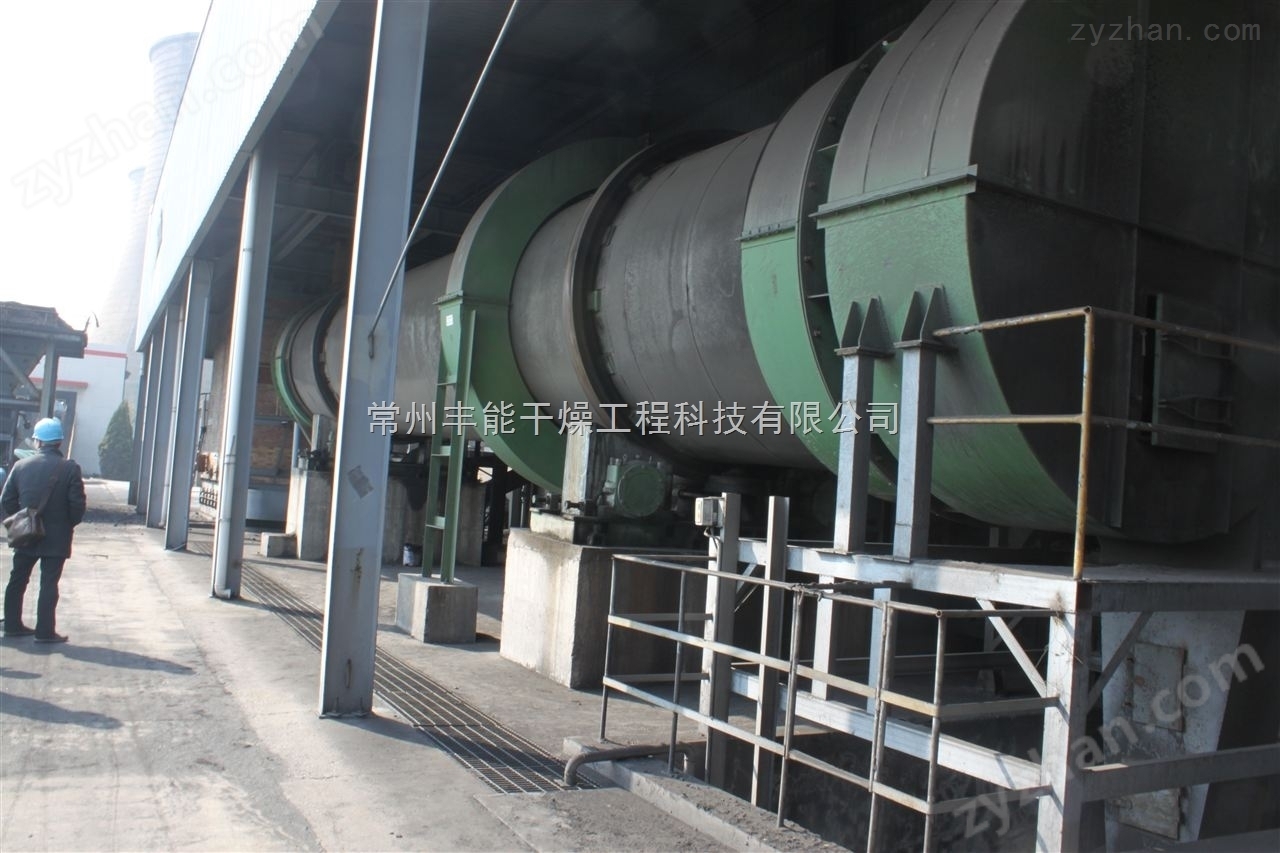
The rotary drum scraper dryer is an internal heating conduction type continuous drying equipment, which integrates drum heat conduction and mechanical scraping technology in its process principle. It is mainly suitable for dehydration treatment of slurry, paste and heat sensitive materials. The core process flow is as follows:
1、 Material film formation and heating conduction
1. Fabric stage: Wet materials are evenly coated on the surface of the rotating drum through the feeding device (hopper, fabric roller), forming a thin film with controllable thickness (usually 0.3-1.5mm).
2. Thermal conduction drying: Heating media such as steam, thermal oil, or hot water (temperature 100-150 ℃) are introduced inside the drum, and heat is conducted from the inner wall to the outer wall of the drum, causing the moisture in the film to evaporate quickly. The material can be dried by rotating the drum once (10-300 seconds), with a heat transfer efficiency of 70% -90%.
2、 Mechanical Scraping and Collection
1. Scraping and peeling: The dried material is scraped off the surface of the drum by a metal or rubber scraper that is tightly attached to the drum surface, ensuring complete peeling without damaging the drum.
2. Continuous collection: The peeled dry materials (flakes, powders, or granules) fall into the lower spiral conveyor and are packaged after being concentrated.
3、 Key technical features
1. Efficient drying: The film design is combined with direct heat conduction, and the vaporization strength reaches 20-70kg · H ₂ O/(m ² · h), significantly shortening the drying cycle.
2. Material adaptability: Suitable for high viscosity or heat sensitive materials such as mother liquor, high salt wastewater, yeast, etc. The final moisture content can be reduced to ≤ 8%.
3. Adjustable parameters: The drum speed (1-10 revolutions per minute), film thickness, and heating temperature can be adjusted to meet different physical property requirements.
4、 Technological advantages
1. Continuous automation: The entire process of fabric, drying, scraping, and collection runs continuously, suitable for large-scale production.
2. Low heat damage: Conducted heating avoids direct impact of hot air and reduces the decomposition of heat sensitive components.
3. Environmental friendliness: The evaporated exhaust gas can be collected and processed through a closed hood to reduce dust emissions.
This device achieves a balance between high moisture evaporation rate and product quality by precisely controlling the thickness of the film and thermal conductivity efficiency, becoming a key drying technology in fields such as chemical and pharmaceutical industries.
Last Article: Process flow of multi-layer belt dryer
Next Article: What industries can pulse airflow dryers be widely used in?