-
E-mail
jwdry8166@163.com
-
Phone
13915898166
-
Address
Jiaoxi Industrial Park, Zhenglu Town, Tianning District, Changzhou City, Jiangsu Province
Changzhou Jinwang Drying Equipment Co., Ltd
Process flow and industry application of HYD series rotary calcination kiln
Date: 2025-10-27Read: 51
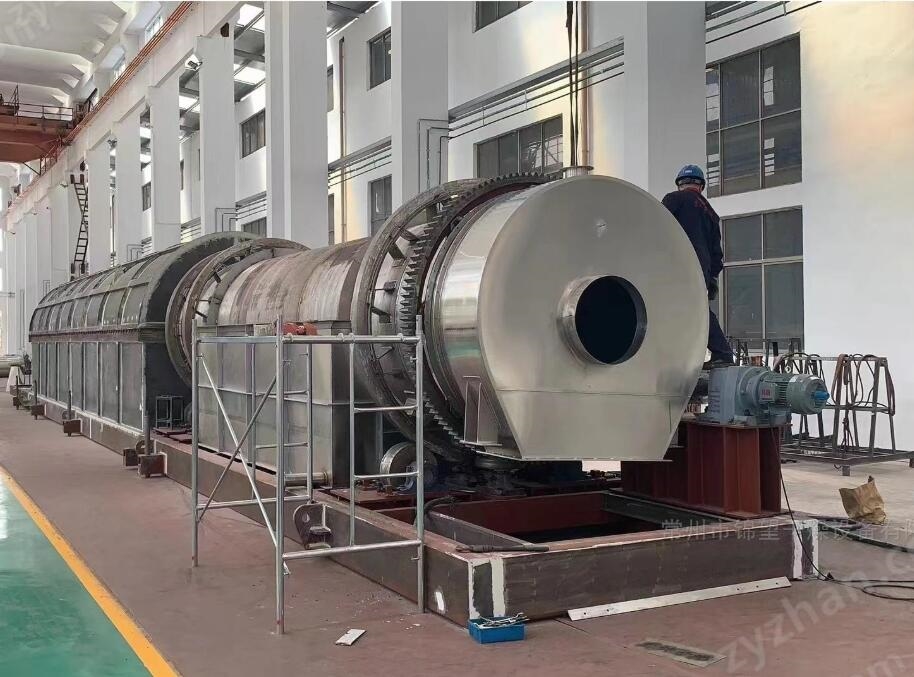
The HYD series rotary calcination kiln is a commonly used equipment for high-temperature continuous processing of materials in industrial production. It relies on a rotatable cylinder to uniformly heat animal materials, and can stably complete core processes such as material dehydration, decomposition, and calcination. It is widely connected to the production chain of building materials, chemical, metallurgical and other industries, and is a key link to ensure the quality and efficiency of material thermal processing. Understanding its process flow can help grasp the equipment operation logic and clarify that industry applications can better match actual production needs. The following analysis will be conducted from two aspects.
1、 Process flow of HYD series rotary calcination kiln
1Material pretreatment and feeding
The materials to be processed are first crushed and screened to ensure uniform particle size; The processed materials are transported to the kiln inlet through a quantitative feeder, and the feeding speed is adjusted according to the calcination requirements to ensure a stable amount of materials in the kiln.
2Kiln calcination stage
The rotary cylinder slowly rotates at the set speed, carrying the animal material to move along the axial direction of the cylinder; The kiln head combustion system provides a high-temperature heat source, creating a stable temperature range inside the kiln; During the movement of materials, they come into full contact with high-temperature airflow, gradually completing dehydration, decomposition, or calcination reactions to achieve the desired process effect.
3Material cooling stage
The high-temperature material after calcination is discharged from the kiln head and enters the cooling machine; By exchanging heat with cold air or cold water, the temperature of the material is reduced to a suitable range for subsequent processing, avoiding direct stacking of high-temperature materials that may cause clumping or deterioration.
4Finished product collection and exhaust gas treatment
The cooled material is separated from impurities by screening equipment, and qualified finished products are transported to the finished product warehouse for temporary storage; The tail gas generated in the kiln is first removed of dust by a dust collector, and then treated with harmful components by desulfurization and denitrification devices. After reaching the standard, it is discharged through the chimney to complete the entire process flow.
2、 Industry application analysis of HYD series rotary calcination kiln
1building materials industry
Mainly used for calcining cement clinker, the cement raw material is calcined at high temperature in the kiln to provide raw materials for subsequent cement grinding; It can also be used for lime roasting, decomposing limestone into calcium oxide at high temperatures, suitable for the mass production needs of building lime and industrial lime.
2chemical industry
Suitable for thermal processing of chemical raw materials such as soda ash and potassium sulfate, for example, in soda ash production, sodium bicarbonate is calcined and decomposed into sodium carbonate in the kiln; It can also be used for phosphate roasting, which converts phosphate materials into forms that meet the requirements of subsequent reactions through high-temperature treatment, meeting the production process requirements of chemical products.
3Metallurgical industry
Used for roasting metal minerals, such as magnetization roasting of iron ore and desulfurization roasting of non-ferrous metal minerals; It can also be used for the preparation of metal oxides by calcining metal salt materials to generate oxides, providing basic raw materials for metallurgical processing.
4environmental protection industry
Applied to the harmless treatment of hazardous waste and sludge, hazardous waste containing harmful components is calcined at high temperatures in kilns, and the structure of harmful substances is destroyed through high-temperature oxidation; It can also be used for sludge drying and calcination, where sludge with high moisture content is dried first and then calcined to reduce volume and kill harmful microorganisms, achieving sludge reduction and harmlessness.