-
E-mail
925633677@qq.com
-
Phone
15051989720
-
Address
Sanhekou Industrial Park, Zhenglu Town, Changzhou
Changzhou Xianzhu Drying Equipment Co., Ltd
Regular maintenance of a medium-sized boiling granulation dryer is key to ensuring its efficient operation
Date: 2025-11-03Read: 6
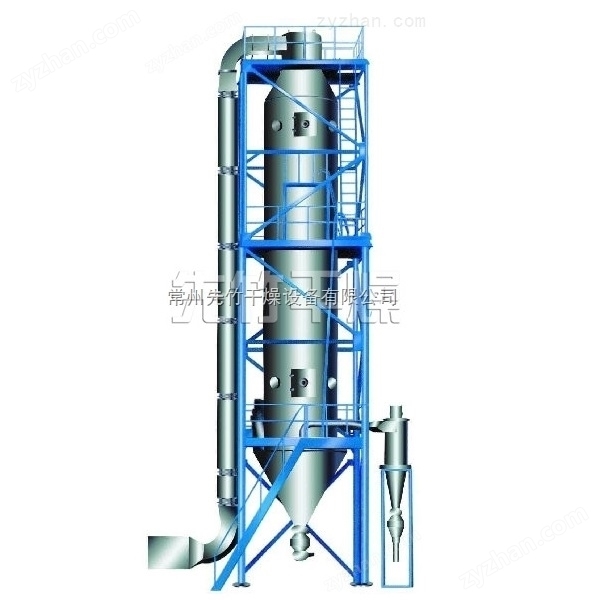
In pharmaceutical, food, and chemical production, the medium-sized boiling granulation dryer uses air flow boiling technology to evenly wet and aggregate powder materials into granules, and simultaneously complete drying. It is one of the core equipment in solid formulation processes. Its operational stability is directly related to the uniformity, dissolution rate, and batch consistency of particles. However, long-term exposure to humid and hot air currents and powder erosion can cause scaling and wear on medium-sized boiling granulation dryers. Regular scientific maintenance is the key to ensuring their efficient operation.
1、 Daily cleaning
After each batch of production is completed, CIP (online cleaning) or disassembly cleaning must be carried out. Focus on cleaning the granulation room, filter bags, nozzles, and inlet and outlet air ducts to prevent material residue from causing deterioration or blockage. Use cleaning agents that comply with GMP requirements to ensure no residue of cleaning agents. The filter bag should be gently brushed or ultrasonically cleaned to avoid damage.
2、 Filter system inspection
Bag filter is a key barrier to prevent dust from escaping. Check the filter bag for holes, looseness, or aging before each operation; Shake or blow back the dust promptly after operation. It is recommended to conduct a comprehensive inspection every 50-100 batches and replace immediately if any damage is found. At the same time, clean the blowback solenoid valve and air circuit to ensure that the pulse dust cleaning function is normal.
3、 Spray system maintenance
Check if the spray gun is blocked or worn, and clean the spray hole with compressed air or a specialized needle. Avoid scratching the sealing surface with hard objects when disassembling the nozzle. When not in use for a long time, the spray gun should be taken out and soaked in deionized water to prevent the medicine from drying out. Regularly calibrate the flow of peristaltic pump to ensure accurate and stable adhesive spray volume.
4、 Fan and duct maintenance
Check the tension of the blower and induced draft fan belts. Loose belts can cause insufficient air flow, while tight belts can accelerate bearing wear. Regularly add lubricating grease to the motor bearings. Clean up the dust accumulation in the air duct, check whether the air pressure and speed meet the process setting values, and prevent "bed collapse" or excessive drying caused by imbalanced air volume.
5、 Inspection of seals and connectors
Regularly inspect the door seals, cylinder seals, pipeline joints, and other parts for aging, cracking, or looseness, with particular attention to the sealing between the granulation chamber and the capture chamber. Leakage not only affects negative pressure control, but may also lead to dust leakage, affecting the clean environment.
6、 Electrical and control system testing
Check the sensitivity and accuracy of temperature control probes, pressure sensors, level gauges, and other instruments, and perform regular calibration. Check if the PLC program runs smoothly and if the touch screen parameter display is normal. Avoid damp environments that may cause the electrical box to become damp.