-
E-mail
mark@coruma.cn
-
Phone
15021117131
-
Address
1st Floor, Building 3, No. 525 Yuanjiang Road, Minhang District, Shanghai
Coruma
Lubricating grease grinder: the core technical parameters that determine the grinding effect
Date: 2025-12-24Read: 3
The uniformity and fineness of lubricating grease directly affect its lubrication performance, and the grinder, as the core equipment for lubricating grease production, achieves full integration of base oil, thickener, and additives through mechanical force. The four core technical parameters of grinding medium specifications, speed range, grinding chamber pressure, and processing capacity jointly determine the quality of grinding effect. Accurately matching these parameters with production requirements is the key to producing high-quality lubricating grease and ensuring the reliability of equipment lubrication.
The specification of grinding medium is the core element for regulating the refinement degree of lubricating grease particles, and its particle size, material, and filling rate directly affect the grinding accuracy. For conventional categories such as lithium based grease, using 1-3mm zirconia beads as the medium can meet the requirements. Its high hardness can effectively break down thickener aggregates and control particle size below 20 μ m. If extreme pressure lubricating grease is used for producing high-precision equipment, it needs to be replaced with 0.5-1mm ultrafine corundum medium, combined with multi-stage grinding to achieve particle size requirements below 5 μ m. The medium filling rate should be strictly controlled within 75% -85% of the grinding chamber volume. If it is too low, it will reduce the frequency of grinding contact, while if it is too high, it will cause the media to squeeze each other, reduce energy transfer efficiency, and even cause equipment vibration.
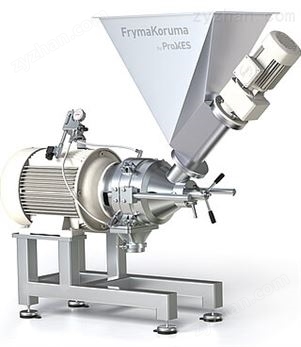
The speed range determines the energy input intensity of the grinder, directly affecting the grinding efficiency and material dispersion effect. When the rotational speed is too low, the medium cannot obtain sufficient kinetic energy, and the thickening agent particles are difficult to be effectively crushed, which can easily lead to uneven and granular lubricating grease after grinding; If the rotational speed is too high, the medium and material will adhere to the wall due to excessive centrifugal force, forming a "dead volume" and generating a large amount of frictional heat, which may cause the base oil to evaporate or additives to fail. Different types of lubricating grease are suitable for different speeds: when producing universal calcium based lubricating grease, it is advisable to set the speed between 800-1200r/min; For composite calcium sulfonate based grease with high viscosity, the rotational speed needs to be increased to 1500-2000r/min to enhance shear force and ensure thorough mixing of materials.
The pressure in the grinding chamber is a key parameter for improving the stability of lubricating grease by changing the contact strength between the medium and the material, further optimizing the grinding effect. Appropriate pressure can reduce the gap between media, enhance shear and compression effects, and make additives more evenly dispersed in the base oil. When producing ordinary lubricating grease, the pressure in the grinding chamber should be controlled at 0.2-0.4 MPa; If it is necessary to improve the water resistance and mechanical stability of lubricating grease, such as in the production of marine lubricating grease, the pressure needs to be increased to 0.5-0.8 MPa to promote the formation of a three-dimensional network structure of the thickener. However, excessive pressure can increase equipment sealing loss and may also cause a sudden rise in material temperature. Therefore, it is necessary to equip a pressure and temperature linkage control system to achieve dynamic adjustment.
The processing capacity needs to be accurately matched with the equipment parameters to avoid efficiency losses caused by "big horse pulling small car" or "small horse pulling big car". Insufficient processing capacity can lead to insufficient material in the grinding chamber and increased wear due to idle media; If the processing capacity is too large, it will result in insufficient residence time of the material in the cavity and insufficient grinding. The processing capacity of small laboratory grinders is usually 1-5L/h, suitable for formula development and small-scale trial production; The processing capacity of industrial production line grinding machines can reach 50-200L/h, requiring a large volume grinding chamber and high-power motor. In actual production, the processing capacity needs to be adjusted in conjunction with the speed and pressure. For example, when increasing the processing capacity, the speed and pressure can be appropriately increased to ensure that the grinding effect is not affected.
From lubricating grease for automotive bearings to extreme pressure lubricating grease for large machinery, the parameter matching of grinding machines always revolves around product performance requirements. The specifications of the grinding medium determine the bottom line of accuracy, the speed range controls energy input, the pressure of the grinding chamber is optimized for dispersion effect, and the processing capacity is adapted to the production scale. Through the collaborative optimization of the four major parameters, it is possible to ensure that the lubricating grease meets the quality requirements of uniformity and delicacy, while also improving production efficiency and reducing energy consumption. With the diversification of lubricant application scenarios, grinding machines with precise parameter control and intelligent monitoring functions will become the core support to ensure lubricant production.
Last Article: Chili sauce grinder: the precise control of feeding rate