-
E-mail
gongyiyuhua@126.com
-
Phone
18623711598
-
Address
Yingyu Industrial Zone, Gongyi City
Gongyi Yuhua Instrument Co., Ltd. (Headquarters)
Application advantages of circulating water multi-purpose vacuum pump
Date: 2025-12-12Read: 7
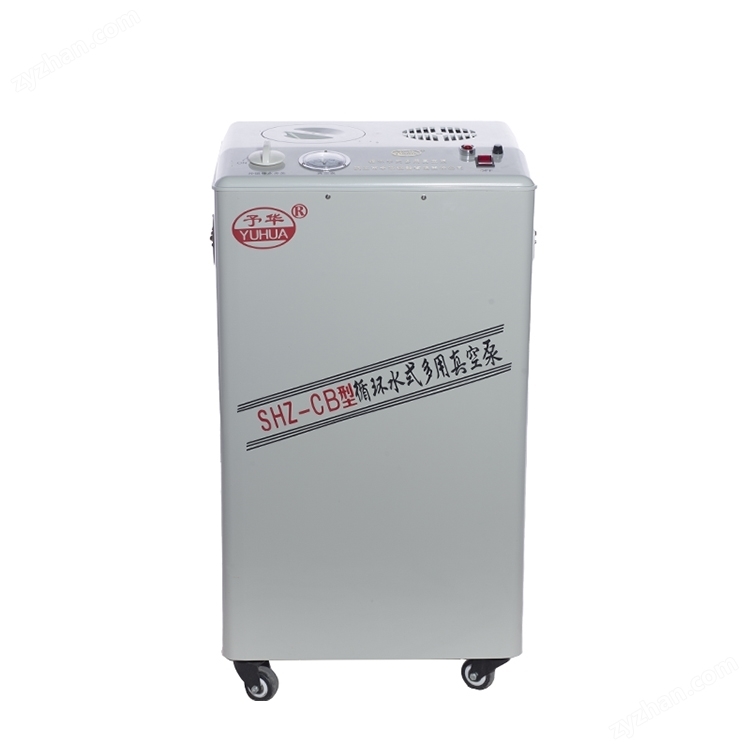
Vacuum equipment is a key tool supporting scientific research and process innovation in laboratories and industrial production. The circulating water multi-purpose vacuum pump has become an ideal equipment in many fields due to its unique design and functions. Its application advantages are mainly reflected in high efficiency and energy saving, environmental protection characteristics, multifunctional integration, safety and reliability, and wide applicability, providing stable and efficient solutions for modern experiments and industrial processes.
1. Efficient and energy-saving: the core advantage of reducing operating costs
The circulating water vacuum pump uses a water circulation system as the working medium, generating negative pressure through high-speed water flow to achieve vacuum pumping function. Compared to traditional vacuum pumps, its energy consumption is significantly reduced, and the energy-saving effect can reach over 35%. For example, in the laboratory, the device can continuously provide a stable vacuum environment without the need for frequent replacement or replenishment of external energy sources. This efficiency stems from its structural design, such as the eccentric rotation of the impeller forming periodic volume changes, ensuring that the gas compression process approaches an isothermal state and reducing energy loss. In chemical production, this energy-saving feature directly translates into cost savings, especially suitable for process flows that operate for long periods of time.
2. Environmental characteristics: reduce resource waste and pollution
Environmental protection is a prominent feature of circulating water vacuum pumps. The equipment avoids a large amount of waste in traditional direct drainage methods by recycling water resources, and has a good water-saving effect. Taking continuous operation for one working day as an example, it can save more than 10 tons of water, which is particularly suitable in areas with tight water sources. In addition, the pump does not require oil media, eliminating the hidden danger of oil mist pollution to experimental samples or the environment, and meeting the requirements of clean laboratories. Its corrosion-resistant materials, such as polytetrafluoroethylene or stainless steel, further reduce waste generation and support the concept of green manufacturing. For example, in the pharmaceutical industry, oil-free design ensures the purity of the drug production process and avoids cross contamination.
3. Multi functional integration: a flexible solution for multiple uses on one machine
The multifunctionality of the circulating water vacuum pump makes it a versatile assistant in the laboratory. It can not only evacuate, but also provide circulating cooling water for the reaction device, achieving various operations such as evaporation, distillation, and filtration. The equipment is usually equipped with multiple suction nozzles and vacuum gauges, which can be used separately or in parallel to meet different experimental needs. For example, in organic synthesis, it can connect a rotary evaporator and a Buchner funnel to simultaneously complete solvent recovery and sample filtration, improving space utilization. The operation panel design is intuitive, and the vacuum degree can be accurately adjusted through the knob. Even beginners can quickly get started, greatly improving experimental efficiency.
4. Safe and reliable: ensuring operation and equipment stability
Safety is an important advantage of circulating water vacuum pumps. Adopting oil-free lubrication design to avoid the risks of handling flammable and explosive gases, especially suitable for chemical and pharmaceutical environments. The equipment is equipped with a dry burn protection device, which automatically shuts down when the circulating water volume is insufficient to prevent motor damage. In addition, its structure is simple, with low operating noise (≤ 65 decibels), creating a quiet working atmosphere. For example, in electronic device manufacturing, low noise characteristics reduce interference with precision operations. Daily maintenance is simple, just need to regularly check the cleanliness of the water source and the smoothness of the pipeline to ensure long-term stable operation.
5. Wide applicability: a universal tool across domains
The application scenarios of circulating water vacuum pumps are extremely wide, covering multiple industries such as chemistry, biology, pharmaceuticals, food processing, and electronics. In the laboratory, it is an ideal choice for basic operations such as filtration, drying, and extraction; In industrial production, it is suitable for processes such as vacuum water diversion, feeding, and concentration. Its corrosion resistance enables it to handle corrosive gases such as acids and alkalis, expanding its use in materials science and environmental monitoring. For example, in food processing, equipment is used for vacuum packaging to extend product shelf life; In the building materials industry, support vacuum forming technology to improve product accuracy.
The circulating water multi-purpose vacuum pump has become a core equipment in modern scientific research and industry due to its advantages of high efficiency, energy saving, environmental protection, multifunctionality, safety and reliability, and wide applicability. It not only optimizes experimental and production processes, reduces resource consumption, but also addresses complex challenges through innovative design. With the advancement of technology, its application potential will be further released, providing solid support for efficient development in various fields. Choosing the right vacuum pump can often make scientific research exploration or industrial upgrading more efficient.