-
E-mail
gongyiyuhua@126.com
-
Phone
18623711598
-
Address
Yingyu Industrial Zone, Gongyi City
Gongyi Yuhua Instrument Co., Ltd. (Headquarters)
Multi purpose vacuum pump for circulating water is an intelligent control guide for laboratory vacuum systems
Date: 2025-12-22Read: 7
Circulating water multi-purpose vacuum pump is the core equipment for laboratory vacuum acquisition, and mastering its correct usage method is crucial to ensuring experimental efficiency and equipment lifespanThis article will provide you with a detailed analysis of the entire process operation standards from preparation to maintenance.
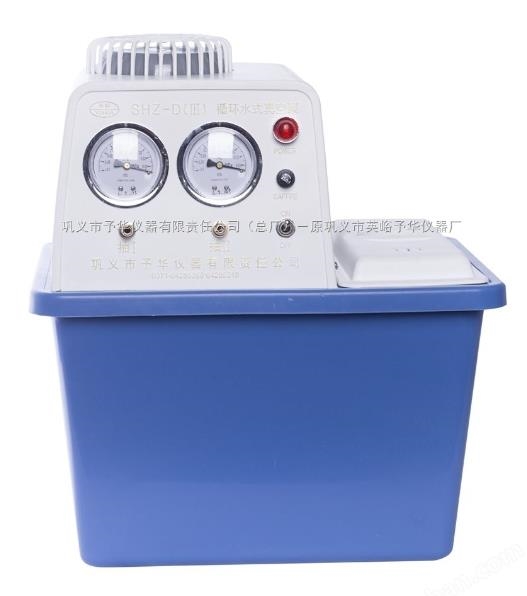
1、 Preparation before startup
Equipment inspection is the first step in ensuring safe operation. Check if the water level in the water tank reaches the specified line (usually 2/3 of the tank volume), and confirm that all pipeline connections are securely connected without leaks. Check if the power supply voltage is consistent with the rated voltage of the equipment, and ensure that the insulation layer of the power line is intact and undamaged. Manually rotate the pump shaft and confirm that it operates smoothly without any jamming. The equipment should be placed on a flat and ventilated table, away from heat sources and corrosive gases, and ensure that the pipeline connected to the exhaust port is not blocked.
Water quality management is the core of stable equipment operation. Prioritize using distilled water or deionized water to avoid the deposition of scale caused by the use of hard water. When using for the first time, open the top cover of the water tank and inject clean cold water to the height below the overflow nozzle. Repeat the operation to stop adding water. Replace the water at least once a week. If the water quality is severely polluted or frequently used, the water replacement cycle should be shortened.
2、 Standard Operating Procedure
The startup operation needs to be executed in sequence. After connecting the power, turn on the power switch to start the vacuum pump. After the water pump runs for 1-2 minutes, slowly open the exhaust valve and gradually establish the vacuum degree. By observing the value with a vacuum gauge, it can usually reach around -0.09MPa. After confirming the stability of the vacuum degree, connect the instruments that need to be evacuated to ensure good sealing of the system.
Long term operation management requires special attention. When the equipment needs to operate continuously for a long time, the water temperature in the water tank will rise, affecting the vacuum degree. At this point, the water discharge hose can be connected to the water source (tap water), and the overflow nozzle can be used as the drainage outlet. The flow rate of tap water should be controlled appropriately to maintain the temperature of the water in the tank and stabilize the vacuum degree. If cooling circulating water needs to be provided for the reaction device, connect the inlet and outlet pipes of the device to the pump body's circulating water outlet and inlet nozzles respectively, and turn the circulating water switch to the ON position to achieve this.
3、 Operation monitoring and exception handling
Parameter monitoring is the key to ensuring the normal operation of equipment. Regularly observe the reading of the vacuum gauge. If the vacuum degree suddenly drops, check whether there is any air leakage in the pipeline or whether the water level in the water tank is too low. Pay attention to the water temperature in the water tank. If the water temperature exceeds 30 ℃, it is recommended to replace the cold water or install a cooling device. If severe vibration or abnormal noise is found in the pump body, the power should be immediately turned off and the impeller should be checked for jamming or bearing damage. Avoid prolonged idling.
Common troubleshooting requires mastering basic methods. If the vacuum degree is insufficient, it may be due to pipeline leakage, low water level in the water tank, or impeller wear. It is necessary to use soapy water to detect the leakage point and seal it, replenish the water volume, or replace the impeller. If the pump body noise is high, it may be due to bearing wear, impeller jamming, or low water level causing idling. It is necessary to replace the bearings, remove debris from the impeller, or replenish the water volume. If the circulating water leaks, it may be due to aging sealing rings or loose pipeline interfaces, and the sealing rings need to be replaced or the interfaces need to be tightened.
4、 Shutdown and daily maintenance
The shutdown operation should be performed in a standardized order. Close the exhaust valve first, and then disconnect the device being extracted. Turn off the power switch and cut off the device's power supply. If it is not used for a long time, the drain valve of the water tank should be opened to drain the stored water and prevent scale deposition or damage to the pump body due to winter icing. After each use, drain the sewage from the water tank, rinse the inner wall with clean water, and remove impurities. If there is contact with corrosive gases during the pumping process, neutral detergent should be used for cleaning.
Regular maintenance is the key to extending the lifespan of equipment. Check the pump shaft seal for wear every week and clean the water tank inlet filter. Dismantle the impeller every month, remove scale or sediment from the impeller and pump casing, and add an appropriate amount of lubricating oil to the bearings. Conduct a comprehensive inspection of the motor insulation performance every quarter and replace the water in the water tank. Every year, professional personnel disassemble the pump body, inspect the wear of core components such as impellers, bearings, and motors, replace aging parts, and calibrate the accuracy of the vacuum gauge.
By mastering the above standardized operating procedures and daily maintenance points, the circulating water multi-purpose vacuum pump can provide a stable and reliable vacuum environment for your experimental work, while significantly extending the service life of the equipment and ensuring the smooth progress of the experiment.