-
E-mail
ec@hkaco.com
-
Phone
13412598543
-
Address
Building T6, PCI Future Community, No. 30 Kaitai Avenue, Huangpu District, Guangzhou City
Guangzhou Hongke Electronic Technology Co., Ltd
Overview of Microfluidic Blood Brain Barrier Chips
Date: 2025-12-12Read: 52
Overview of Microfluidic Blood Brain Barrier Chips
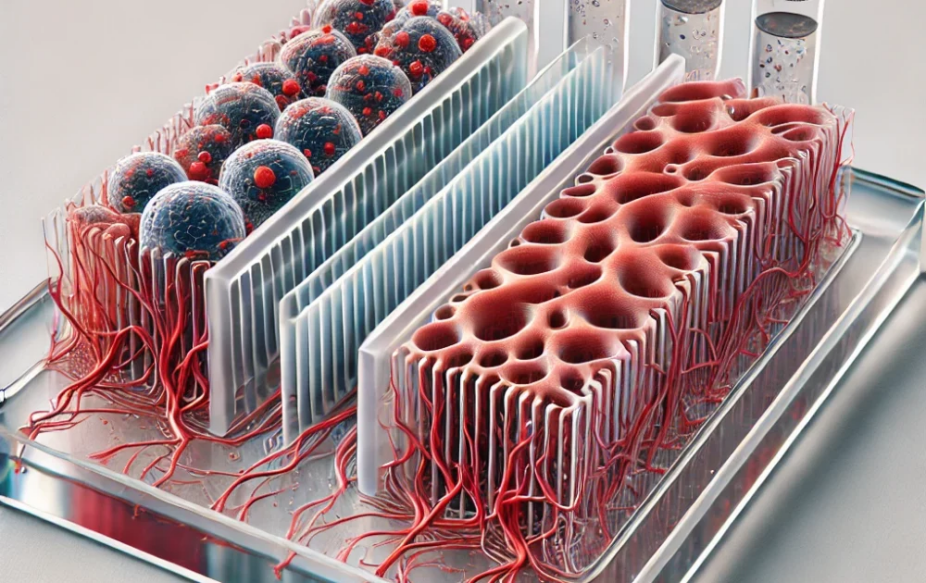
Blood-brain barrier(BBB is a selective barrier that protects the brain and central nervous system (CNS), maintaining a stable internal environment. It is composed of endothelial cells, pericytes, glial cells, and extracellular matrix, ensuring the integrity of the barrier. Dysfunction of the blood-brain barrier is associated with diseases such as Alzheimer's and Parkinson's, which can allow harmful substances to enter the central nervous system. The current blood-brain barrier models can better study these diseases by developing targeted therapies and identifying potential neurotoxic foreign substances, which represents an important step forward in the fields of neuroscience and pharmacology[1-2].
Traditional research on the blood-brain barrier(The methods of BBB, such as Transwell chamber experiments and animal models, have limitations such as oversimplification, poor physiological relevance, and species differences.
Microfluidic blood-brain barrier model(μ BBB) solves these problems by simulating the blood-brain barrier function in vivo through engineering systems. These models can precisely control the environment, support cell co culture, apply shear stress, and replicate human brain environmental conditions. Microfluidic blood-brain barrier devices are capable of high-resolution imaging, intracellular monitoring, and extracellular response analysis, making them an ideal tool for central nervous system disease research, treatment screening, and neurotoxicity testing. They provide enormous potential for advancing research on the blood-brain barrier[2].
An ideal extracorporeal blood-brain barrier(The BBB model should replicate key features of the blood-brain barrier in vivo, including:
lEndothelial cells(ECs form 3D vascular like structures
lIntercellular interaction
lShear stress generated by fluid flow on endothelial cells
lA thin and porous substrate membrane(BM)
Simulating the blood-brain barrier in vitrohaveOne of the challenging aspects is accurately replicating the natural basement membrane, which plays a critical role in processes such as cell differentiation, in vivo balance, tissue maintenance, and structural support. Ideally, artificial basement membranes should be made of biocompatible materials with a thickness of approximately 100 nanometers.
Design of Microfluidic Devices
1.1 Sandwich Design Layered Design
The characteristic of this microfluidic blood-brain barrier design is the upper and lower layers of polydimethylsiloxane(PDMS channels are separated by a porous membrane in the middle. Typically, polycarbonate membranes with pore sizes ranging from 0.2 to 3 microns are used, similar to the Transwell system. Endothelial cells are usually seeded in the upper channel, while pericytes, astrocytes, or other brain cells are cultured in the lower channel.
Other transparent films, such as polytetrafluoroethylene, can achieve high-resolution imaging and real-time monitoring of biomolecule transport and cell growth. In addition, reversing the cell seeding configuration by culturing endothelial cells in the three-dimensional vascular like structure of the lower channel(ECs), Simultaneously seeding pericytes and astrocytes in the upper channel can enhance the observation of intercellular interactions.
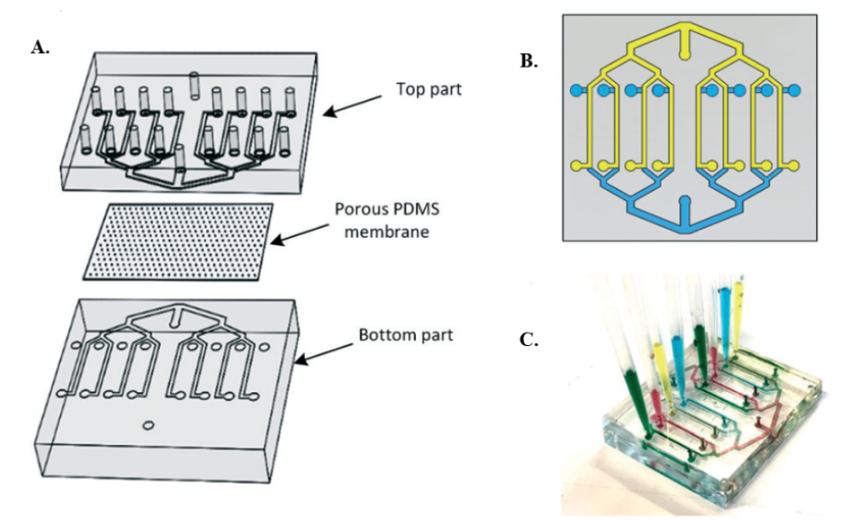
image1 Design diagram of blood-brain barrier sandwich on chip. (A) The exploded view of the chip, including the top and bottom parts,
Each containing eight channels, composed of multiple pores PDMS membrane separation. (B) Schematic diagram of two-layer equipment design,
The characteristics are two identical ones PDMS components, one inverted and bonded to the other. (C) Displaying eight different conditions generated in two layers of equipment[2]
1.2 Parallel Design
Two horizontally arranged channels are composed of PDMS microchannel array separation replaces traditional polycarbonate membranes with PDMS based micro column "membranes" (3-micron gaps)[3]This design can be co cultured with astrocytes or brain tumor cells, and simplifies the assembly process without the need for additional chemical modifications. The planar layout improves intercellular interactions and imaging effects.
The feature of this device is a tissue compartment with two vascular channels with fluid entry ports on both sides, assembled on a microscope slide and equipped with plastic tubes for entering the channels.
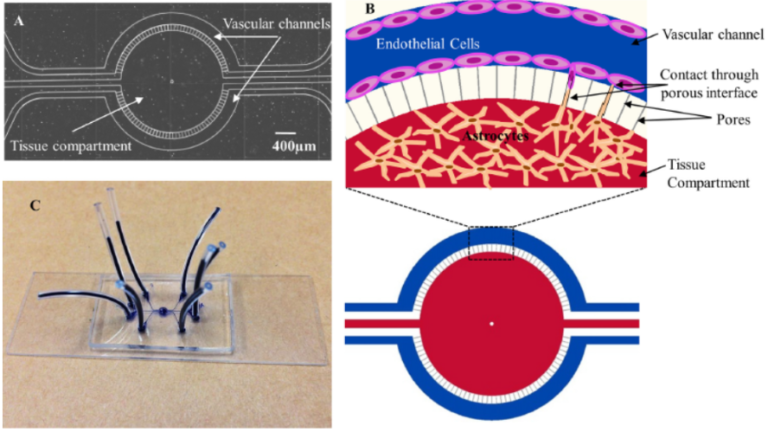
image2 Image of blood-brain barrier on chip.A. The schematic diagram shows the organizational compartment at the center of the device,
Surrounded by two independent vascular channels with fluid inlet openings.B. Schematic diagram of cell culture in this design.
C. The equipment is assembled on microscope slides and equipped with plastic tubes (dark blue) that can enter various vascular channels and tissue compartments[3].
1.3 Three dimensional tubular structure design
traditionThe PDMS μ BBB model uses rectangular microchannels, which result in uneven flow and shear forces, affecting endothelial cell behavior. To improve this issue, some models use cylindrical microchannels to achieve uniform shear force, such as 3D collagen based microvascular pipelines (diameter 75-150 μ m), which precisely control the diameter through fluid flow rate and integrate it into the μ BBB device.
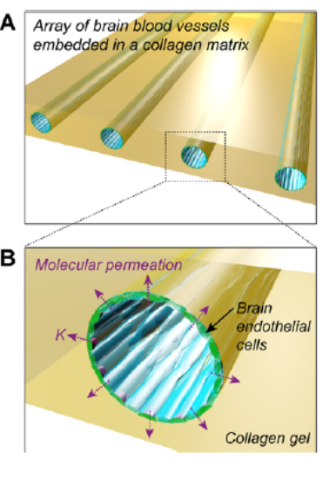
image3 Diagram of cerebral microvascular system[4]
Experimental device for blood-brain barrier chip
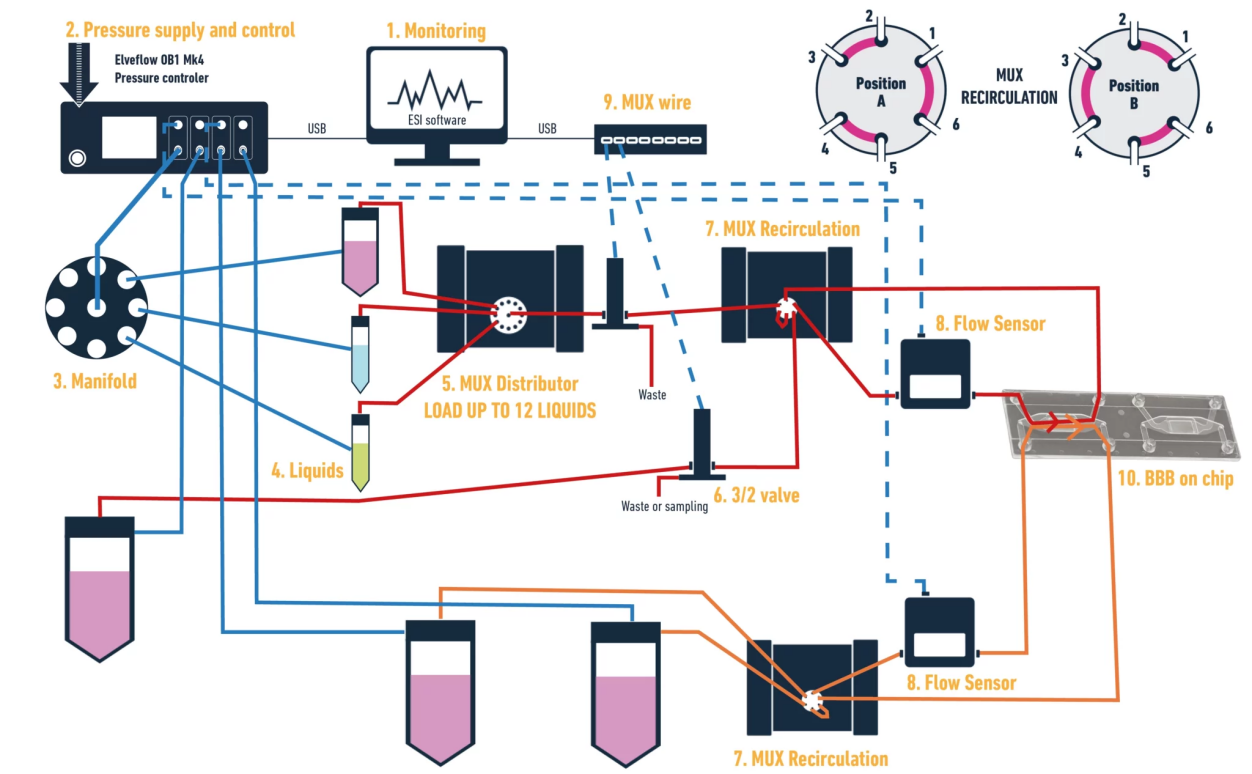
Integrated blood-brain barrier experimental device on chip:
1. OB1 flow controller
2. manifold
3. MUX Recirculation Valve
4. MUX distribution valve
5. MUX wire
6. three-way /Two way valve
7. Microfluidic flow sensor
8. Connectors, pipes, and Ruhr connectors
9. liquid storage tank
10. Microfluidic chip for blood-brain barrier chip model
11. Microfluidic software
2.1 Advantages of Elveflow devices
1. OB1 pressure controller
lAccurate fluid flow control:OB1 adopts a piezoelectric regulator, which can achieve fast and stable pressure regulation. This precision ensures that the microfluidic environment can closely simulate physiological conditions, which is crucial for accurately replicating the dynamic characteristics of the blood-brain barrier.
lDynamic perfusion capabilityMaintaining appropriate shear stress is crucial for endothelial cell function in blood-brain barrier devices on chips.OB1 allows for controlling fluid flow, achieving dynamic perfusion, simulating blood flow conditions in the body, and enhancing the physiological relevance of the model.
2. MUX distribution valve
lAutomatic sequential injectionThis valve allows various reagents, drugs, or culture media to be delivered to the blood-brain barrier chip according to the program. This automation is crucial for conducting dynamic perfusion experiments that closely simulate in vivo conditions, enhancing the physiological relevance of the model.
3. MUX Recirculation Valve
lSimulate physiological flow conditions:The MUX recirculation device allows for precise and programmable fluid recirculation, which is crucial for replicating the shear stress and fluid dynamics experienced by endothelial cells in the blood-brain barrier.
lControlled recirculation ensures realistic blood flow patternsThis is crucial for maintaining the morphology and function of endothelial cells.
lDrug testing and toxicity screeningIntroduce drugs or nanoparticles in a controllable manner and recycle them to study their interaction with the blood-brain barrier over time.
lDynamic co cultivation systemIt ensures continuous perfusion, which is crucial for cell viability and maintaining tight junctions.
lReduce pollution riskClosed loop recirculationbigMinimizing the risk of contamination is a common challenge in open infusion systems.
3 application areas
3.1 Modeling of Neurological Diseases
lbrain tumorBlood-brain barrier(The BBB model is used to study the interaction of vascular glioma initiating cells (a key factor in brain tumor invasion) in their environment. In addition, using an in vitro blood-brain barrier system can provide a clearer understanding of the mechanisms underlying brain tumor metastasis. By integrating patient derived glioblastoma spheroids into microfluidic systems, these models provide an efficient platform for screening drugs with strong tumor killing capabilities.
lNeurofunctional disordersThe inflammatory response in neurological disorders is caused by the aggregation and migration of immune cells, including neutrophils, glial cells, and astrocytes. In neurological disease models such as Alzheimer's disease, neuroinflammation is driven by the activation of microglia and astrocytes. Activated immune cells release inflammatory cytokines, including tumor necrosis factor(TNF - α and interleukin-1. In this reaction process, cytokines and immune cells can disrupt the blood-brain barrier (BBB), often leading to blood infiltration into the brain and irreversible brain tissue damage.
3.2 Neurobiological research
Control the microenvironment around neuronal cells within a microfluidic platform, including between cells and between cells and extracellular matrix(The interaction between ECM can create a microenvironment similar to that in the body for neural stem cells to differentiate into components of the nervous system.
By combining microfluidic technology with neurobiology, some technical challenges in this field can be addressed, such as cultivating the central nervous system(CNS neurons, axonal separation, patterning of cultured neurons, guiding neurite growth to simulate axonal injury, and studying local protein synthesis, axonal regeneration, and axonal transport processes within axons.
3.3 In vitro drug development
The on-chip blood-brain barrier system provides a platform for evaluating the permeability of drugs across the blood-brain barrier under dynamic and physiologically relevant conditions, addressing the limitations of traditional in vitro models. They can evaluate drug loaded nanoparticles, including receptor-mediated endocytosis and nanocarrier optimization for targeted delivery to the central nervous system. By replicating the cellular complexity of the blood-brain barrier, these models can aid in testing neuroprotective agents and antibodies under disease specific conditions. Integrated sensors can provide a deep understanding of drug toxicity, neuronal activity, and synaptic behavior. Using patient derived cells that support personalized drug screening and research targeting specific diseases[4].
3.4 Research on Brain Axes on Chips
Multi organ chips provide a platform for studying the interactions between the brain and other organs in the context of disease and drug development. They can study complex diseases, such as lung cancer brain metastases, where dynamic processes can be replicated and studied in detail. These chips also help reveal microbial communities -The communication pathways in the gut brain axis elucidate how gut health affects neurological disorders. By simulating interconnected organ systems, such as the liver brain axis in hepatic encephalopathy or immune regulation through the brain spleen axis, multi organ chips provide a comprehensive approach to understanding systemic diseases. Their ability to simulate dynamic physiological environments has facilitated pioneering research in inter organ communication and treatment development.
References
1. X. Chen ; C. Liu ; L. Muok ; C. Zeng and Y. Li, Dynamic 3D On-Chip BBB Model Design, Development, and Applications in Neurological Diseases, Cells, 2021
2. M. Zakharov ; Mr. A. Palma do Carmo; M. W. van der Helm; H. Le-The; M. N. S. de Graaf; V. Orlov; A. of the mountain; A. D. of the Sea; K. Broersen and L. I. Segerink, Multiplexed blood–brain barrier organ-on-chip, Lab on a Chip, 2020.
3. S. P. Deosarkar ; B. Prabhakarpandian ; B. Wang ; J. B. Sheffield ; B. Krynska and M. F. Kiani, A Novel Dynamic Neonatal Blood-Brain Barrier on a Chip, PlosOne, 2015
4. J.A. Kim ; H.N. Kim ; S-K. Im ; S. Chung ; J.Y. Kang and N.Choi, Collagen-based brain microvasculature model in vitro using three-dimensional printed template, Biomicrofluidics, 2015
5. X. Wang ; Y. Hou ; X. Ai ; J. Sun ; B. Xu ; X. Meng ; Y. Zhang and S. Zhang, Potential applications of microfluidics based blood brain barrier (BBB)-on-chips for in vitro drug development, Biomedicine & Pharmacotherapy, 2020