-
E-mail
sales-sci.cn@horiba.com
-
Phone
13681872955
-
Address
Unit D, 1st Floor, Building A, Lianqiang International Plaza, 1068 Tianshan West Road, Shanghai
HORIBA (China)
Nano laser particle size analyzer is continuously driving various industries towards refinement
Date: 2025-11-17Read: 3
The nano laser particle size analyzer is based on the principles of dynamic light scattering (DLS) or static light scattering, and can quickly and non destructively measure the particle size distribution of particles in the range of 0.3nm to 10 μ m. With its high sensitivity, good repeatability, and convenient operation, it has become a key instrument in the fields of materials science, biomedicine, chemical engineering, and more. The application depth and breadth of nano laser particle size analyzer are constantly driving various industries towards refinement and standardization.
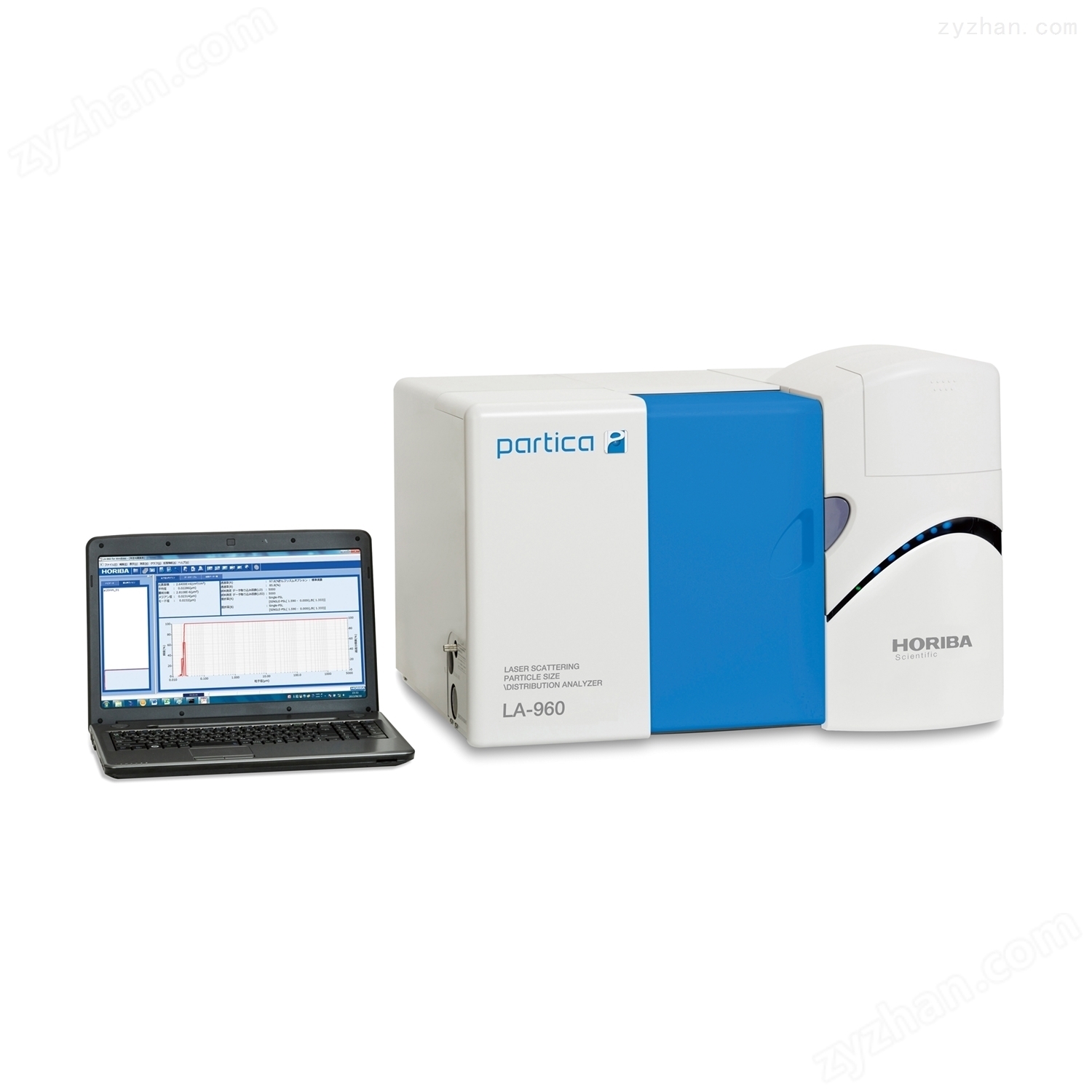
1. Pharmaceutical and Biotechnology
In the development of protein drugs, liposomes, mRNA vaccines, and nanocarrier systems, particle size directly affects drug stability, in vivo distribution, and targeting efficiency. Laser particle size analyzer is used to monitor the uniformity of nano formulations (PDI<0.2 is preferred), ensure batch consistency, and meet the strict quality control requirements of FDA/EMA for nano pharmaceutical products.
2. Batteries and New Energy Materials
The particle size distribution of positive and negative electrode materials for lithium-ion batteries, such as lithium iron phosphate and silicon carbon composite materials, determines the specific surface area, compaction density, and ion diffusion rate. Through particle size analysis, the grinding process can be optimized to avoid excessive fineness leading to increased side reactions or excessive coarseness affecting rate performance, thereby improving battery energy density and cycle life.
3. Cosmetics and daily chemical products
Nano titanium dioxide in sunscreen, lipid nanoparticles in essence solution, and microemulsion droplets in lotion, whose particle size is directly related to transparency, spreadability, and skin permeability. Laser particle size analyzer helps R&D personnel accurately control the stability of the system, prevent flocculation or sedimentation, and achieve a "light and thin without whitening" skin sensation experience.
4. Food and Beverage
If the particle size of fat globules or protein aggregates in milk, juice, and plant-based protein drinks is too large, it can easily lead to stratification or precipitation. By monitoring particle size, the homogenization process parameters (pressure, frequency) can be optimized to ensure long-term stability of the product; In functional foods, the particle size of nano encapsulated nutrients also needs to be strictly controlled to improve bioavailability.
5. Nanomaterials and Advanced Ceramics
The performance of new materials such as graphene, carbon nanotubes, quantum dots, and zirconia powder is highly dependent on particle size and dispersion state. Laser particle size analyzer is not only used for factory quality inspection, but also guides surface modification and dispersant screening during the synthesis process to prevent agglomeration and unleash the true potential of nanomaterials.
6. Environment and Water Treatment
The particle size of colloidal particles (such as humic acid and clay) in natural water bodies affects the migration of heavy metals and membrane fouling trends. Researchers use a nano laser particle size analyzer to track the flocculation process, optimize the dosage of coagulants, and improve the efficiency of wastewater treatment.