-
E-mail
934287166@qq.com
-
Phone
15821588900
-
Address
No.1 East Industrial Park, Yangzhai Avenue East Section, Chuhe Street, Yuzhou City, Henan Province
Henan Jincheng Industrial Technology Co., Ltd
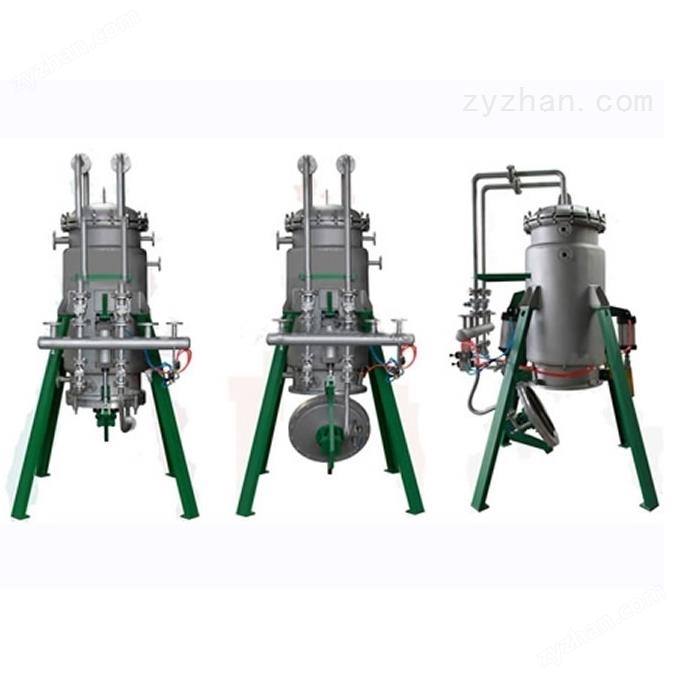
The working principle and wide application of sanitary grade microporous filters
Date: 2025-08-28Read: 0
The working principle of sanitary grade microporous filters is mainly based on the physical screening mechanism, and its core is to intercept impurities through the physical barrier effect of microporous membranes. Specifically, it can be divided into the following four levels:
1. Screening interception
The pore size of the filter membrane is usually 0.1-10 microns, and separation is achieved by directly intercepting particles larger than the pore size, such as bacteria and suspended solids. Special structures such as seaweed hollow fiber membranes can also remove surface sediments through backwashing to maintain filtration efficiency.
2. Multi level interception mechanism
In addition to direct interception, it also includes inertial collision (particles deviating from the streamline due to momentum and coming into contact with the membrane wall), diffusion adsorption (small particles coming into contact with the membrane surface due to Brownian motion), and electrostatic interaction (charge opposite attraction).
3. Pressure driven filtration
The fluid passes through the filter membrane under a pressure difference of 0.07-0.2MPa, and the cleaning medium flows out from the outlet, while the intercepted material accumulates on the membrane surface. The T-shaped design optimizes the fluid path and reduces pressure loss.
4. Maintainability Design
By backwashing or chemical cleaning, impurities on the surface of the filter membrane are removed, and the modular design facilitates quick replacement of the filter element.
The work of sanitary grade microporous filtersApplication areas:
Medical pharmaceuticals: sterile injection preparation, clean room air purification.
Food and beverage: sterilization of dairy products, clarification of beverages.
Water treatment: Remove bacteria and viruses to achieve ultra pure water standards.
Industrial field: pharmaceutical raw material filtration, chemical fluid purification.