-
E-mail
251651220@qq.com
-
Phone
18173490139
-
Address
No. 48 Baisha Industrial Avenue, Baishazhou Industrial Park, High tech Zone, Hengyang City, Hunan Province
Hunan Yuerui Technology Co., Ltd
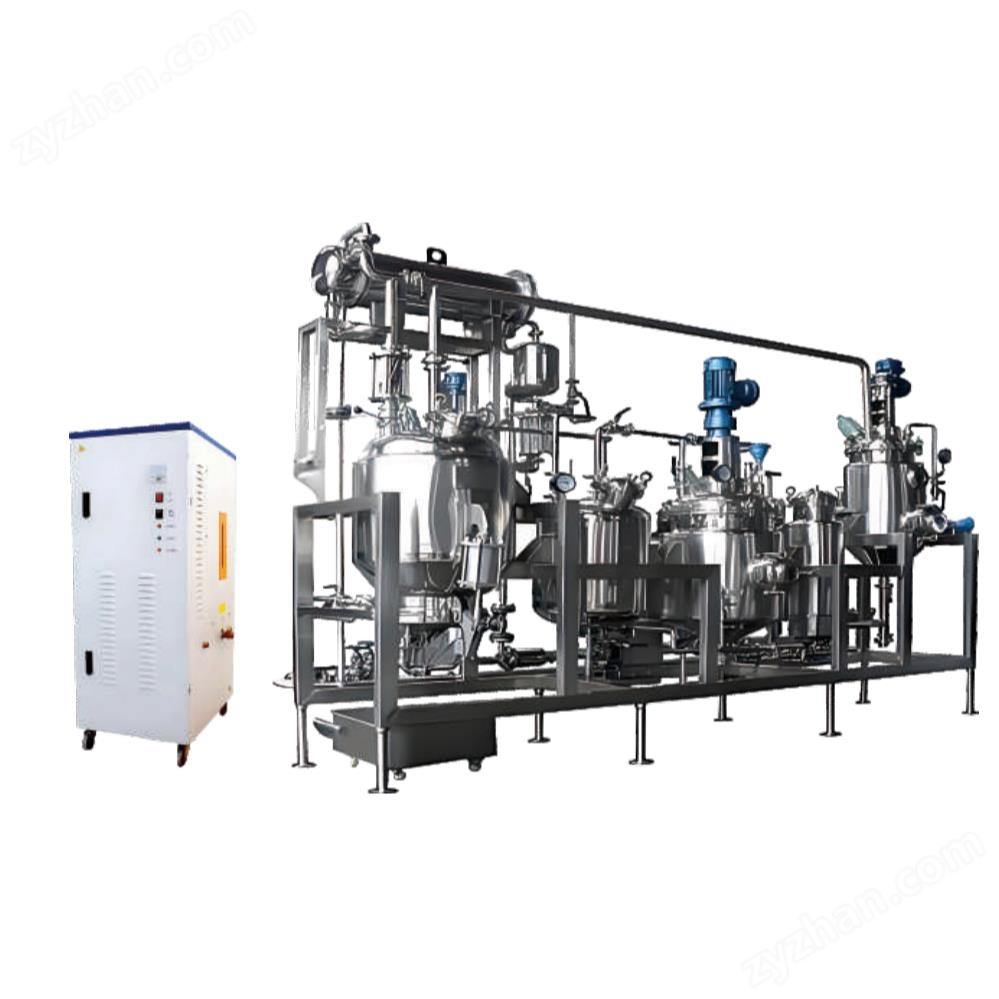
Analysis of the working principle of small-scale extraction and concentration units
Date: 2025-09-23Read: 56
The small-scale extraction and concentration unit integrates mass transfer technology and intelligent control modules to achieve seamless transition from laboratory to industrial production, providing solutions for the modernization of traditional Chinese medicine, food additive development, and other fields. Low temperature vacuum concentration effectively preserves the active ingredients in the extract, avoiding high-temperature damage; Advanced technologies such as ultrasound assisted extraction further enhance the yield and purity of the target substance.
The working principle of a small extraction and concentration unit:
1. Solvent extraction and circulating reflux: After feeding the raw materials into the extraction tank, a specific solvent is added and heated to boiling state through a jacket heating system to dissolve the active ingredients into the solvent. Some models support hot reflux technology, which means that the evaporated steam is condensed and returned to the inside of the tank to form a dynamic cycle, improving extraction efficiency and reducing solvent loss.
2. Vacuum negative pressure concentration technology: After extraction is completed, the boiling point of the liquid is lowered using a vacuum environment, and water or other volatile components are quickly removed at low temperatures. This process can protect the activity of thermosensitive substances, achieve high rate concentration, and is equipped with a condenser to recover organic solvents for reuse.
3. Automation control system: Modern equipment integrates PLC or touch screen operation interface, which can accurately regulate temperature, pressure, time and other parameters, and monitor data in real time. For example, the design of an automatic slag discharge door can separate residue from finished products, ensuring smooth operation of continuous production.
Measurement steps for small-scale extraction and concentration units:
1. Preparation and inspection before startup
-Sealing and component status confirmation: Check whether the sealing parts and valves of the equipment are intact and leak free; Ensure that the vacuum pump rotates flexibly and normally. At the same time, check the electrical circuits and voltage stability inside the self-control box to ensure sufficient boiler water supply and normal operation of the cooling circulating water system.
-Material Placement and Initial Setting: Open the lid of the extraction tank, weigh according to the specifications, and add the material to be processed, along with an appropriate amount of water or solvent. Turn on the main power, activate the heating automatic button, and set the target temperature value on the temperature controller. Then turn on the hot water pump to circulate hot water until the preset temperature is reached.
2. Extraction process control
-Vacuum degree adjustment and monitoring: After the temperature reaches the standard, the vacuum pump can be turned on (note: the inlet valve must be opened first, and it is strictly prohibited to run without water), slowly open the vacuum valve of the extraction tank, and maintain the vacuum degree inside the tank between -0.03Mpa and -0.04MPa. This range helps to increase the boiling point inside the tank and promote dynamic material exchange. If there is abnormal noise such as screaming, the state of the permeation valve can be optimized by adjusting it counterclockwise.
-Circulating extraction mechanism: After completing the ingredient feeding, synchronously open the cooling water valve of the condenser at the top of the solvent tank, and heat the extraction tank and solvent tank. By utilizing the low specific heat characteristics of solvents, the temperature is rapidly raised to boiling point, and the resulting gas is refluxed to the extraction tank through a condensation device, forming a continuous cycle to fully dissolve the active ingredients.
3. Concentration stage operation
-Concentration monitoring and endpoint determination: In the later stage of concentration operation, it is necessary to regularly sample and measure the specific gravity of the solution, usually controlled within the range of 1.2-1.24. Once the concentration required by the process is reached, the concentrated solution should be immediately discharged while it is hot to avoid wall sticking caused by cooling, which may affect subsequent cleaning and product quality.