-
E-mail
1650740367@qq.com
-
Phone
16602839833
-
Address
No. 118 Muyu Street, Gate 15, Luoshi Machinery
Luoshi Machinery (Chengdu) Co., Ltd
Installation conditions for air-cooled chillers
Date: 2025-12-09Read: 46
The installation of air-cooled chillers needs to meet the requirementsVenue, environment, power supply, pipelinesTo ensure the stable operation and service life of the equipment, various conditions must be met. The specific requirements are as follows:
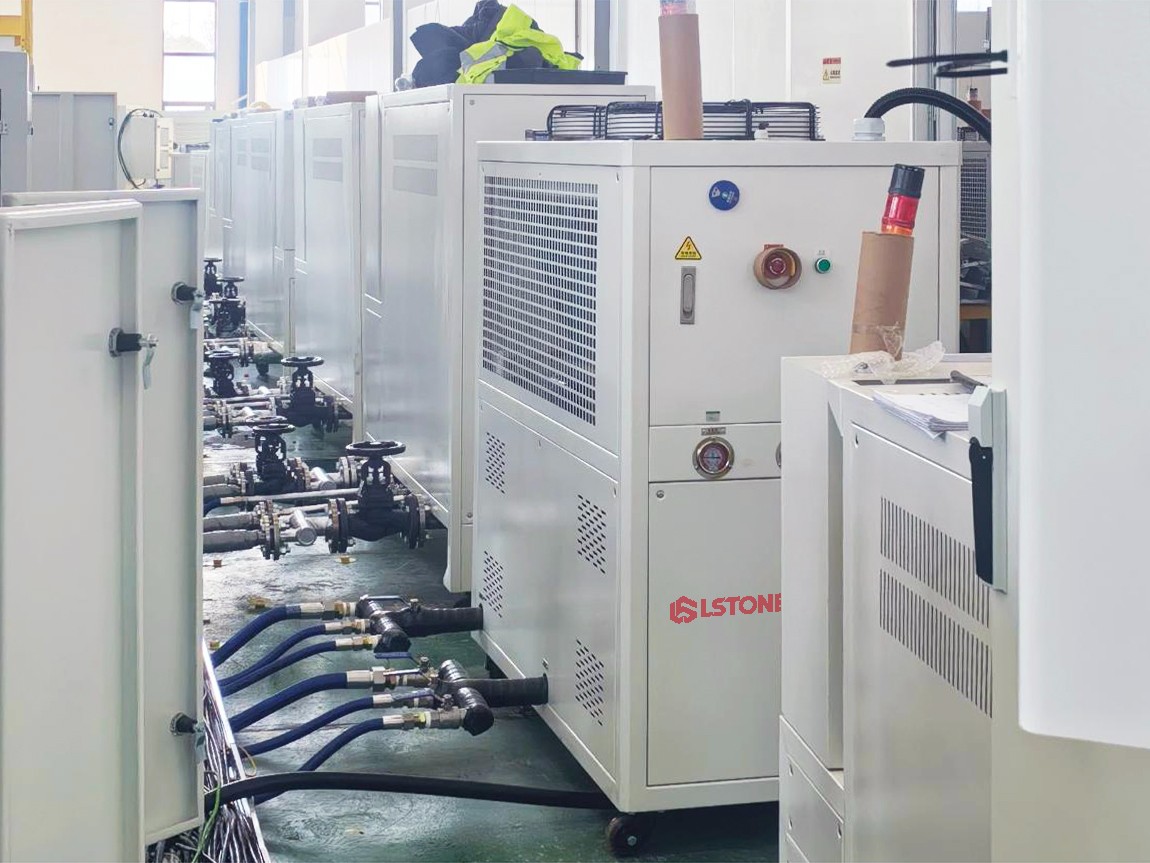
1. Requirements for installation site
Space size: Adequate ventilation and maintenance space should be reserved around the equipment. Generally, it is required that the distance between the two sides and the rear of the unit and the wall be ≥ 30cm, and the distance between the top and the ceiling be ≥ 50cm. The direction of the front air outlet should maintain an unobstructed space of ≥ 1m to avoid the influence of hot air reflux on heat dissipation.
Ground foundation: The installation ground should be flat, sturdy, and able to withstand the overall weight of the unit (including the weight of refrigerant and water). It is recommended to use a concrete foundation with a ground flatness error of ≤ 5mm/m; If installed in high-altitude locations such as rooftops, it is necessary to confirm the floor's load-bearing capacity and take reinforcement measures.
Installation location: Priority should be given to well ventilated and open areas without sealing, avoiding installation in narrow indoor spaces or near heat sources such as boilers and ovens. At the same time, it is necessary to stay away from sources of pollution such as dust, oil, and corrosive gases.
2. Environmental condition requirements
Temperature range: The working environment temperature should be controlled between 5 ℃ and 40 ℃. If the ambient temperature exceeds 40 ℃ for a long time, additional exhaust or cooling devices need to be installed; Anti freezing measures should be taken for the unit in low temperature environments to avoid pipeline freezing and cracking.
Humidity and altitude: The relative humidity of the environment should be ≤ 85% and there should be no condensation water to avoid electrical components being affected by moisture and short circuiting; In high-altitude areas (altitude>1000m), attention should be paid to the reduced heat dissipation efficiency caused by thin air, and the manufacturer should be contacted for customized adaptation of the unit.
Rain and dust prevention: Outdoor installation requires the installation of a rain shelter (to prevent rainwater from directly hitting the electrical control box), and regular cleaning of dust, willow catkins, and other debris on the condenser fins to ensure heat exchange efficiency.
Power supply and electrical conditions
Power specification: It is necessary to match the voltage and frequency indicated on the unit nameplate (such as 380V/50Hz three-phase power), and the power supply should be stable with a voltage fluctuation range of ≤± 10%. It is recommended to install an independent distribution box and leakage protection device. The distribution box should be close to the unit and easy to operate.
Grounding protection: Reliable grounding treatment must be carried out with a grounding resistance of ≤ 4 Ω to prevent equipment leakage from causing safety accidents; The electrical control box needs to be waterproof and dustproof to prevent debris from entering and affecting electrical components.
Wiring requirements: Power lines and control lines should be laid separately to avoid electromagnetic interference; The cable specifications must meet the rated current requirements of the unit, and the cable must be properly fixed and protected to prevent wear and tear.
3. Pipeline connection conditions
Waterway system: The inlet and outlet pipes should use pipe diameters that match the unit interface (seamless steel pipes or PPR pipes are recommended), and be equipped with valves, filters, pressure gauges, and thermometers for later adjustment and maintenance; The pipeline needs to be insulated to reduce cooling loss, and a drainage valve should be installed for shutdown and emptying.
Water quality requirements: The circulating water should be clean and free of impurities. It is recommended to install a soft water device or filter to avoid pipeline scaling and blockage; The hardness of water quality should be ≤ 100mg/L (calculated as CaCO3), otherwise it will affect the efficiency and service life of the heat exchanger.
Pipeline direction: The water pipeline should maintain a reasonable slope to avoid gas accumulation; If the pipeline is long, it is necessary to install an expansion tank or a stabilizing device to ensure stable water pressure.
4. Other special conditions
Noise protection: If installed in residential areas or noise sensitive areas, the noise level of the unit should be confirmed (generally the noise level of air-cooled units is 65-75dB), and if necessary, soundproof covers or shock absorbers should be installed.
Industry specific requirements: Pharmaceutical, chemical and other industries need to meet corresponding explosion-proof and cleanliness level requirements, and explosion-proof units need to be selected with pipeline sealing and anti-corrosion treatment.