-
E-mail
851012694@qq.com
-
Phone
13916683657
-
Address
No. 9 Kesheng Road, Zhongshan Science and Technology Park, Jiangbei New District, Nanjing City
Nanjing Haizhizhou Heating and Cooling Equipment Co., Ltd
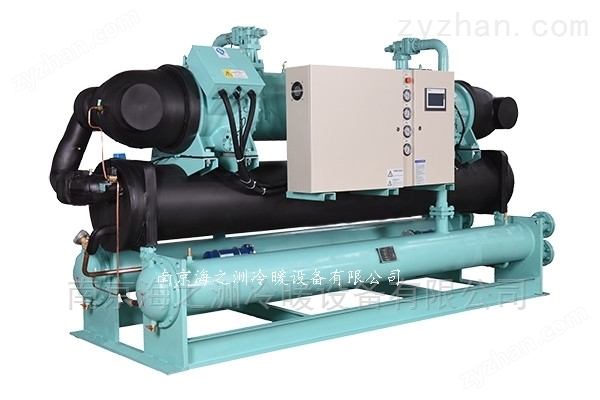
What is the process principle of water-cooled screw heat recovery chiller?
Date: 2025-09-17Read: 4
The process principle of water-cooled screw heat recovery chiller is based on steam compression refrigeration cycle, which achieves energy reuse by recovering condensation heat. The core process can be divided into the following steps:
1、 Basic process of refrigeration cycle
1. Compression process
The screw compressor sucks in low-temperature and low-pressure refrigerant gas from the evaporator, and compresses it into high-temperature and high-pressure gas through the engagement of the anode and cathode rotors. This process adopts a 5:6 asymmetric rotor design, which has energy efficiency 20-30% higher than ordinary compressors.
2. Condensation and heat recovery
When high-temperature and high-pressure gases enter the condenser, they are condensed into liquid form through heat exchange with cooling water, and the heat released is recovered for domestic hot water or process heating. The shell and tube condenser adopts copper heat exchange tubes, and the cooling water circulates outside the tubes to improve the heat exchange efficiency.
3. Throttling and evaporation
After the high-pressure liquid is throttled and depressurized by the thermal expansion valve, it absorbs the heat of the chilled water in the evaporator and vaporizes, causing the temperature of the chilled water to decrease. The evaporator can adopt a full liquid or dry structure, depending on the needs.
2、 Linkage of heat recovery system
1. Dual cycle design: When the refrigerant releases heat in the condenser, it transfers the heat to an independent hot water circulation system through a plate heat exchanger, achieving synchronous cooling and heating.
2. Energy efficiency optimization: Variable frequency drive technology can adjust the compressor capacity (30% -100% stepless adjustment), and the partial load performance coefficient (IPLV) is increased by 40%.
3、 Collaboration of key components
1. Oil separation system: An external oil separator separates lubricating oil from the refrigerant and returns it to the compressor to ensure stable operation of the system.
2. Intelligent control: The PLC system monitors real-time parameters such as chilled water/cooling water temperature and pressure, and automatically adjusts the heat recovery ratio.
This process integrates refrigeration and heat recovery functions, with a comprehensive energy efficiency ratio (COP) of over 6.0, making it suitable for industrial scenarios that require simultaneous cooling and heating.