-
E-mail
shouwang6368@126.com
-
Phone
18051034886
-
Address
No. 19, Tuanshan East Road, Lishui Economic Development Zone, Nanjing City
Nanjing Shouwang Machinery Equipment Co., Ltd
Powder Conveyor: Maintenance Strategy and Safety Operation Guide
Date: 2025-10-28Read: 4
Powder conveyorMaintenance Strategy and Security Operation Guide
1、 Daily inspection: preventive "physical examination"
Mechanical component inspection
Spiral conveyor: Check the wear of spiral blades, bearing temperature and lubrication status, observe whether the U-shaped groove/pipe wall is worn or blocked, and regularly clean residual materials.
Belt conveyor: Monitor belt deviation, joint cracking, and flexibility of roller rotation, clean the adhesive material on the surface of the roller, and check whether the edge/skirt is damaged.
Bucket elevator: Check the fixing bolts of the bucket, the tension of the chain/belt, and the wear of the drive sprocket to ensure that there is no deformation or material residue in the hopper.
Pneumatic conveying system: Check the sealing of the pipeline and the stability of the gas source pressure, observe the pressure difference of the dust collector filter bag, and regularly clean the airlock valve/rotary valve.
Electrical and Control Systems
Confirm that the motor current and temperature are within the rated range, check the frequency converter/PLC alarm records, and verify the sensitivity and accuracy of sensors (such as weighing, limit, pressure).
The sealing of the junction box and the static grounding resistance (≤ 4 Ω) need to be checked in the explosion-proof area to ensure that the emergency stop button functions properly.
2、 Regular maintenance: "deep conditioning" of systematic maintenance
Lubrication management
According to the equipment manual, establish a lubrication cycle, select appropriate lubricants (such as lithium grease, food grade lubricants), and focus on lubricating friction parts such as bearings, chains, and gears to avoid excessive lubrication and dust adhesion.
Component replacement and calibration
Vulnerable parts: Regularly replace worn spiral blades, belts, buckets, rollers, filter bags, etc., and reserve key spare parts in advance.
Precision components: calibrate weighing sensors and flow meters to verify measurement accuracy; Check the sealing and response speed of pneumatic components such as cylinders and solenoid valves.
System cleaning and anti-corrosion
Clean up the accumulated materials and dust inside the equipment to avoid clumping or corrosion; Rust prevention treatment (such as painting, galvanizing) should be applied to metal components, especially in humid/corrosive environments.
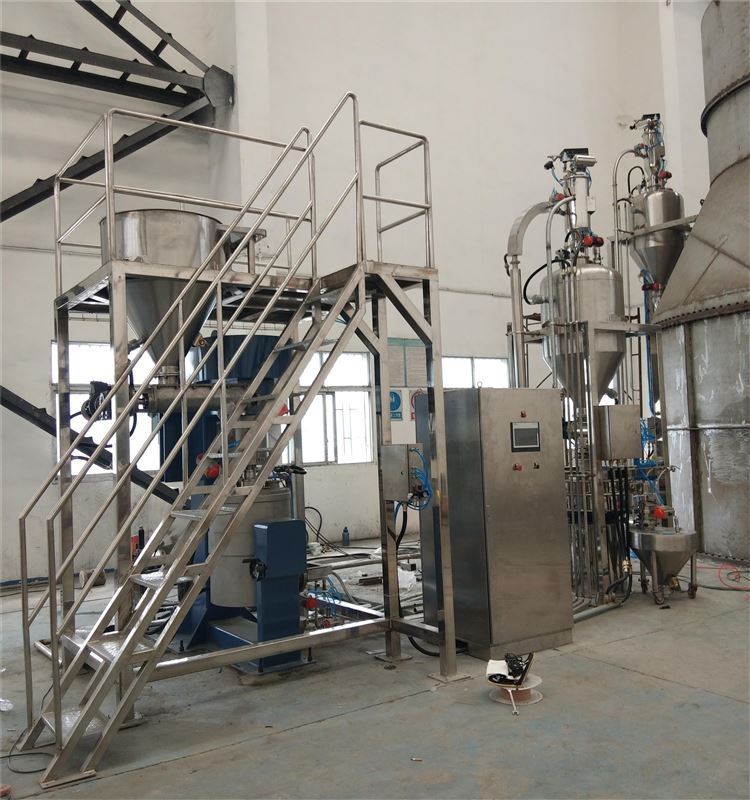
3、 Troubleshooting and Emergency Response of Powder Conveyor Malfunctions: A Quick Response "First Aid Plan"
Common fault diagnosis
Mechanical failures: such as screw jamming (possibly due to blockage by large pieces of material), belt breakage (possibly due to overload or aging), chain tooth skipping (possibly due to insufficient tension).
Pneumatic faults: such as fluctuations in conveying pressure (possibly due to unstable gas sources or pipeline leaks), blockage of dust collectors (possibly due to damaged filter bags or dust cleaning system failures).
Electrical faults: such as motor overload tripping, sensor failure, and control program errors.
Emergency response measures
Immediately stop the machine and cut off the power supply, investigate the cause of the malfunction (such as clearing blockages, adjusting tension, replacing damaged parts); For pneumatic conveying systems, it is necessary to confirm whether the pipeline is blocked or leaking, and if necessary, activate the backup gas source.
4、 Preventive maintenance and intelligent upgrade: forward-looking 'health management'
predictive maintenance
Using vibration sensors to monitor the vibration spectrum of bearings/gears and predicting wear trends through AI algorithms; Using oil analysis to monitor the degree of lubricant contamination and provide early warning of potential faults.
System optimization and upgrade
Update old equipment to low-energy and high-efficiency models (such as variable frequency drive screw conveyors and intelligent pneumatic conveying systems); Integrate IoT sensors to achieve remote monitoring and automatic alarm (such as temperature, pressure, vibration exceeding limits).
Upgrade explosion-proof motors, nitrogen inerting devices, and dust concentration monitors for special materials such as flammable, explosive, and toxic materials to ensure compliance with safety regulations.
5、 Safety and environmental protection: an essential 'bottom line thinking' that cannot be ignored
Safety operation standards
Before maintenance, it is necessary to cut off power, hang out tags, lock, and wear personal protective equipment (such as dust masks, goggles, anti-static clothing); High altitude operations require the use of safety belts, and single person operation of hazardous equipment is strictly prohibited.
When handling flammable materials, explosion-proof tools should be used to avoid static sparks; The pneumatic conveying system requires regular testing of the reliability of explosion-proof valves and explosion-proof discs.
Environmental compliance
Ensure that the emission concentration of the dust removal system meets standards such as GB16297 (e.g. ≤ 1mg/m ³); The collected dust needs to be properly handled (such as recycling and harmless disposal) to avoid secondary pollution.