-
E-mail
li.fu@perkinelmer.com
- Phone
-
Address
1670 Zhangheng Road, Pudong New Area
PerkinElmer Enterprise Management (Shanghai) Co., Ltd
Analysis of the specific workflow of gas chromatography
Date: 2025-12-17Read: 6
Gas chromatograph is an analytical instrument that utilizes the differential distribution behavior of samples in a gas carrier gas stream to achieve separation. The core idea is that under given conditions of a fixed phase (usually a liquid or solid material coated on the inner wall of a packed column) and a carrier gas (inert gases such as nitrogen, helium, or nitrogen), the components in the sample are distributed between the "gas phase fixed phase" phases with different distribution coefficients, so as to be carried out in the separation column with different retention times, and the peaks are qualitatively and quantitatively analyzed by combining a detector. The advantages of gas chromatography are high separation efficiency, good sensitivity, relatively low operating costs, and wide applicability, especially in analyzing volatile organic compounds.
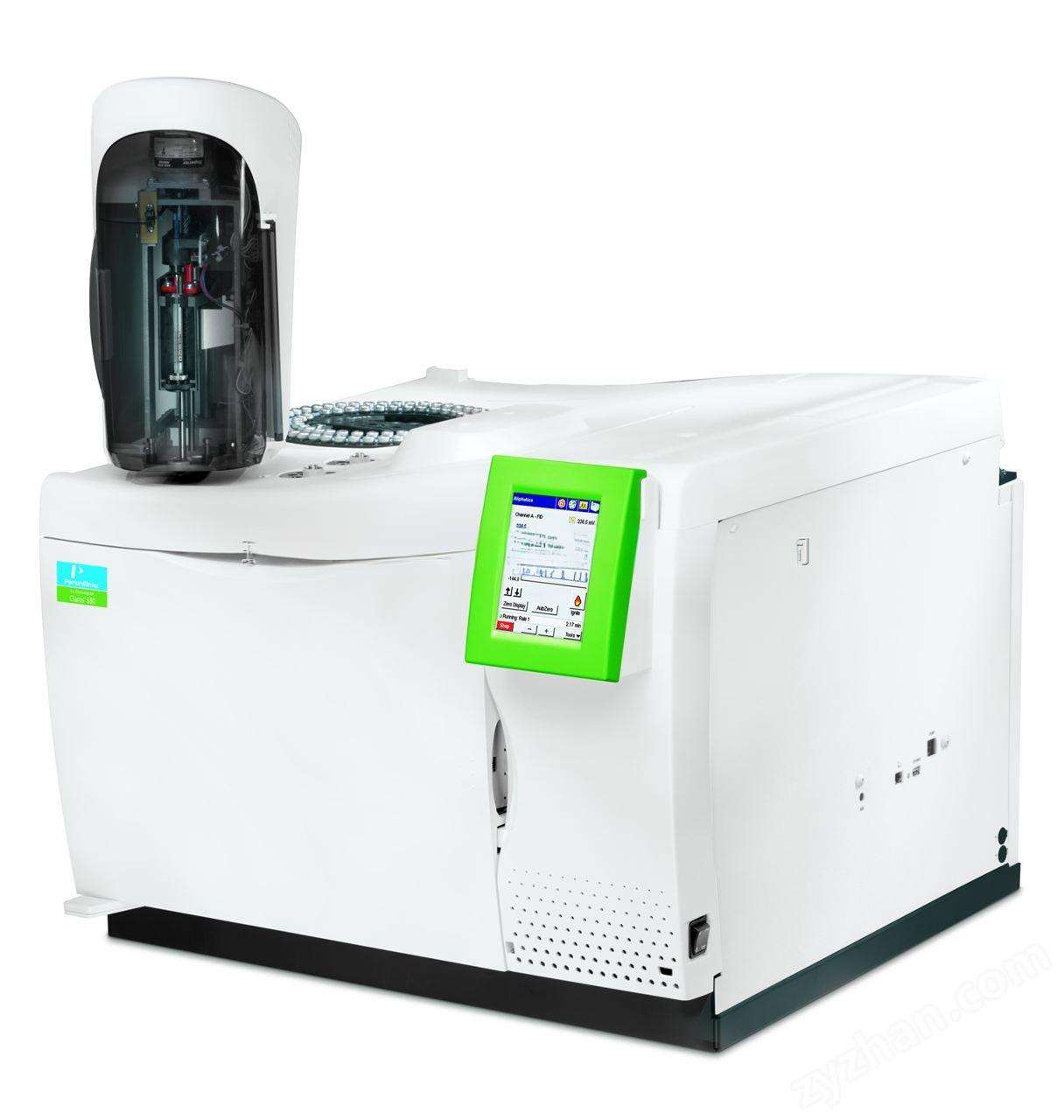
gas chromatographCommon workflow:
1. Sample preparation
-For volatile organic compounds, methods such as solid-phase microextraction (SPME), liquid-liquid extraction, and gas-solid phase extraction are often required for extraction and concentration to reduce matrix interference.
-Pay attention to the stability, degradation risk, and amplification effect of the sample to avoid peak distortion.
2. Method development
-Select the column, stationary phase and model (such as polar/non-polar stationary phase), carrier gas flow rate, column temperature, injection method, detector, etc.
-Evaluate the performance of the method by the retention time and separation degree (theoretical plate number, separation factor) of standard substances.
-Optimize parameters to achieve good separation (baseline separation), peak symmetry, and linear response.
3. Data collection and analysis
-Qualitative/quantitative analysis will be conducted using peak identification, retention time comparison, internal or external standard methods.
-Quantification usually uses external or internal standard methods, and internal standard methods can effectively correct factors such as injection volume fluctuations and instrument drift.
Application areas of gas chromatography:
1. Environmental analysis: Monitoring of volatile organic pollutants (VOCs) in water, soil, and air, such as toluene, benzene, xylene, benzo [a] pyrene, etc.
2. Food and spices: Qualitative and quantitative analysis of volatile aroma compounds, evaluation of flavor and quality control.
3. Drug analysis: Separation and detection of volatile drug components and their metabolites, quality control of pharmacies and drug production lines.
4. Petrochemical industry: Separation and analysis of light hydrocarbons and aromatic compounds, characterization of distillate composition.
5. Forensic and clinical research: detection of various volatile organic compounds for breath analysis or metabolite analysis, etc.