-
E-mail
shenbiaobiao@zryq.cn
-
Phone
19589992149
-
Address
No. 11 Yuehe Road, Chengyang District, Qingdao City, Shandong Province
Qingdao Zhongrui Intelligent Instrument Co., Ltd
The condensable particulate matter CPM that cannot be ignored in exhaust emissions!
Date: 2025-09-08Read: 3

What are condensable particles? What is the difference between it and the particulate matter captured by conventional filter membranes/cartridges? How was it generated? Why is it highly valued in ultra-low emission monitoring of exhaust gas? What harm will it cause? How should we monitor it? I believe this is a question that many readers have when they first come into contact with CPM. The particulate matter emitted from fixed sources not only includes filterable particulate matter that exists directly in liquid or solid form in flue gas, but also includes condensable particulate matter that is gaseous at flue gas temperature and condenses into solid or liquid particles in a short period of time after being discharged from the flue into the atmospheric environment. Below, the editor will unveil the mysterious veil of CPM for everyone.
►What are condensable particles?
Condensible Particulate Matter (CPM): Solid or liquid particulate matter that is typically in the form of a gaseous substance in a high-temperature flue gas environment and is discharged into the atmosphere through cooling, dilution, and short-term condensation or reaction.
►What is the difference between it and the particulate matter captured by conventional filter membranes/cartridges?
According to GB/T 16157 and HJ 836, particulate matter captured is referred to as filterable particulate matter (FPM), which refers to liquid droplets or solid particles that can be directly intercepted by filter cartridges or membranes in the flue. thenTotal particulate matterTotal particulate matter (TPM) is the total amount of particulate matter emitted from flue gas,Composed of two parts: condensable particles and filterable particles.
►How was it generated?
1. Chemical composition and reactions:
The main inorganic components in CPM includeWater soluble anions (such as SO4 ² ⁻) and metal elements (such as Na ⁺, K ⁺)These components are generated through chemical reactions in the flue gas. For example, SO3 and H ₂ SO2 condense into particulate matter after cooling and dilution. In addition, NH ₄⁺ and organic components such as polycyclic aromatic hydrocarbons (PAHs) and n-alkanes are also important components of CPM.
2. Physical processes:
CPM exists in a gaseous state in the flue, and after being discharged into the atmosphere, the gaseous substance condenses into liquid or solid particulate matter due to temperature reduction and dilution. This process is influenced by factors such as temperature, cooling amplitude, and humidity during flue gas emissions, which promote the generation of water-soluble ions (such as sulfate ions and nitrate ions).
►Why is it highly valued in ultra-low emission monitoring of exhaust gas?
1. Investigation and remediation of inefficient and ineffective air pollution control facilities:
On November 22, 2023, the General Office of the Ministry of Ecology and Environment releasedWork Plan for Investigation and Remediation of Inefficient and Inefficient Air Pollution Control FacilitiesDraft for soliciting opinions; On September 9, 2024, the Department of Ecology and Environment of Henan Province issuedImplementation Plan for Investigation and Remediation of Inefficient and Inefficient Air Pollution Control Facilities in Henan ProvinceBoth documents mention the existence ofColored smoke plumes, smoke tails, "chimney rain"If necessary, inspect the chimney, treatment facilities, and by-product treatment and preparation system for desulfurization facilities and sulfuric acid mistConcentration of condensable particulate matter (CPM).
2. Ultra low emission assessment and monitoring:
On June 2, 2024, the General Office of the Ministry of Ecology and Environment released the "Technical Guidelines for Ultra low Emission Assessment and Monitoring of Cement Enterprises", which mentioned that for denitrification processes using oxidation principles, supporting absorption devices should be used. In addition to monitoring particulate matter, condensable particulate matter (CPM) should also be monitored; The sum of the mass concentration of particulate matter and CPM shall not exceed 10mg/m3.
►What harm will it cause?
1.Formation of haze:
CPM is the core substance that forms PM2.5 aerosols, characterized by small particle size (sub micron level), strong extinction, large particle size (difficult to settle), and the ability to absorb moisture and amplify, directly leading to haze.
2.Affects human health:
Condensed particles can enter the human body through the respiratory tract. Due to their small particle size and large specific surface area, they are more likely to penetrate the lungs and even enter the circulatory system. Some chemical substances in condensable particulate matter, such as heavy metals, organic pollutants, etc., are toxic and can cause damage to the human nervous system, immune system, etc., affecting physical health and normal physiological functions.
3.Corrosion equipment and facilities:
In some industrial production processes, such as the treatment of smoke emissions, condensable particulate matter may cause corrosion to equipment and pipelines. For example, in wet ammonia desulfurization, condensable particles generated outside the desulfurization tower can cause severe corrosion of the tower body; The condensable particles in the smoke emitted from cement chimneys can corrode the inner wall of the chimney. This type of corrosion not only affects the normal operation of equipment and shortens its service life, but may also lead to problems such as equipment leakage and damage, increasing maintenance costs and production risks for enterprises.
4.Interference monitoring data:
Condensed particulate matter can interfere with environmental monitoring equipment, affecting the accuracy and reliability of monitoring data. For example, in cold dry CEMS, condensable particles can cause discoloration and blockage of the secondary filter element, affecting the sampling flow rate; Electrochemical reactions occur outside the measuring probe, interfering with the measurement data. These issues will pose difficulties for air pollution control work, making it difficult to accurately assess environmental quality and pollution control effectiveness.
►How should we monitor it?
1. Three main monitoring methods for fixed source CPM
=

Summary: Comparing condensation method and dilution method, whereThe condensation method can achieve the separation and capture of FPM and CPMAnd it has a certain portability compared to the dilution method, but SO2 will dissolve and form sulfate ions, which will have a positive deviation on the test results.The advantage of indirect condensation method is that it can truly reflect the formation process of gas-phase CPM after entering the atmosphereHowever, it is impossible to separate and capture FPM and CPM, and the instrument is bulky and cumbersome.
2. Domestic and international monitoring standards:
2.1《METHOD 202—DRY IMPINGER METHOD FOR DETERMINING CONDENSABLE PARTICULATE EMISSIONS FROM STATIONARY SOURCES》The United States Environmental Protection Agency;
2.2Guidelines for the determination of condensable particulate matter in fixed source exhaust gases using dry impact condensation method (provisional)Department of Ecology and Environment of Guangdong Province;
2.3DL/T 2091-2020 Test method for condensable particulate matter in flue gas of coal-fired power plants - Dry impact bottle methodNational Energy Administration;
2.4T/CIECCPA 048-2023 Test method for condensable particulate matter in flue gas of coal-fired power plants - Impact methodChina Industrial Energy Conservation and Clean Production Association.
3. Detailed explanation of the sampling principle of the "dry impact condensation method" released by the Guangdong Provincial Department of Ecology and Environment
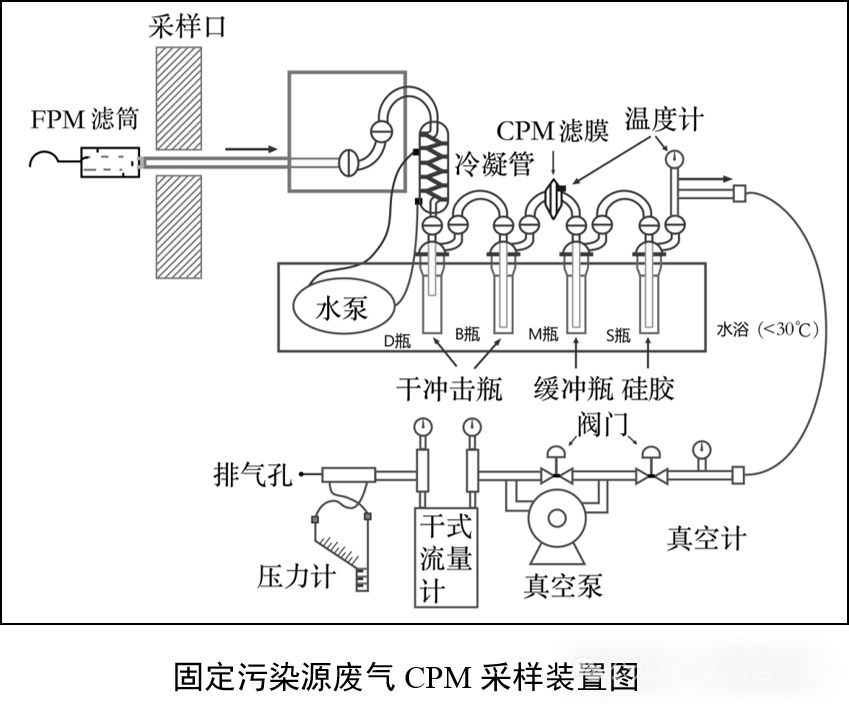
Dry impact bottles and filtration devices are used to test condensable particles in flue gas. The principle is to combine a condensable particle sample collection device with a filterable particle testing method. After the filterable particles in the flue gas are removed, the condensable particles are condensed in the sample collection device and collected by an impact bottle and a post filter membrane. After sample collection, the impact bottle and filter membrane are immediately purged with nitrogen to remove dissolved sulfur dioxide and other gases. Then, they are washed and extracted separately with deionized water, acetone, and hexane to separate into organic and inorganic components, which are then concentrated, evaporated, dried, and weighed. Calculate the organic and inorganic components and total mass concentration of condensable particulate matter based on their mass and sampling volume.
=
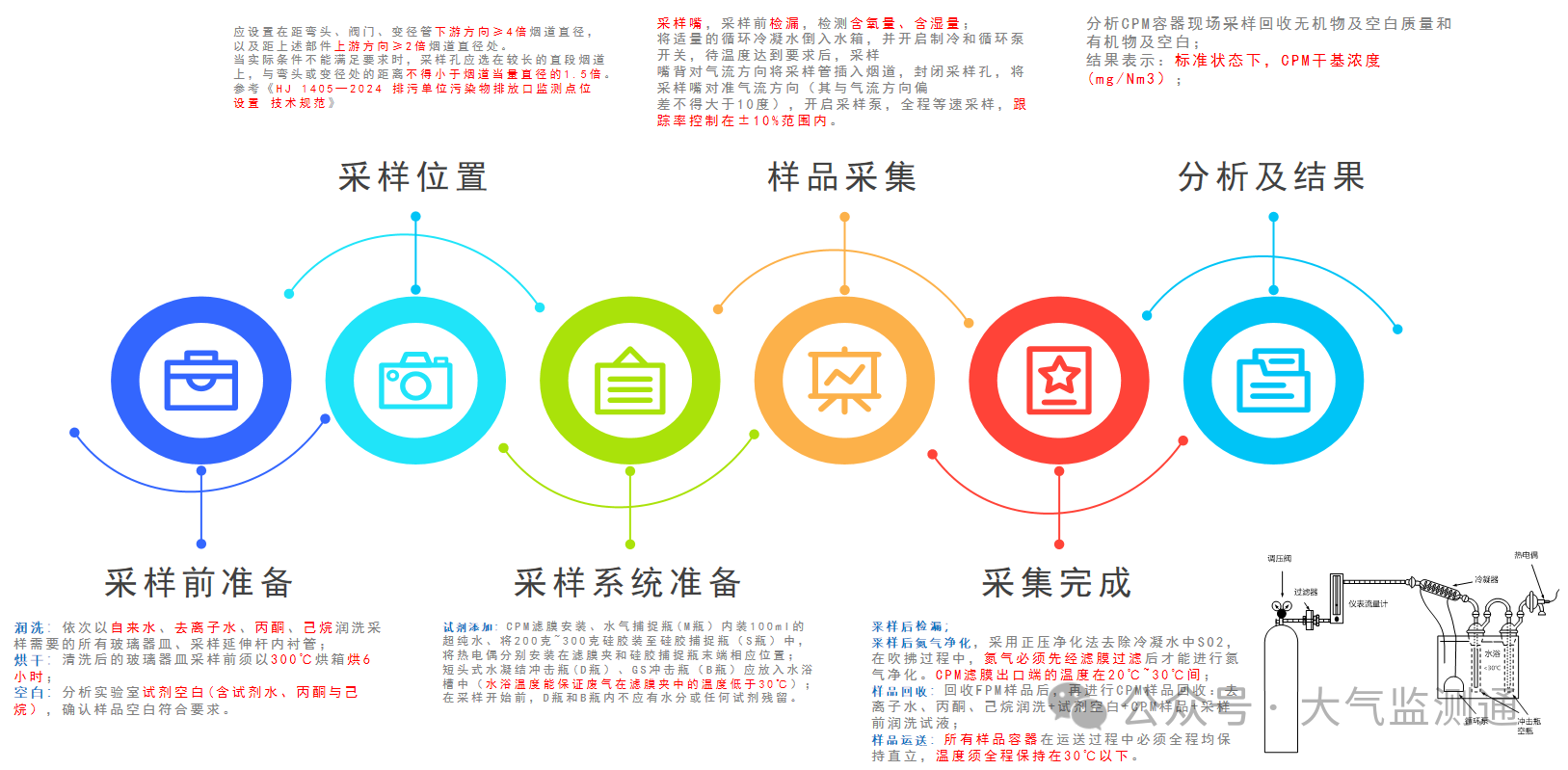
4. Application cases of related monitoring products
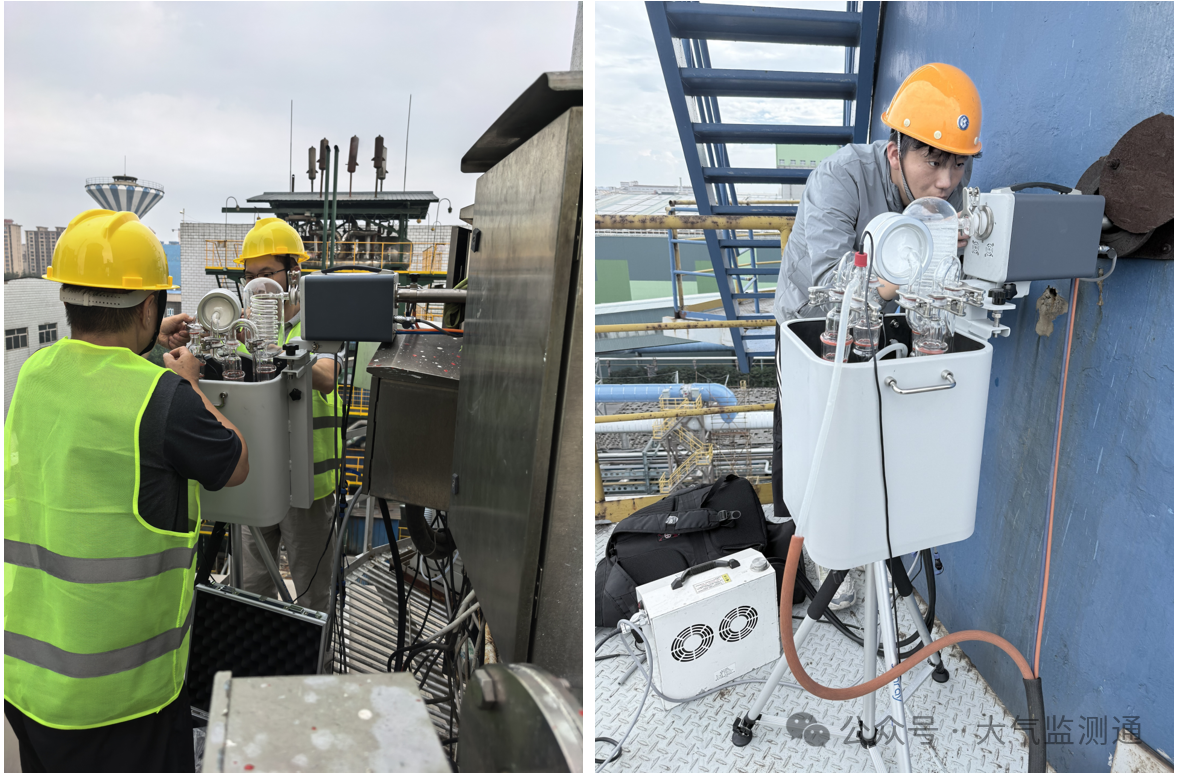
Source: Qingdao Zhongrui, ZR-D35 exhaust gas condensable particulate matter sampling tube and supporting device
The above is an introduction to condensable particulate matter (CPM). By detecting the emission concentration, composition, and particle size distribution of CPM, the main pollution sources and high emission links can be identified, achieving precise supervision and treatment of key pollution sources; Conducting monitoring of condensable particulate matter plays an important role in improving the precision and scientific level of air pollution prevention and control, and enhancing air quality!
Next Article: Calibration process of aerosol photometer equipment