-
E-mail
512032841@qq.com
-
Phone
15666889209
-
Address
Oulong Technology Park
Shandong Boke Instrument Co., Ltd
Pipeline water quality monitoring equipment ensures continuous and effective monitoring with high stability
Date: 2025-12-15Read: 7
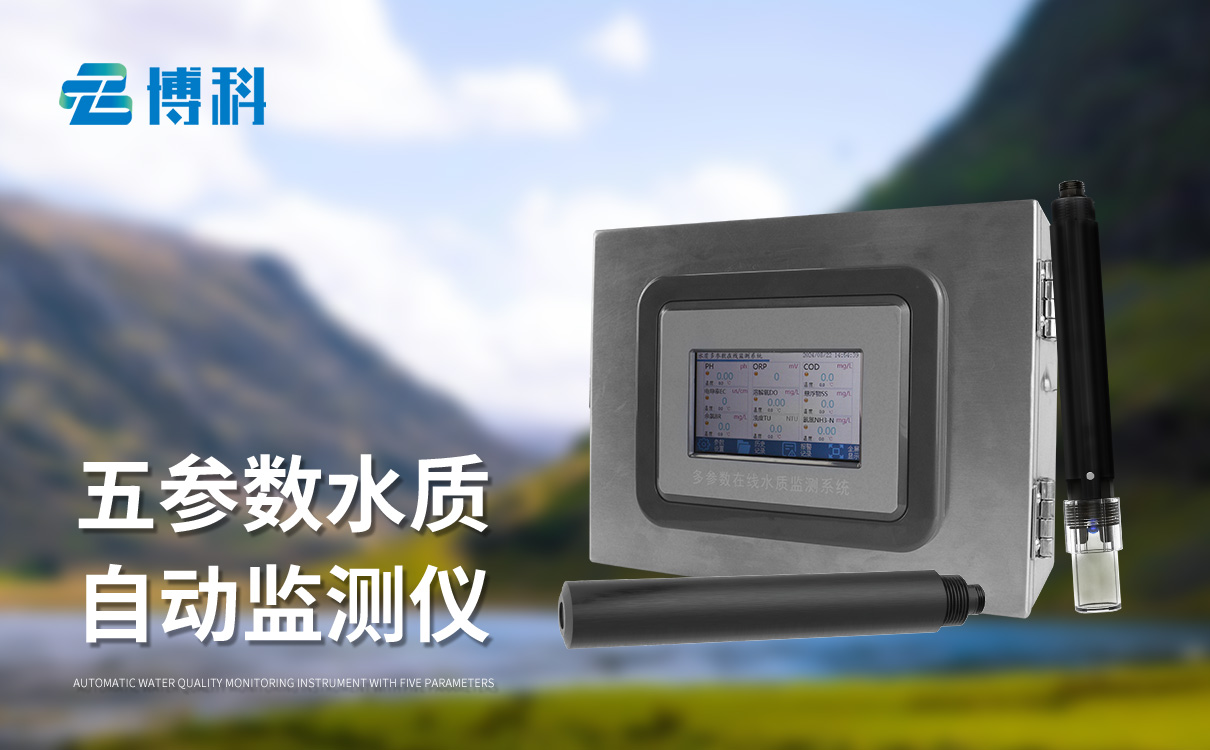
The water quality monitoring equipment for the pipeline network ensures continuous and effective monitoring with high stability. BK-ZS05 Shandong Boko Instrument Manufacturer is continuously updating. The urban water supply pipeline network is like the blood vessels of the human body, delivering clean water sources to thousands of households. However, issues such as aging of the pipeline network, secondary pollution, and sudden leaks constantly threaten water quality safety. As the "nerve endings" that safeguard water supply safety, the pipeline water quality monitoring equipment, with its high stability design, achieves long-term, continuous, and accurate monitoring of pipeline water quality, providing a solid guarantee for water supply safety and becoming a core tool for modern urban water management.
High stability design: the 'hard power' to cope with complex pipeline environments
The water supply network environment is complex, and factors such as water flow pressure fluctuations, temperature changes, chemical corrosion, and biofilm adhesion may all affect the stability of monitoring equipment. The high stability pipeline water quality monitoring equipment ensures continuous and effective operation under harsh conditions through multiple technological optimizations
Anti interference sensor technology: using corrosion-resistant electrodes (such as titanium alloy electrodes) and anti pollution film materials to reduce the adhesion of substances such as chlorine, iron, and manganese to the sensor and avoid data drift. For example, pH sensors use special coatings to isolate water flow impacts, extending their service life to over 3 years.
Intelligent pressure compensation algorithm: In response to pressure fluctuations in the pipeline network (such as peak water usage periods), the equipment is equipped with built-in pressure sensors and compensation models to automatically correct data errors and ensure the accuracy of parameters such as dissolved oxygen and turbidity.
Self cleaning and anti clogging structure: In response to the problem of suspended solids and sediment accumulation in the pipeline network, the equipment is designed with backwashing devices or rotating probes to regularly and automatically remove attached substances, avoiding monitoring interruptions caused by clogging.
Wide temperature range working ability: Through the constant temperature control module and low-temperature resistant battery, the equipment can operate stably in an environment of -20 ℃ to 60 ℃, adapting to the monitoring needs of cold northern regions or industrial high-temperature pipelines.
Continuous monitoring: building an all-weather defense line for water supply safety
Traditional manual sampling and detection have long cycles and limited coverage, making it difficult to capture instantaneous changes in water quality in pipeline networks. High stability pipeline water quality monitoring equipment achieves full coverage of "point line surface" through 24-hour continuous monitoring:
Multi point control: Deploy equipment at key nodes of the pipeline network (such as water source entrances, pump stations, and community entrances) to track water quality changes in real-time. For example, a city successfully located a hidden leak point by installing 50 devices in the main pipeline network, avoiding large-scale water pollution.
Abnormal warning: When parameters such as residual chlorine and turbidity suddenly decrease or heavy metal concentration exceeds the standard, the equipment immediately triggers multi-level alarms (SMS, APP, platform pop-up), notifying operation and maintenance personnel to respond quickly. A certain water company once discovered industrial wastewater mixed into the pipeline network in a timely manner due to equipment warning, avoiding major public health incidents.
Data traceability: Long term stored historical data can be combined with GIS maps to analyze the correlation between water quality changes, pipeline network renovation, and peak water use, providing a basis for optimizing water supply scheduling.
Low maintenance cost: improving the "economy" of water management
The high stability design significantly reduces the equipment failure rate and maintenance frequency. For example, when a certain water company uses traditional equipment, the average annual maintenance frequency reaches 12 times per unit, but after switching to high stability equipment, the maintenance frequency drops to 2 times per unit, saving over 5000 yuan in annual operation and maintenance costs for a single device. In addition, the device supports remote diagnosis and firmware upgrades, and operation and maintenance personnel can complete parameter calibration and function updates without the need to be on-site, further improving management efficiency.
Multiple application scenarios: from urban water supply to full coverage of industrial pipeline networks
High stability pipeline water quality monitoring equipment has been widely used in urban water supply, industrial circulating water, rural drinking water safety and other fields. In industrial scenarios, equipment can monitor the corrosion rate and microbial content of cooling water to prevent equipment scaling and corrosion; In rural pipeline networks, equipment is powered by solar energy and designed with low power consumption to solve the problem of power supply in remote areas and ensure safe drinking water.
The pipeline water quality monitoring equipment, with "high stability" as its core, has achieved "full time domain, full process, and full scenario" protection of water supply safety through technological innovation and scene adaptation. In the future, with the deep integration of IoT and AI technology, devices will further become intelligent, providing stronger support for building a safe, efficient, and sustainable modern water supply system.