-
E-mail
512032841@qq.com
-
Phone
15666889209
-
Address
Oulong Technology Park
Shandong Boke Instrument Co., Ltd
Multi parameter water quality detection system: precise detection, providing solid basis for water quality assessment
Date: 2025-12-15Read: 5
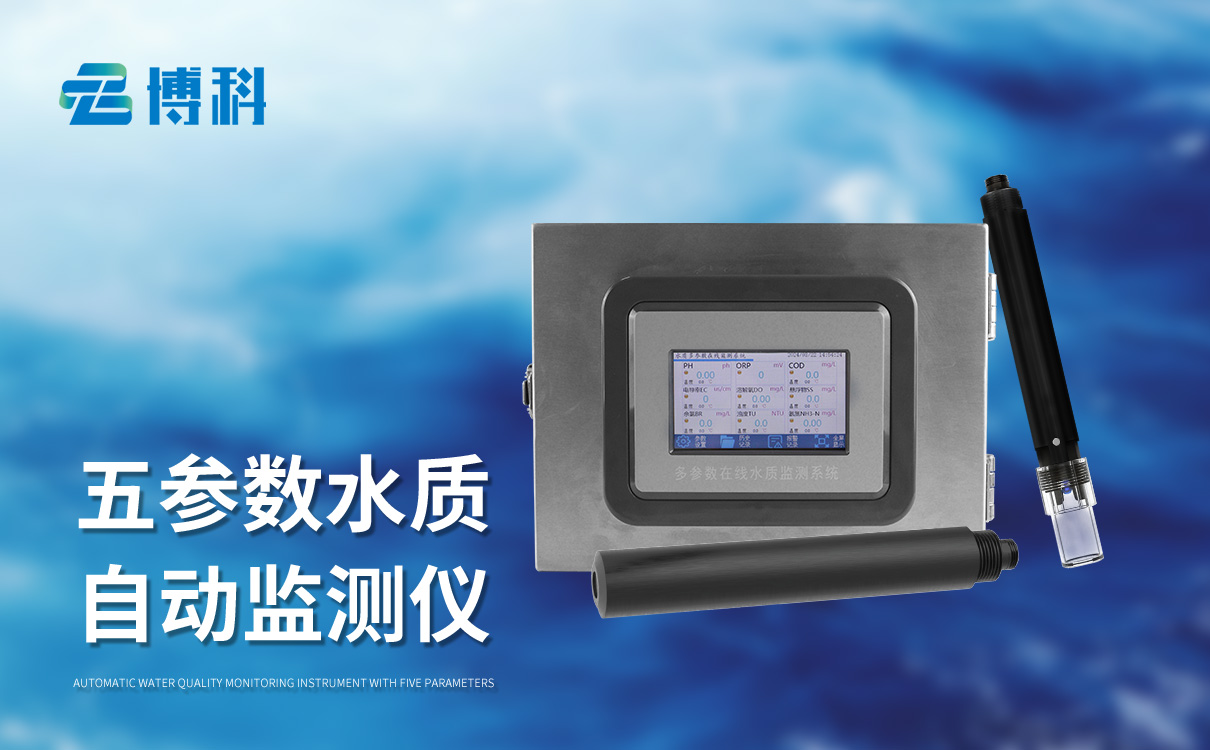
Multi parameter water quality detection system: precise detection, providing solid basis for water quality assessment. BK-ZS05 Shandong Boke Instrument Manufacturer is continuously updating. Water is the source of life, and its quality is directly related to ecological balance, human health, and economic development. From drinking water safety to industrial water compliance, from surface water protection to groundwater monitoring, comprehensive and accurate water quality assessment is the foundation of scientific decision-making. The multi parameter water quality detection system, with its integrated and intelligent design, can synchronously analyze multiple key indicators and provide multidimensional and highly reliable data support for water quality assessment, becoming a tool in environmental monitoring, water management, and scientific research fields.
Multi parameter synchronous detection: constructing a "panoramic view" of water quality
Traditional water quality testing often relies on single parameter analysis, which makes it difficult to comprehensively reflect the overall condition of the water body. For example, judging water quality solely based on turbidity may overlook the risk of chemical pollution, while monitoring pH alone cannot assess organic matter content. The multi parameter water quality detection system integrates core sensors such as conductivity, pH value, dissolved oxygen, turbidity, permanganate index, ammonia nitrogen, heavy metals (such as lead, mercury, cadmium), total phosphorus, and total nitrogen to simultaneously obtain physical, chemical, and biological indicators of the water body, forming a "water quality fingerprint". For example, in the monitoring of eutrophication in lakes, the system accurately locates the risk areas of algal blooms through the joint analysis of total phosphorus, total nitrogen, and chlorophyll-a; In the monitoring of industrial wastewater discharge, real-time detection of heavy metals and COD (chemical oxygen demand) can quickly identify sources of excessive pollution, providing a basis for the Z-method.
High precision and anti-interference: ensuring the authenticity and reliability of data
The accuracy of water quality testing is significantly affected by environmental factors such as temperature, pressure, and water flow rate, as well as sample characteristics such as color and suspended solids. Multi parameter systems improve data reliability through technological optimization:
Intelligent calibration technology: using automatic temperature compensation and standard solution calibration functions to eliminate environmental interference. For example, pH sensors are automatically calibrated before each detection to ensure that the reading error is less than ± 0.02 pH units.
Anti pollution sensor design: For high turbidity or corrosive water bodies, the sensor surface is covered with a protective coating (such as polytetrafluoroethylene) to reduce impurity adhesion. For example, the conductivity probe adopts a four electrode structure to avoid electrode polarization and extend its service life to more than 3 years.
Data filtering algorithm: By using algorithms such as moving average and median filtering to remove outliers, data stability is improved. The actual application of a certain water group shows that the system can still maintain over 98% data efficiency in complex pipeline environments.
Intelligence and Convenience: Adapting to Multiple Application Scenarios
The multi parameter water quality detection system meets the detection needs of different scenarios through modular design and IoT technology:
Portable device: suitable for emergency monitoring in the field (such as sudden pollution incidents, river section inspections), the device is lightweight, easy to operate, and can complete multiple parameter tests within 10 minutes.
Online monitoring station: deployed at fixed locations such as water sources and sewage treatment plants, achieving 24-hour continuous monitoring, with real-time data uploaded to the cloud platform, supporting remote monitoring and early warning.
Laboratory grade analyzer: equipped with high-precision sensors and automatic sampling system, suitable for deep analysis of trace pollutants in scientific research institutions, with a detection limit of up to ppb (parts per billion) level.
Data driven decision-making: empowering water quality assessment and governance
The multi-dimensional data generated by the system is not only used for real-time warning, but also reveals the patterns of water quality changes through big data analysis. For example, by combining historical data with meteorological information, predicting the timing of algae outbreaks and taking algae control measures in advance; By monitoring data from multiple points in the pipeline network, locate leakage points or contaminated areas, and optimize water supply scheduling. After applying a multi parameter system in a certain city, the compliance rate of drinking water has increased to 99.5%, and the cost of sewage treatment has been reduced by 20%.
The multi parameter water quality detection system has the core advantages of "precision, comprehensiveness, and intelligence", providing an upgraded tool for water quality assessment from "single point judgment" to "system analysis". In the future, with the further integration of AI algorithms and microsensors, the system will be more deeply integrated into the smart water management system, contributing greater strength to safeguarding water resource security and promoting sustainable development.