-
E-mail
18660167086@163.com
-
Phone
18660167086
-
Address
South section of No. 3 Road, East Industrial New City, Pingyin County, Jinan City, Shandong Province, south of Dongcheng Street
Shandong Qinglei Environmental Technology Co., Ltd
After sales service of reactor cooling tube heat exchanger
Date: 2025-12-24Read: 69
As a core equipment in industries such as chemical, pharmaceutical, and power, the reactor cooling tube heat exchanger ensures precise control of reaction temperature through efficient heat exchange, directly affecting product quality and production efficiency. However, equipment is prone to scaling, corrosion, leakage and other problems during long-term operation, and a sound after-sales service system has become the key to ensuring stable operation of the equipment. This article will analyze how reactor cooling tube heat exchangers can achieve "worry free after-sales service" from four aspects: technical principles, structural innovation, after-sales support system, and future trends.
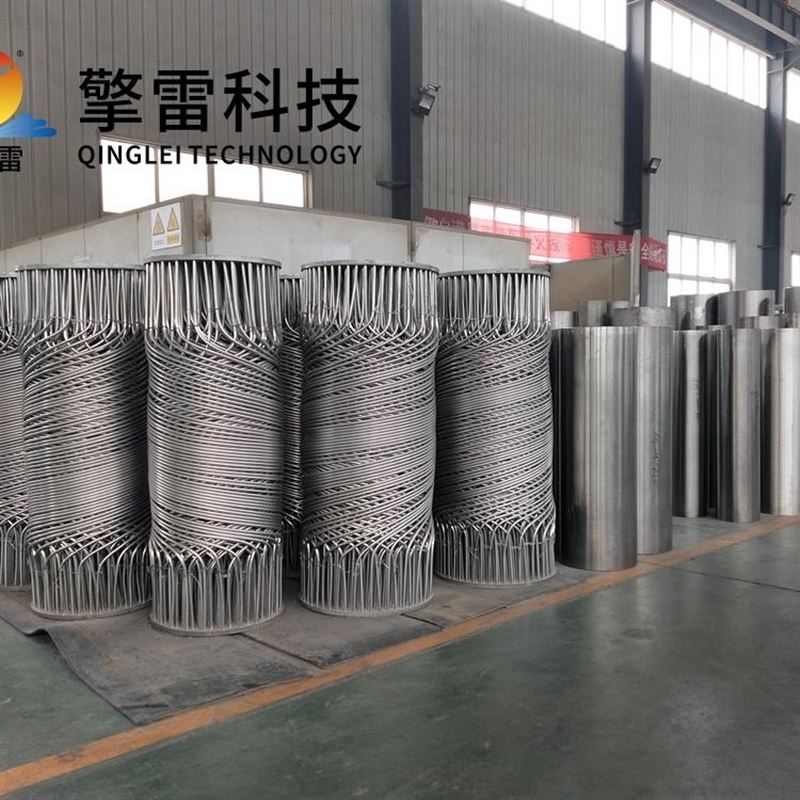
1、 Technical principle: Scientific logic and efficient implementation of heat transfer
The reactor cooling tube heat exchanger isolates the medium through the "tube wall" to achieve heat transfer between high-temperature materials and cooling medium. The core process is divided into three stages:
Heat absorption: The high-temperature reaction liquid enters the "hot side channel" of the heat exchanger driven by the pump body, comes into contact with the channel wall, and the heat is transferred to the wall through thermal conduction. For example, in the process of synthesizing ammonia, the 350 ℃ high-temperature gas at the reactor outlet transfers heat to the cold side through the pipe wall.
Tube wall thermal conductivity: The heat exchanger wall is made of high thermal conductivity materials (such as stainless steel, titanium alloy, silicon carbide, etc.) to quickly transfer heat to the "cold side flow channel". The cooling medium flows on the cold side and absorbs heat through thermal convection.
Heat release: The heated cooling medium flows out of the heat exchanger and enters the cooling tower or refrigeration unit to cool down, forming a cycle; After the temperature of the reaction solution drops to the process requirements, it returns to the reaction system. For example, in the IGCC gasifier system, the equipment successfully processes high-temperature and high-pressure synthesis gas at 12MPa/650 ℃, saving 100000 tons of standard coal annually.
By optimizing the fluid path and material selection, the heat transfer coefficient of the tubular heat exchanger can reach 1500-3500 W/(m ² · K), which is 10% -15% higher than that of the plate heat exchanger. It is suitable for high flow and high temperature difference scenarios.
2、 Structural Innovation: Technological Breakthrough in Modularization and Intelligence
The reactor cooling tube heat exchanger has achieved a performance leap through structural optimization and material upgrading:
Improved heat transfer efficiency:
Spiral channel design: enhances fluid turbulence, reduces boundary layer thickness, and achieves a heat transfer coefficient of 12000-14000 W/(m ² ·℃), which is 2-4 times higher than traditional straight pipe design.
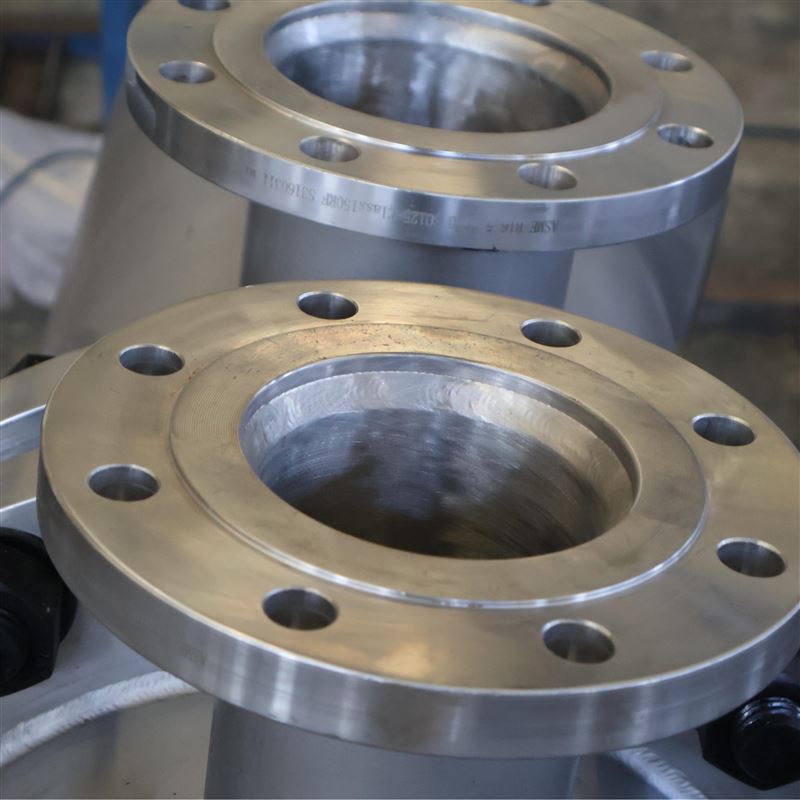
Spiral flat tube and corrugated tube: The heat transfer coefficient reaches 5000-10000 W/(m ² ·℃), which is 40% -60% higher than traditional light tubes.
3D printing channel: The specific surface area has been increased to 800 ㎡/m ³, enhancing heat transfer efficiency.
Anti vibration and corrosion-resistant design:
Anti vibration structure: Strong operational stability, suitable for high temperature and high pressure working conditions. For example, in an ethylene cracking unit, a two-way tube condenser reduces the cooling temperature of the cracking gas to 40 ℃, which is 15 ℃ higher than traditional equipment and increases the annual production of ethylene by 20000 tons.
Corrosion resistant materials: The tube bundle is made of highly corrosion-resistant and long-lasting materials such as 316L stainless steel, titanium alloy, or nickel based alloy, which can withstand high temperature and high pressure conditions. For example, titanium alloy tubes are resistant to chloride ion corrosion, suitable for seawater desalination and hydrometallurgy, with a service life of over 20 years.
Intelligent monitoring and maintenance:
IoT sensors: Real time monitoring of fluid temperature, pressure, and tube bundle vibration frequency, providing 48 hour advance warning of scaling or corrosion risks.
Digital twin technology: Build a 3D model of the equipment, integrate temperature and flow field data, and achieve remaining life prediction and cleaning cycle optimization. For example, a petrochemical company optimized its flow channel design through digital twin technology, which increased the accuracy of fault prediction to 85% and reduced unplanned downtime by 60%.
3、 After sales guarantee system: Full lifecycle service eliminates customers' worries
The after-sales guarantee system for reactor cooling tube heat exchangers covers the entire process of design, installation, maintenance, and upgrade, achieving "worry free after-sales" through three core services:
Intelligent monitoring and predictive maintenance:
The device integrates IoT sensors and combines AI algorithms to analyze operational data, identifying potential risks such as scaling and leaks in advance. For example, a vaccine production company has built a virtual device model using digital twin technology, achieving a remaining life prediction error of<8%, a fault warning accuracy rate of>98%, and a 60% reduction in unplanned downtime.
Modular maintenance and rapid response:
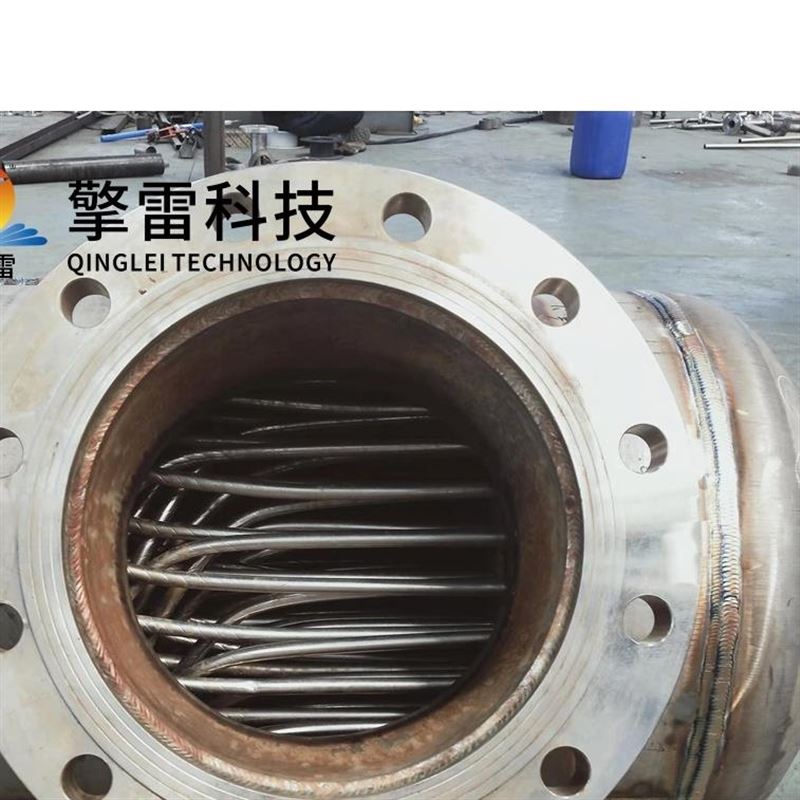
Adopting modular structures such as detachable tube bundles and flange connection heads, it supports independent replacement of single tube bundles or tube boxes, reducing cleaning time to 1/4 of traditional equipment. For example, a certain antibiotic synthesis project adopts a floating head design, which only requires loosening the flange to extract the tube bundle for high-pressure water jet cleaning, increasing maintenance efficiency by 70% and reducing annual operation and maintenance costs by 40%.
Full process compliance support:
Provide full process documentation support from material certification, welding inspection reports to GMP validation to ensure equipment complies with international standards such as FDA and ASME BPE. For example, a certain traditional Chinese medicine factory uses multi stream plate heat exchangers to achieve cascade utilization of steam condensate and low-temperature process water, increasing the heat recovery rate to 92% and saving 800 tons of standard coal annually. At the same time, it has passed HACCP certification, and the product qualification rate has been increased to 99.9%.
4、 Future Trends: Intelligent and Green Sustainable Development
With the advancement of the "dual carbon" target, reactor cooling tube heat exchangers will develop in the following directions:
AIoT technology fusion: identify 0.01mL/s level micro leakage through convolutional neural network (CNN), and realize millisecond level parameter adjustment combined with 5G+edge computing, reducing unplanned downtime by 60%.
Digital twin and CFD simulation: design cycle shortened by 50%, remaining life prediction error<8%, comprehensive energy efficiency improved by 12% -15% after optimizing operating parameters.
Natural cooling medium: Developing CO ₂ working fluid to replace Freon and reduce greenhouse gas emissions; Integrated heat pump technology improves the overall energy efficiency of the system by 50% -70%.
Material closed-loop utilization: Establish a silicon carbide waste recycling system, reducing carbon emissions from a single device by 30%; Biobased composite materials achieve a recovery rate of ≥ 95% for equipment.
3D printing customization: Customize irregular tubes or tube sheets for complex materials, temperature and pressure conditions to enhance equipment adaptability.
Innovation in leasing mode: Modular leasing reduces initial investment for enterprises and shortens the investment payback period to 1.5 years.
Next Article: Distillation reactor