-
E-mail
18660167086@163.com
-
Phone
18660167086
-
Address
South section of No. 3 Road, East Industrial New City, Pingyin County, Jinan City, Shandong Province, south of Dongcheng Street
Shandong Qinglei Environmental Technology Co., Ltd
After sales worry free tilting enamel reaction kettle
Date: 2025-12-25Read: 46
Tilting enamel reactor: a chemical tool that combines flexible operation and corrosion resistance
1、 Core function: Combination of flexible operation and efficient response
The tilting enamel reaction vessel integrates the corrosion resistance of enamel material with the tilting function of the reaction vessel through a unique design, making it an ideal choice for industries such as chemical, pharmaceutical, and food. Its core functions include:
Flexible discharge and cleaning
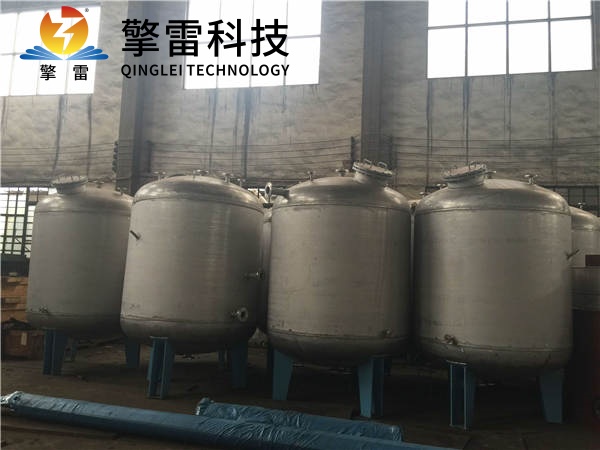
The reactor body can be tilted to a certain angle (usually 0-90 °) to allow the material to be naturally discharged under gravity, avoiding residue, especially suitable for materials with high viscosity or high solid content. For example, in the food industry, the tilting design can empty sauces, fermentation liquids, etc., reducing the risk of cross contamination.
corrosion-resistant
The enamel layer covering the inner wall (mainly composed of silicon dioxide, with a content of about 75%) is firmly bonded to the steel kettle body through high-temperature sintering (850-900 ℃), forming a dense glassy structure. This coating can withstand multiple chemical media:
Acid resistance: It has excellent corrosion resistance to inorganic acids such as hydrochloric acid and sulfuric acid, as well as organic acids such as acetic acid and citric acid. For example, after soaking in a 30% sulfuric acid solution at 80 ℃ for 1000 hours, the weight loss of the enamel layer does not exceed 0.5g/m ².
Alkali resistance: It can withstand weak alkali (pH ≤ 12) erosion, but it is necessary to avoid strong alkali (such as high concentration of sodium hydroxide) or high-temperature alkaline solution.
Solvent resistance: Stable to organic solvents such as ethanol and acetone, but avoiding (HF) and fluorine-containing media.
Accurate temperature control and heat transfer
The jacket design (integral jacket or half tube jacket) supports the circulation of steam, thermal oil or cooling water, achieving rapid heating or cooling. For example, when 0.8MPa saturated steam is introduced into the jacket, the temperature control accuracy of the materials inside the kettle can reach ± 2 ℃, meeting the strict temperature requirements of esterification, polymerization and other reactions.
2、 Technical feature: Integration of structural innovation and performance optimization
Modular structural design
The kettle body and kettle cover are connected by quick opening connections (such as clamps or flanges) for easy disassembly and cleaning. The kettle cover can be equipped with a manhole, sight glass, and temperature and pressure measurement interface to meet the requirements of process monitoring.
Mixing system: Select the type of mixer based on the viscosity of the material:
Paddle mixer: suitable for low viscosity liquids (<500cP), such as acid-base neutralization reactions.
Turbine agitator: suitable for medium to high viscosity materials (500-5000cP), such as resin synthesis.
Anchor mixer: for handling materials that are prone to sedimentation, such as catalyst suspensions.
Sealing structure: Provide mechanical seal (silicon carbide dynamic ring+graphite static ring, leakage rate ≤ 0.1mL/h) or packing seal (flexible graphite ring, suitable for low-pressure scenarios) to ensure leak free operation.
Intelligent control system
Temperature control: Adjust the flow rate of the jacket medium through PID to maintain stable reaction temperature. For example, in the antibiotic fermentation process, temperature fluctuations are controlled within ± 0.5 ℃.
Pressure monitoring: equipped with pressure gauges and safety valves to prevent overpressure risks (such as polymerization reaction pressure ≤ 0.5MPa).
Mixing control: The mixing shaft is driven by a variable frequency motor with adjustable speed (0-150r/min) to meet the needs of different reaction stages.
Safety and Maintenance Design
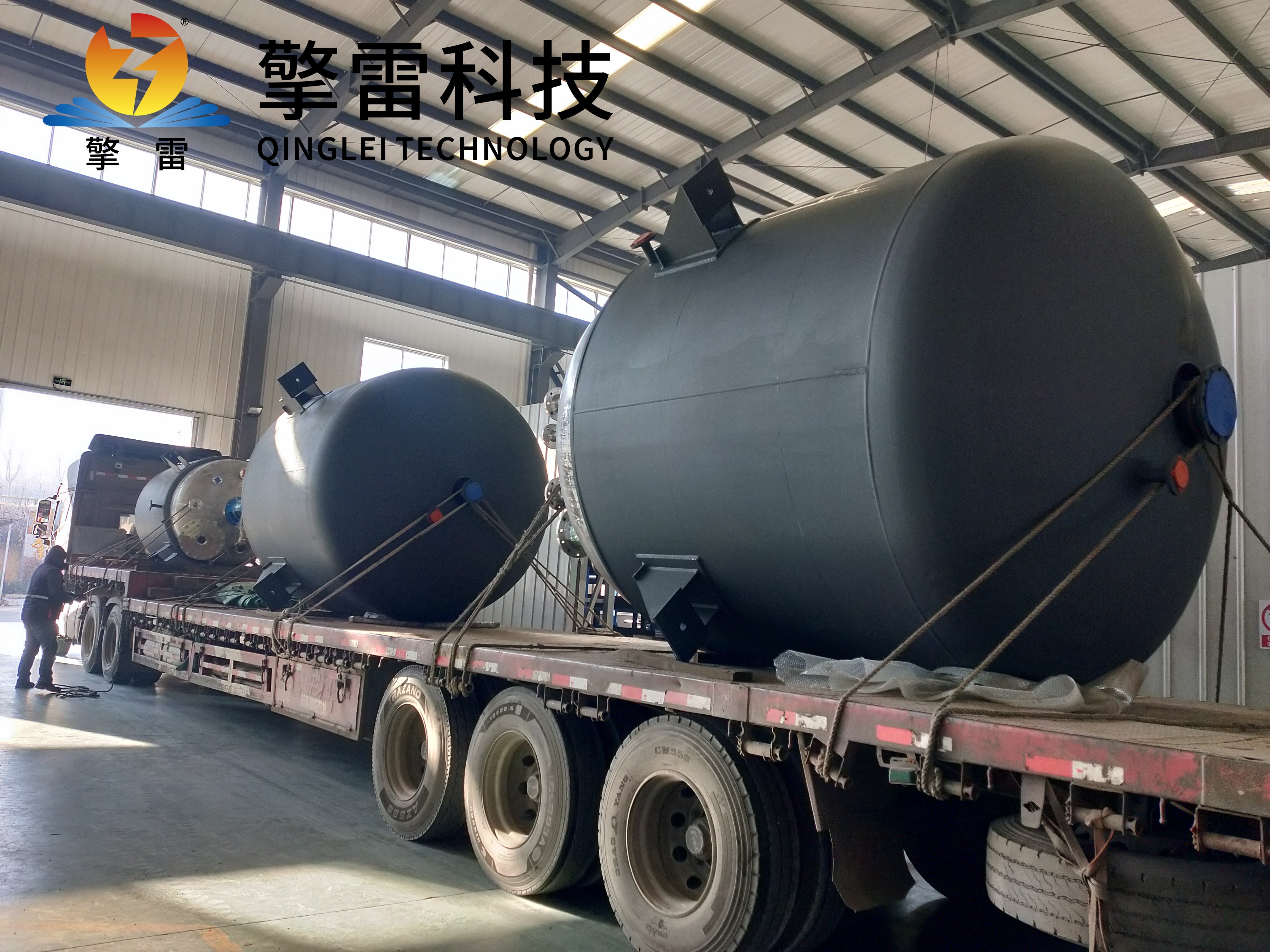
Explosion proof design: The enamel layer has excellent insulation performance (surface resistance>10 ¹² Ω), which can prevent static electricity accumulation from causing explosions. The charge needs to be exported through a grounding device (grounding resistance ≤ 4 Ω).
Damage repair: Local pinholes (diameter<5mm) can be repaired with epoxy resin and fiberglass, but long-term use requires returning to the factory for re coating.
Regular testing: Use a thickness gauge to measure the thickness of the enamel layer annually (with a permissible reduction of ≤ 20%), and check the verticality of the mixing shaft quarterly (with a deviation of ≤ 0.2mm/m).
3、 Industry application: Multi domain penetration, solving key process problems
chemical industry
Synthesis reaction: used for esterification, sulfonation, nitration and other reactions, such as the synthesis of ethyl acetate and dioctyl phthalate (DOP). The acid resistance of the enamel layer extends the lifespan of the reaction vessel to 8-10 years, replacing expensive stainless steel equipment.
Waste liquid treatment: Treat industrial wastewater containing acid and organic solvents, reduce COD values through neutralization reactions, and discharge in compliance with standards.
pharmaceutical industry
Raw material synthesis: In the production of antibiotics, vitamins, etc., enamel reaction vessels comply with GMP standards, with smooth inner walls (roughness Ra ≤ 0.8 μ m) to reduce material residue and avoid cross contamination.
Biopharmaceuticals: used for cell culture, protein purification and other steps, with corrosion resistance and temperature control ability to ensure the stability of biological processes.
food industry
Fermentation process: In the fermentation process of soy sauce, vinegar, yogurt, etc., the tilting design is convenient for discharging and cleaning, preventing microbial growth.
Concentrate and Stir: Process high viscosity materials such as fruit juice and seasonings with an anchor stirrer to ensure even mixing and avoid clumping.
environmental protection field
Heavy metal treatment: Removing heavy metal ions such as lead and cadmium from wastewater through precipitation reactions, and ensuring the long-term stable operation of the equipment through the corrosion resistance of the enamel layer.
4、 Selection and Maintenance: Key Parameters and Operating Standards
Key selection points
Volume matching: Select the kettle volume based on the production scale (such as 50L for laboratory use and 5000L or more for industrial production).
Material selection: Choose boron containing enamel for strong acid environment (to enhance alkali resistance), and titanium containing enamel for frequent temperature fluctuations (to enhance temperature resistance).
Sealing method: Mechanical seal is selected for high-pressure conditions, and packing seal is selected for low-pressure scenarios.
Maintain standards
Operation taboos: Avoid hitting the kettle body with metal tools to prevent enamel peeling off; The stirring speed should not be too fast (≤ 150r/min) to reduce static electricity generation.
Cleaning and maintenance: When cleaning, circulate hot water at 40-60 ℃ for 30 minutes and avoid using strong acid or alkali cleaning agents.
Shutdown treatment: When not in use for a long time, empty the medium inside the jacket to prevent freezing and cracking; Keep the kettle dry to avoid corrosion.
5、 Future trend: Intelligent and green driving industrial upgrading
Intelligent upgrade
Digital twin technology: Build a virtual reactor model to simulate the reaction process under different process conditions and shorten the research and development cycle.
AI process optimization: Machine learning algorithms analyze historical data, automatically adjust parameters such as stirring speed and temperature curve, and improve product yield by more than 5%.
Green Manufacturing
Energy saving technology: using heat pumps to recover reaction heat and reduce energy consumption; The waste heat power generation system achieves energy self-sufficiency.
Environmentally friendly materials: bio based catalysts replace traditional sulfuric acid to reduce wastewater discharge; Degradable seals reduce environmental load.
modular design
Quick change: Standardized interface supports quick replacement of kettle body, agitator and other modules, adapting to the production needs of multiple varieties.
Integrated system: deeply coupled with distillation towers, condensers and other equipment to achieve continuous production and improve overall efficiency.
Conclusion
The tilting enamel reactor has become a core equipment in industries such as chemical, pharmaceutical, and food due to its flexible operation, corrosion resistance, and precise process control. From modular structure to intelligent control, from green manufacturing to modular design, every technological breakthrough is driving the dual improvement of production efficiency and product quality. In the future, with the deep integration of materials science and digital technology, the tilting enamel reactor will further unleash its potential and provide a more efficient and sustainable "Chinese solution" for global industrial production.
Last Article: After sales service for vertical single-layer glass reaction kettle
Next Article: Esterification reactor