-
E-mail
18660167086@163.com
-
Phone
18660167086
-
Address
South section of No. 3 Road, East Industrial New City, Pingyin County, Jinan City, Shandong Province, south of Dongcheng Street
Shandong Qinglei Environmental Technology Co., Ltd
Worry free after-sales service for heat exchangers in the metallurgical industry
Date: 2025-12-19Read: 61
Worry free after-sales service for heat exchangers in the metallurgical industry: full lifecycle management drives efficient production
As the core field of metal extraction and processing, the metallurgical industry involves production processes such as high temperature, high pressure, and strong corrosion, which impose strict requirements on the performance and reliability of heat exchangers. The stable operation of heat exchangers directly affects process efficiency, energy consumption control, and environmental compliance, from wet metallurgical wastewater treatment to high-temperature molten metal waste heat recovery. This article combines industry practice and technological trends to explore innovative paths for after-sales management of heat exchangers in the metallurgical industry, and constructs a full lifecycle service system of "prevention monitoring intervention optimization".
1、 The core challenge of heat exchangers in the metallurgical industry
Adaptability to working conditions
High temperature and high pressure: In the copper smelting converter flue gas acid production system, when the flue gas temperature reaches 1200 ℃, the heat exchanger needs to operate stably at 1000 ℃ or above; The recovery of waste heat from molten iron requires withstanding a high temperature impact of 1600 ℃.
Strong corrosive medium: Wet metallurgical wastewater contains heavy metal ions such as copper, zinc, lead, as well as sulfuric acid and hydrochloric acid, with a pH value as low as 2. The service life of traditional stainless steel heat exchangers is less than 1 year; The condensation of tail gas from nitric acid production requires resistance to corrosion from highly oxidizing mixtures containing NOx.
High fouling load: Heavy metal hydroxides and sulfates in wastewater are prone to deposit and form a dense fouling layer, resulting in a decrease of over 50% in heat transfer coefficient. Frequent shutdowns for cleaning affect production continuity.
Energy efficiency and environmental pressure
The energy consumption of the metallurgical industry accounts for over 15% of the total national energy consumption, and the decline in heat exchanger efficiency will directly lead to an increase in energy consumption. For example, an uncleaned heat exchanger may experience a decrease in thermal efficiency of over 30% due to the accumulation of scale.
Environmental regulations are becoming stricter, such as controlling NOx emissions from nitric acid production exhaust below 50mg/m ³. Leakage or insufficient efficiency of heat exchangers may lead to excessive emissions.
2、 Full lifecycle after-sales management strategy
1. Customized selection and installation debugging
Material adaptation: Select corrosion-resistant materials based on the characteristics of the medium. For example, the wet metallurgical wastewater treatment uses silicon carbide composite tube bundles, which have a phosphoric acid corrosion resistance rate of<0.005mm/year and a service life of over 10 years; Hastelloy C-276 is selected for nitric acid tail gas condensation, which is resistant to mixed acid corrosion of nitric acid and sulfuric acid.
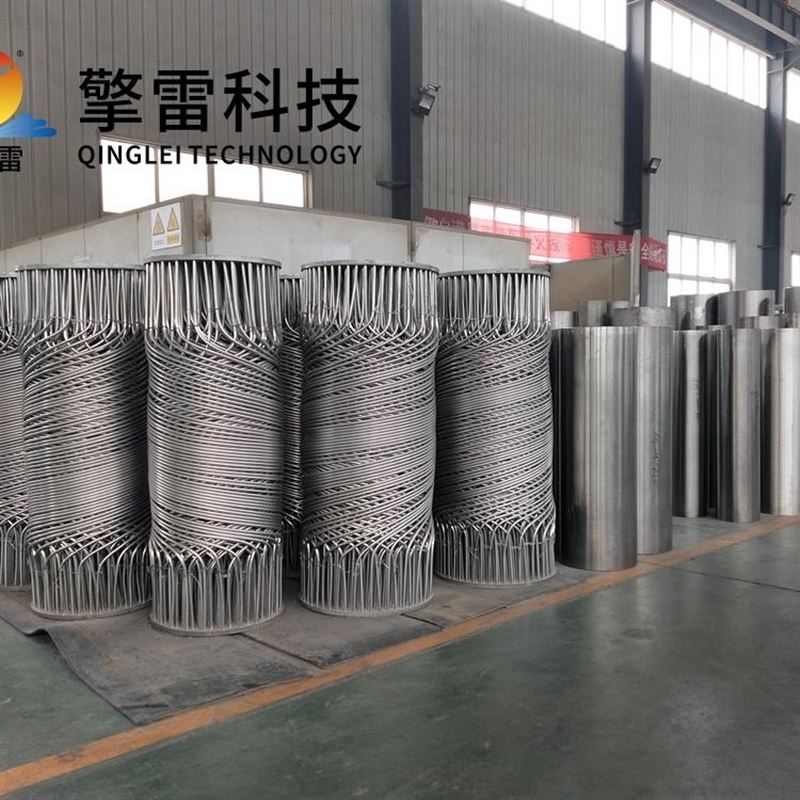
Structural optimization: Spiral wound tube bundle design improves heat transfer efficiency. A certain copper smelting plant adopts a wrapped tube heat exchanger, with a heat transfer area of 800 square meters per unit volume, which is three times higher than the traditional tube type. The heat recovery efficiency is increased by 40%, and 12000 tons of steam are saved annually.
Installation specifications: The tube bundle and tube plate are connected by strength welding and adhesive expansion, eliminating gaps to prevent corrosion; Install a cyclone separator at the inlet to remove particles with a diameter greater than 0.5mm and reduce the risk of dirt deposition.
2. Intelligent monitoring and predictive maintenance
IoT integration: Deploy temperature, pressure, and flow sensors to track device status in real-time. A certain steel plant optimized the flow channel design through a digital twin system combined with CFD simulation, reducing pressure drop by 15% and increasing heat transfer area by 10%.
AI fault warning: using machine learning algorithms to analyze historical data, predict scaling cycles and cleaning timing. For example, a nitric acid production enterprise discovered the risk of tube bundle corrosion in advance through vibration analysis, avoiding unplanned shutdowns and reducing annual losses by over one million yuan.
Remote operation and maintenance platform: connected to cloud management system to achieve remote adjustment of operating parameters and fault diagnosis. A certain chlor alkali enterprise has shortened the equipment failure response time from 72 hours to 12 hours through remote monitoring.

3. Standardized maintenance process
Daily inspection: Check the surface, connecting components, and sealing gaskets of the equipment daily to confirm that there is no rust, water leakage, or looseness; Real time monitoring of key parameters such as temperature and pressure, and immediate handling of abnormal fluctuations.
Chemical cleaning: Select specialized cleaning agents for different types of scale. For example, the calcium carbonate scale layer is cleaned with citric acid to restore heat transfer efficiency to 95% of the design value; Use EDTA chelating agent for the sulfate scale layer to avoid corrosion caused by improper acid washing.
Mechanical cleaning: High pressure water gun washes stubborn dirt to avoid scratching the tube bundle; Areas with poor water quality should be cleaned once every 6 months, while areas with good water quality should be cleaned at least once a year.
Spare parts management: Establish a standardized spare parts inventory and reserve high failure rate components (such as seals and expanders) in advance. A certain enterprise has shortened the maintenance response time to 4 hours through spare parts management optimization.
4. Technological upgrading and energy efficiency optimization
Material Innovation: Developing high-temperature resistant ceramic coatings and self-healing nanomaterials. For example, graphene reinforced composite materials improve heat transfer performance by 50% and extend temperature resistance range to -196 ℃ to 1500 ℃.
Structural improvement: Adopting microchannel technology to enhance heat transfer density. A nitric acid concentration project uses microchannel heat exchangers, reducing equipment footprint by 40% and achieving a payback period of only 2 years.
Waste heat recovery: Integrated heat electricity gas multi supply system to improve energy utilization efficiency. For example, a copper smelting plant recovers waste heat from flue gas to generate electricity, increasing annual efficiency by tens of millions of yuan and reducing CO ₂ emissions by over 10000 tons.
3、 Industry Case: Practice of Shandong Qinglei Environmental Technology Co., Ltd
Wet metallurgy wastewater treatment: Provided a wound tube heat exchanger for a copper smelting plant, replacing traditional tube type equipment, increasing the heat transfer area by three times, saving 30% of cooling water consumption annually, and reducing the consumption of wastewater treatment agents.
Nitric acid tail gas condensation: customized titanium alloy tube bundle heat exchanger for high temperature and strong corrosion conditions, with a condensation efficiency increase of 40%, steam production increase of 15%, and NOx emission concentration reduced to below 50mg/m ³.
Molten metal waste heat recovery: Developed silicon carbide composite tube bundles that can withstand high temperature impacts of 1600 ℃, heat the feedwater to 300 ℃, improve power generation efficiency by 20%, and extend equipment lifespan beyond 10 years.
After sales service system: providing a "all inclusive" service of 24-hour emergency response, spare parts inventory, and technical training, reducing customer failure rate by 45%, and the total maintenance cost over 10 years is only 40% of replacing new equipment.
4、 The long-term value of after-sales management
Short term benefits: equipment failure rate decreases by 30% -50% after maintenance, and maintenance costs are reduced; For example, a power plant discovered tube bundle leaks in advance through pressure testing, avoiding unplanned shutdowns and reducing losses by over one million yuan.
Long term value: The lifespan of the equipment is extended to over 15 years, and the total maintenance cost over 10 years is only 40% of the cost of replacing the new equipment; A pharmaceutical company has achieved a modular design that reduces single tube bundle replacement time by less than 8 hours and annual downtime by 50%.
Implicit benefits: Stable operation of equipment enhances corporate image and strengthens customer trust; A dairy company has extended the shelf life of its products to 21 days, an increase of 10%, through the maintenance of pasteurization equipment.
The after-sales management of heat exchangers in the metallurgical industry has shifted from "passive maintenance" to "active prevention". Through material innovation, intelligent monitoring, and full lifecycle services, enterprises can not only improve equipment efficiency and safety, but also achieve sustainable development under the "dual carbon" goal. With the iteration of technology and the upgrading of service models, after-sales management is becoming a key engine for enhancing the competitiveness of the metallurgical industry.
Last Article: Distillation reactor
Next Article: After sales service for vertical single-layer glass reaction kettle