-
E-mail
18660167086@163.com
-
Phone
18660167086
-
Address
South section of No. 3 Road, East Industrial New City, Pingyin County, Jinan City, Shandong Province, south of Dongcheng Street
Shandong Qinglei Environmental Technology Co., Ltd
Worry free after-sales service for reactor heating plate fin heat exchanger
Date: 2025-12-24Read: 40
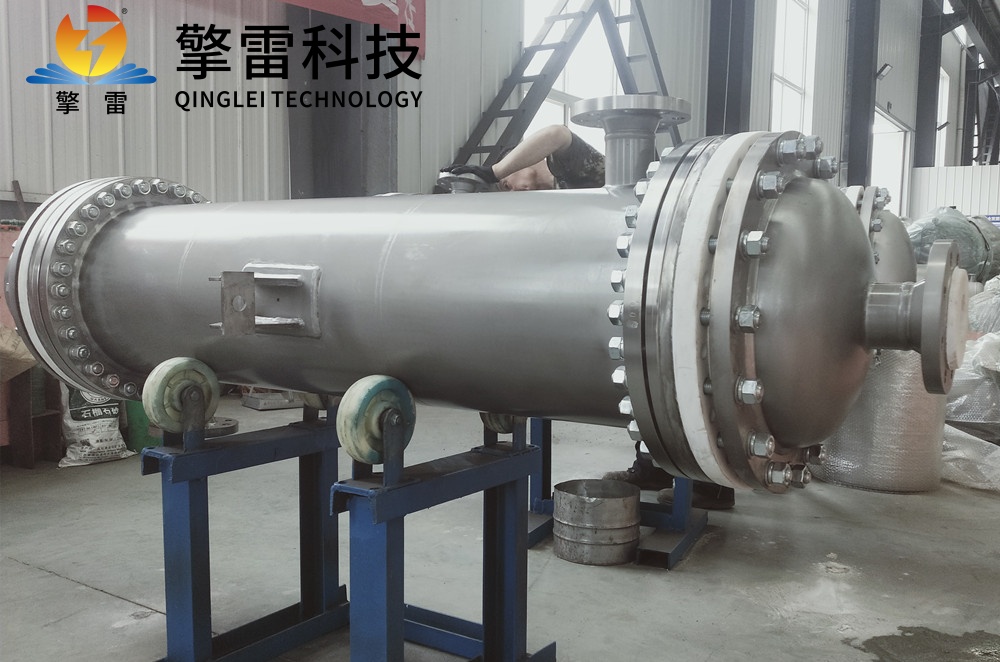
In industrial fields such as chemical, pharmaceutical, and food processing, the reactor heating plate fin heat exchanger serves as the core equipment, achieving efficient heat exchange through "expanding heat transfer area" and "enhancing flow field disturbance". Its performance directly affects product quality and production efficiency. However, equipment is prone to scaling, corrosion, leakage and other problems during long-term operation, and a sound after-sales service system has become the key to ensuring stable operation of the equipment. This article will analyze how reactor heating plate fin heat exchangers can achieve "worry free after-sales service" from four aspects: technical principles, structural innovation, after-sales support system, and future trends.
1、 Technical principle: Extended surface enhanced heat transfer
The reactor heating plate fin heat exchanger achieves efficient heat exchange through "expanding heat transfer area" and "enhancing flow field disturbance", and its core process can be divided into three steps:
Heat source introduction and heat transfer: High temperature media (such as steam and thermal oil) enter the "hot side channel" through the inlet channel and come into direct contact with the fins and baffles. Fins and partitions are often made of high thermal conductivity materials such as aluminum, stainless steel, or nickel alloys, which quickly transfer heat to the surface. For example, a plate fin steam air heat exchanger introduced by a dehydrated vegetable processing plant adopts a stainless steel corrugated fin design, which can withstand a steam temperature of 120 ℃. The heat is efficiently transferred to the fresh air through the fins, stabilizing the inlet air temperature from 25 ℃ to 85 ℃ and controlling the temperature difference fluctuation within ± 1 ℃.
Secondary transfer and diffusion: Heat is transferred to the "cold side channel" through fins and partitions, and exchanges heat with low-temperature media such as air and water. Fin design increases turbulence effects, reduces thermal resistance, and improves heat transfer efficiency. For example, the plate fin heat exchanger used in the freeze-drying formulation workshop of a biopharmaceutical factory adopts electrolytic polished stainless steel partitions and seamless fins welded together. The steam channel is degreased and passivated to prevent microbial growth, with a heat transfer efficiency of up to 95%, which is 75% more energy-efficient than the electric heating scheme.
Heat output and process adaptation: The low-temperature medium after heat exchange returns to the process flow, while the high-temperature medium is discharged through the outlet channel. The equipment is designed to adapt to different working conditions through customized design. For example, in the polyvinyl chloride production workshop of a certain chemical plant, the reaction feed air is preheated from room temperature to 180 ℃. After using a titanium alloy plate fin heat exchanger, the air preheating efficiency reaches 92%, an increase of 18% compared to before, reducing steam waste by about 200 tons per month.
2、 Structural Innovation: Technological Breakthrough in Modularization and Intelligence
The reactor heating plate fin heat exchanger has achieved a performance leap through structural optimization and material upgrading:
Efficient heat transfer design:

Ripple fins: By increasing air disturbance, reduce thermal resistance by more than 30% and improve heat transfer efficiency. For example, the outdoor unit condenser of a 1.5-horsepower wall mounted air conditioner adopts a copper tube+aluminum corrugated fin structure, with an energy efficiency ratio of over 3.5 and a power consumption reduction of about 20%.
Cross flow design: alternate arrangement of steam and air channels to optimize the heat exchange path. The titanium alloy plate fin heat exchanger in a certain chemical plant has reduced its equipment footprint from 15 square meters to 4.2 square meters through cross flow design, making it suitable for narrow workshop spaces.
Corrosion and high temperature resistant materials:
Titanium alloy: With a threefold increase in resistance to chloride ion corrosion, it is suitable for environments with chlorine containing gases. The titanium alloy fuel preheater of a certain enterprise has a lifespan of over 15 years in sulfur corrosion environment, which is three times longer than traditional 316L stainless steel.
Graphene coating: After a certain enterprise adopted graphene coated heat exchangers, the maintenance personnel did not master the coating protection process, resulting in coating detachment and shortened equipment life. This case highlights the importance of material selection and maintenance processes.
Modular and compact structure:
Modular installation: supports quick replacement of single modules, reducing maintenance time by 90%. After the renovation of a 600MW ship unit, 8000 tons of standard coal were saved annually, and the thermal efficiency was increased by 8%.
Compact design: In the thermal control system of a certain satellite, a finned heat exchanger with titanium alloy base tube and titanium alloy flat fins is used, with a volume of only 0.05 cubic meters and a weight of less than 5kg, but it can achieve a heat transfer power of over 100W.
3、 After sales guarantee system: Full lifecycle service eliminates customers' worries
The after-sales guarantee system for the reactor heating plate fin heat exchanger covers the entire process of design, installation, maintenance, and upgrade, achieving "worry free after-sales" through three core services:
Intelligent monitoring and predictive maintenance:
The device integrates IoT sensors and combines AI algorithms to analyze operational data, identifying potential risks such as scaling and leaks in advance. For example, a certain enterprise simulates the heat exchange process through digital twin technology, predicts the corrosion risk of the tube bundle 30 days in advance, and avoids unplanned shutdowns.
Regular testing and water quality management: Check the hardness and chloride ion concentration of seawater every quarter, and control the working temperature range. A certain LNG transport ship has extended the service life of the plate fin heat exchanger to over 8 years by optimizing the pH value of the cooling water.
Modular maintenance and rapid response:
Adopting modular structures such as detachable fins and flange connected partitions, it supports independent replacement of single modules and reduces cleaning time to 1/4 of traditional equipment. For example, a certain enterprise's plate fin heat exchanger supports online cleaning and can restore performance without shutting down.
Establish a nationwide after-sales service network, equipped with a team of professional engineers and spare parts warehouses. For example, a certain service provider promises to respond within 4 hours and arrive 24 hours. In the event of a malfunction in the cooling system of an ocean going cargo ship's main engine, remote guidance will be provided to the crew to replace the filter and avoid losses due to suspension.
Full process compliance support and green upgrade:
Provide full process documentation support from material certification, welding inspection reports to GMP validation to ensure equipment complies with international standards such as FDA and ASME BPE. For example, the plate fin heat exchanger of a certain enterprise meets the aseptic requirements of the biopharmaceutical industry through electrolytic polishing treatment.
Energy saving renovation and waste heat recovery: A certain steel plant uses finned heat exchangers to recover high-temperature flue gas waste heat, which can recover 1000 kW · h of waste heat per hour, equivalent to about 120 kg of standard coal, saving energy costs of about 500000 yuan per year.
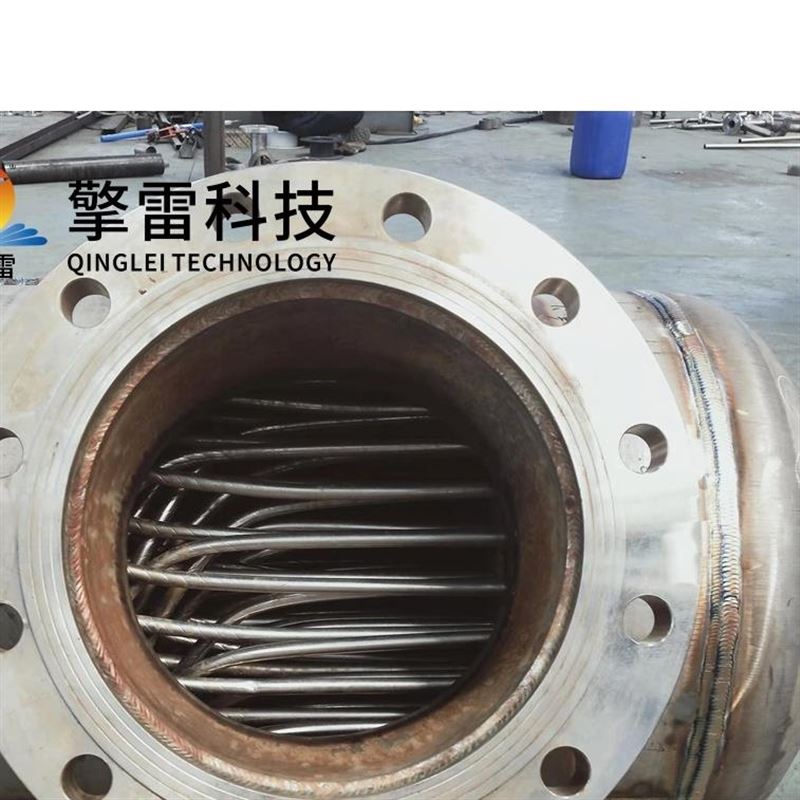
4、 Future Trends: Intelligent and Green Sustainable Development
With the advancement of the "dual carbon" target, reactor heating plate fin heat exchangers will develop in the following directions:
AIoT technology fusion: identify 0.01mL/s level micro leakage through convolutional neural network (CNN), and realize millisecond level parameter adjustment combined with 5G+edge computing, reducing unplanned downtime by 60%.
Digital twin and CFD simulation: design cycle shortened by 50%, remaining life prediction error<8%, comprehensive energy efficiency improved by 12% -15% after optimizing operating parameters.
Natural cooling medium: Developing CO ₂ working fluid to replace Freon and reduce greenhouse gas emissions; Integrated heat pump technology improves the overall energy efficiency of the system by 50% -70%.
Material closed-loop utilization: Establish a titanium alloy waste recycling system, reducing carbon emissions from a single device by 30%; Biobased composite materials achieve a recovery rate of ≥ 95% for equipment.
3D printing customization: Customize irregular fins or partitions for complex materials, temperature and pressure conditions to enhance equipment adaptability.
Innovation in leasing mode: Modular leasing reduces initial investment for enterprises and shortens the investment payback period to 1.5 years.