-
E-mail
773042332@qq.com
-
Phone
13816887304
-
Address
2nd Floor, Building 1, Lane 333, Wensong Road, Songjiang District, Shanghai
Shanghai Ouhe Machinery Equipment Co., Ltd
Laboratory digital mixer
Date: 2025-12-22Read: 5
Although laboratory digital mixers are small devices, they play an irreplaceable role in the scientific research chain. From precise parameter controlThe technological evolution of functional design that adapts to complex scenarios always revolves around the actual needs of researchers. In the process of selection and use, only by fully understanding the experimental objectives and equipment characteristics can its value be realized and reliable support be provided for scientific research work.
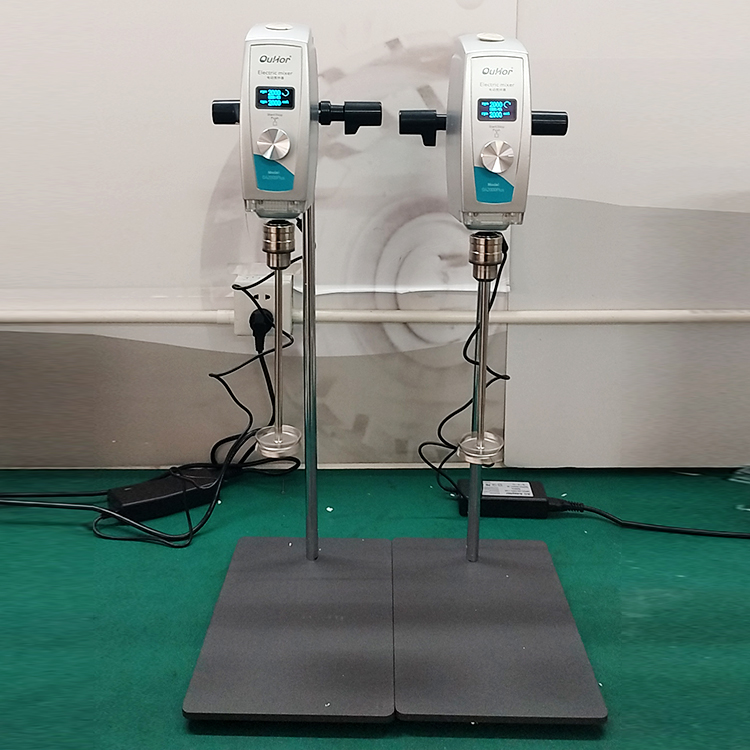
###1、 Technical features and core advantages
The core difference between laboratory digital mixers and traditional mechanical mixers lies in their digital control module. Through high-precision motors and microprocessors, users can directly set the speed through the touch screen or knob. The brushless DC motor has a noise level of less than 50 decibels and is equipped with overload protection function, suitable for long-term continuous operation. In addition, the digital display interface can display the current speed and remaining time in real time, avoiding the problem of traditional dial reading errors.
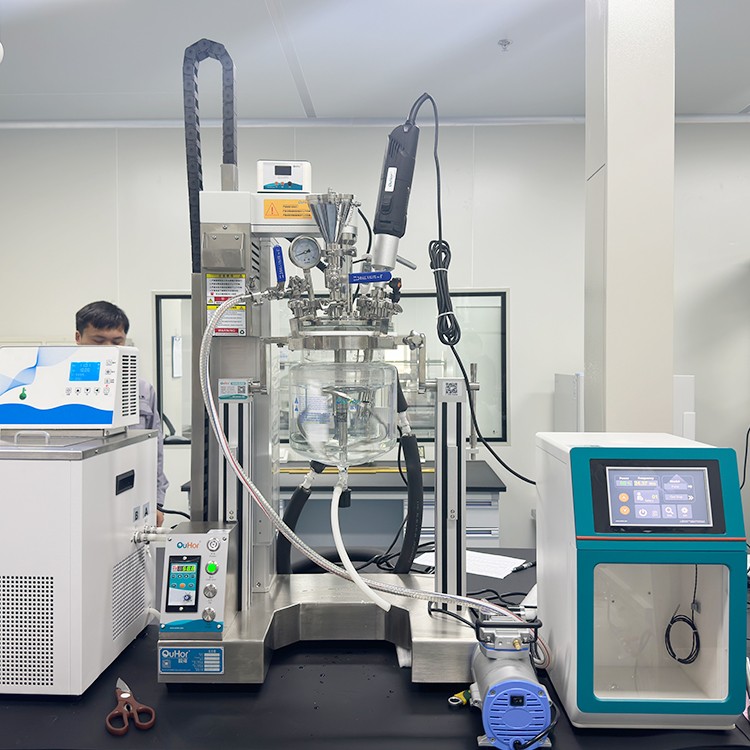
Another significant advantage is adaptability. Modern digital mixers are usually equipped with various mixing blades (such as propeller type, anchor type, blade type) to adapt to liquids of different viscosities. Blades made of polytetrafluoroethylene (PTFE) material have strong corrosion resistance and can be used in strong acid and alkali environments. Some models also support external temperature probes to synchronize mixing and temperature control, meeting complex experimental requirements such as polymerization reactions.
Last Article: The function of polymer collagen reaction kettle