Polymer collagen reaction kettle isCore equipment for collagen polymer modification and large-scale preparationIts core function is to provide a controllable environment for chemical reactions such as polymerization, cross-linking, and modification of collagen, thereby producing high molecular weight collagen materials that meet specific performance requirements.
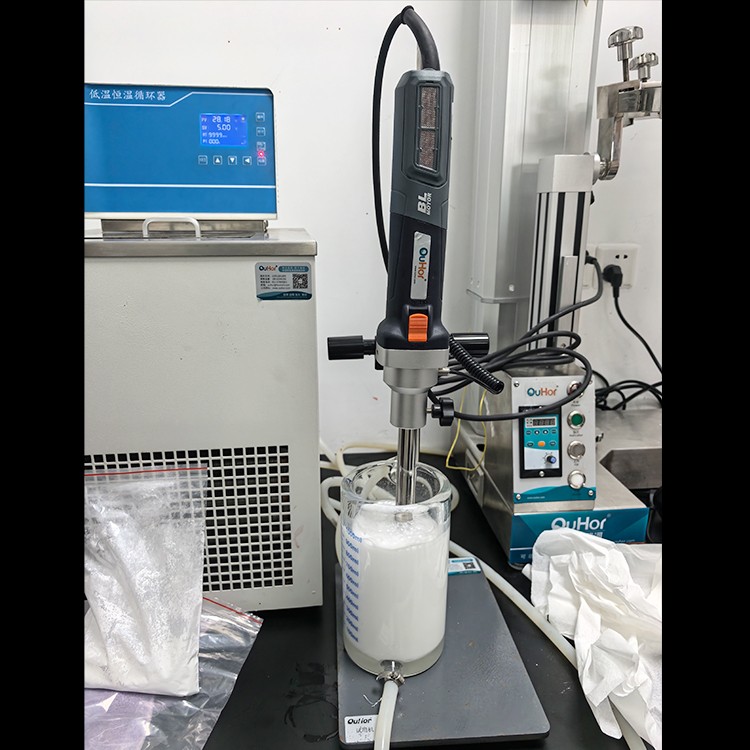
The specific functions can be divided into the following aspects:
Provide a controllable reaction environmentThe polymerization reactions of collagen, such as cross-linking and graft copolymerization, require strict parameters such as temperature, pressure, pH value, and stirring rate. The reactor can precisely control these parameters:
temperature controlBy using a jacket or built-in heat exchange device, heating or cooling can be achieved to avoid collagen denaturation due to high temperature, while ensuring stable polymerization reaction rate.
stress regulationIt can operate under normal pressure, negative pressure, or slightly positive pressure. Negative pressure environment can remove small molecule by-products (such as crosslinking agent decomposition products) generated during the reaction process, while slightly positive pressure is suitable for scenarios that require the introduction of reactive gases (such as nitrogen protection).
uniformly mixedEquipped with specialized stirring blades (such as anchor type and frame type) to ensure full contact between collagen solution, crosslinking agent, modifier and other materials, ensuring reaction uniformity and avoiding excessive or insufficient local crosslinking.
Realize high molecular weight modification of collagen proteinNatural collagen has a low molecular weight and weak mechanical properties, which limits its direct application. In the reaction vessel, small molecule collagen chains can be connected through chemical cross-linking (such as using glutaraldehyde, genipin) or graft copolymerization (such as combining with monomers such as polyethylene glycol and lactic acid)
Polymer with three-dimensional network structureTo enhance the tensile strength, elasticity, water resistance, and biological stability of the material, and expand its application scenarios.