-
E-mail
773042332@qq.com
-
Phone
13816887304
-
Address
2nd Floor, Building 1, Lane 333, Wensong Road, Songjiang District, Shanghai
Shanghai Ouhe Machinery Equipment Co., Ltd
Types and applications of commonly used reaction vessels in laboratories
Date: 2025-11-27Read: 5
As one of the core equipment in chemical laboratories, reaction vessels have a wide variety of types and functions. According to different structures, materials, and uses, the commonly used reaction vessels in laboratories mainly include the following types:
1. Glass reaction kettle
Transparent material facilitates observation of reaction processes, has strong corrosion resistance, and is suitable for routine experiments such as acid-base neutralization and organic synthesis. The common glass reaction vessels are divided into two structures: single-layer and double-layer. The double-layer structure can achieve heating or cooling function by introducing circulating medium through the interlayer.
2. Stainless steel reactor
Made of 304 or 316L stainless steel, it has the characteristics of high mechanical strength and high temperature and pressure resistance. Widely used in special experimental environments such as catalytic reactions and high-pressure hydrogenation. Equipped with a magnetic stirring system, it can achieve sealed and leak free operation.
3. Miniature high-pressure reactor
The volume is usually between 50-500ml, and the design pressure can reach 10-30MPa. This type of reactor is equipped with precision pressure gauges and pressure relief devices, suitable for research fields such as catalyst evaluation and supercritical fluid reactions. Its compact structure is particularly suitable for parallel experiments and screening experiments.
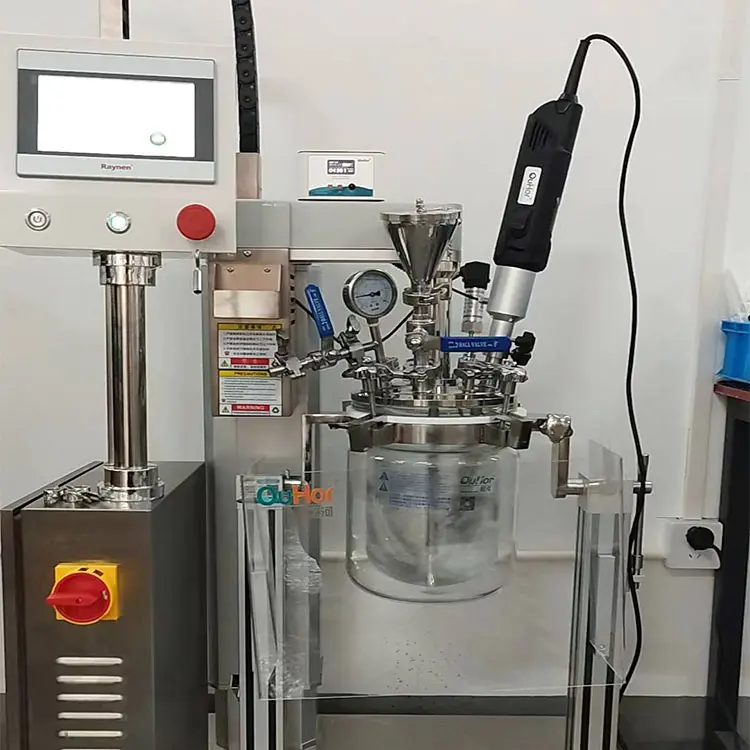
5. Aggregation reactor
Specially designed for polymer synthesis, with a special stirring system and temperature control accuracy. Usually equipped with high viscosity stirring blades and molecular weight monitoring interfaces to meet the special requirements of polymerization reactions.
6. Bioreactor
Used for microbial cultivation and cell fermentation, with strict sterilization system and dissolved oxygen control function. This type of reaction kettle usually integrates online monitoring probes such as pH and DO, which comply with GMP specifications.
7. Multi functional reactor
Adopting modular design, different functions can be achieved by replacing accessories. For example, equipped with a distillation column, reactive distillation can be carried out, and adding a solid-phase extraction module can achieve continuous operation. This flexibility makes it an ideal choice for complex research projects.
The selection of reaction kettle needs to consider the following key factors:
-The corrosiveness of the reaction system determines the material selection
-The operating temperature and pressure range determine the structure of the kettle body
-Mixing requirements affect the configuration of the power system
-Sampling and analysis requirements determine interface design
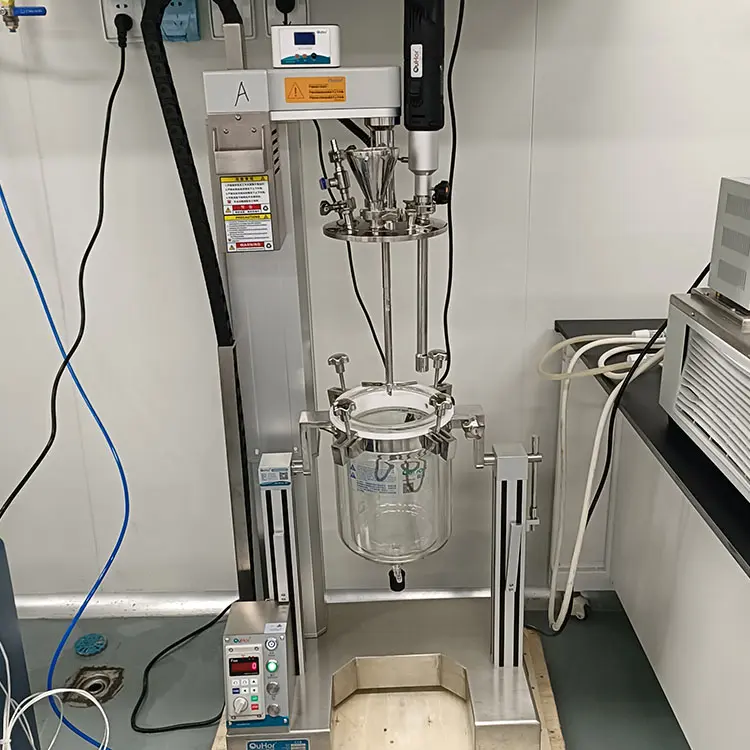
Modern laboratory reactors are developing towards intelligence, and new models are generally equipped with:
• Touch screen control system
• Data recording and export function
• Remote monitoring interface
• Safety interlock device
Last Article: Advantages of laboratory vacuum synthesis reactor
Next Article: Precautions for choosing a vacuum heating reactor