-
E-mail
liuyuanzhi@eti-test.com
-
Phone
19201635557
-
Address
Wujiang to Tongli Economic Development Zone, Suzhou City
Suzhou Yitai Environmental Technology Co., Ltd
Ten level cleanroom cleanliness level testing method, process, standards, and precautions
Date: 2025-08-25Read: 5
1. Testing method
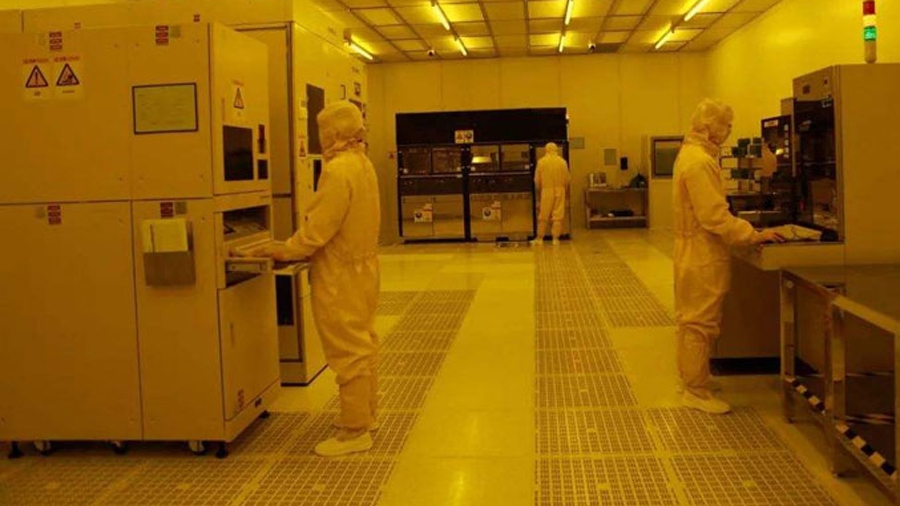
A Class 10 cleanroom (corresponding to ISO Class 4) is a controlled environment with extremely high cleanliness requirements. Its detection method system is rigorous and complex, requiring specialized detection methods and precision instruments. For example, the LPC-8110 dust particle counter under the etiedt Yitai Jingke brand of Suzhou Yitai Environmental Technology Co., Ltd. has a sampling flow rate of 28.3L/MIN and can detect 8 particle size channels simultaneously.
Suspended particle concentration detection:
Particle counter method: A particle counter based on the principle of light scattering is used as the core detection equipment, which must have particle size discrimination capability (able to distinguish particles from 0.1 μ m to 5.0 μ m), a wide range of concentration applications, and counting efficiency that meets standard requirements. Before testing, it is necessary to confirm that the instrument holds a valid calibration certificate to ensure the accuracy of the measurement results.
Sampling requirements: The minimum sampling amount for each sampling point shall not be less than 0.3 liters. The actual sampling amount shall be determined by the formula VS=(20/Cn · m) × 1000, where Cn · m is the concentration limit of the corresponding particle size in the Class 10 clean room (particles ≥ 0.5 μ m shall not exceed 35 particles/m ³). The sampling time is usually not less than 1 minute to ensure the representativeness of the sampling.
Sampling point arrangement: According to the requirements of ISO 14644-1 and GB/T 16292-2008 standards, a Class 10 clean room should be equipped with no less than 20 sampling points, and the distance between the measuring points should be controlled between 0.5-2.0 meters. The sampling points should be evenly distributed throughout the entire clean room workspace, with a focus on covering key process areas and areas with high personnel activity. The sampling height is usually set at the working plane height (0.8-1.2m) to reflect the cleanliness of the actual operating environment.
Data collection and processing: Each sampling point needs to be sampled continuously three times, and the average value is taken as the actual measurement value of that point. The final cleanliness level of a Class 10 cleanroom is determined based on the maximum value of each measuring point (rather than the average value), reflecting strict requirements for the weakest link
2. Testing process
The testing process of the Level 10 cleanroom follows strict logical sequence and operational specifications to ensure the reliability and repeatability of the testing results. The complete detection is usually divided into three stages:
2.1 Preparation Stage
System cleaning and self-cleaning: Before testing, the clean room and its purification air conditioning system need to be thoroughly cleaned (ordinary vacuum cleaners are prohibited), and cleaning personnel should wear specialized cleaning clothes. After cleaning, the purification air conditioning system should run continuously for at least 12 hours to achieve a stable environment.
Environmental condition confirmation: Record and confirm that the basic parameters such as temperature (usually controlled at 20-24 ℃), relative humidity (45% -65%), and illumination (≥ 300 lux) in the clean room meet the testing requirements.
High efficiency filter pre leakage: Conduct a preliminary filter integrity check before formal testing to ensure that subsequent particle counting is not affected by filter leakage. Any leakage discovered during this stage should be dealt with immediately.
2.2 Main parameter detection stage (in logical order)
Wind volume/speed and air exchange rate detection:
Firstly, measure the total supply air volume, total return air volume, fresh air volume, and exhaust air volume to confirm the balance of the system air volume.
For a unidirectional flow clean room, measure the cross-sectional wind speed in the working area and calculate the non-uniformity (which should not exceed 0.25).
For non unidirectional flow cleanrooms, calculate the air exchange rate (Grade 10 cleanrooms typically require ≥ 60 times/hour).
Static pressure difference detection:
After passing the air volume test, ensure that all doors are closed.
Use a micro differential pressure gauge (accuracy ≤ 0.1 Pa) to measure the pressure difference between the clean room and adjacent areas, as well as areas of different cleanliness levels.
Requirement for Level 10 Cleanroom: Consistent pressure difference in areas of the same cleanliness level; The pressure difference between adjacent areas of different cleanliness levels is ≥ 5Pa; the pressure difference between clean and non clean areas is ≥ 10Pa.
Efficient filter official leak detection:
After passing the tests for air volume, wind speed, and static pressure difference, it is carried out as a prerequisite for cleanliness testing.
Perform a complete scan leak detection using the aforementioned method, promptly mark and repair any leaks found, and retest until they are qualified.
Air cleanliness testing:
After passing the leak detection, avoid data distortion caused by filter leakage.
Perform suspended particle concentration detection according to the preset sampling point layout, and take the average of three consecutive samples at each point.
Add microbial sampling points to key operational areas such as filling points and workstations for the detection of planktonic and settling bacteria.
Self purification time test:
Measure the time required for a cleanroom to recover from a high concentration state to a Class 10 cleanliness standard after monitoring pollution events through the introduction of aerosols (such as smoke) or particle counters.
The self-cleaning time of a Class 10 cleanroom is usually required to be ≤ 1 minute.
Airflow flow pattern and direction test:
Using visible smoke in conjunction with a high-speed camera, observe and record airflow patterns to verify the presence of backflow, eddies, or dead zones.
Confirm that the airflow direction conforms to the principle of flowing from the clean area to the lower level area.
3. Testing standards
The testing standard system for Class 10 cleanrooms covers international standards, national standards, and industry norms, forming a complete set of technical requirements.
3.1 Core parameter standards
Suspended particle concentration: According to ISO 14644-1 and GB/T 16292-2008 standards
4. Precautions
During the testing process of a Level 10 cleanroom, it is necessary to pay attention to multiple key control points, which directly affect the accuracy and reliability of the testing results.
4.1 Data Management and Reporting Requirements
Electronic data integrity: When using computerized systems to record data, it must comply with the ALCOA+principles (attributable, clear, synchronized, original, accurate) and enable audit trail functionality to prevent data tampering.
Paper record specifications: Manual records should use permanent ink, fill in the specifications, sign and date any modifications made. The raw data must be archived together with the final report.
Integrity of report content: The formal testing report should include elements such as sampling point distribution map, testing conditions (temperature and humidity, pressure difference), instrument calibration information, testing results, standard limits, conclusion judgment, and signature of testing personnel.
Archiving period: The retention period of inspection records and reports should be at least one year beyond the validity period of the produced products, meeting the requirements of quality traceability.
5. Summary
As one of the controlled environments with the highest cleanliness requirements, the testing work of a Level 10 cleanroom is a highly technical and demanding professional activity. Only through scientific and standardized testing methods (particle counter method, wind speed testing, filter leak detection, etc.), rigorous execution processes (system preparation → parameter testing → data analysis), strict standard requirements (ISO Class 4 static standard), and comprehensive precautions (personnel control, instrument management, interference avoidance, etc.) can the performance status of the clean room be accurately evaluated, providing reliable environmental protection for high-end manufacturing and research and development activities.
The core implementation principles can be summarized as follows: strictly following national standards and industry norms; Prioritize the weakest links (such as boundaries and connections); Implement a hierarchical control strategy (combining static and dynamic); Establish a continuous monitoring mechanism (daily monitoring+regular comprehensive testing). These principles together form the technical foundation for ensuring the environmental protection of Class 10 cleanrooms, providing key technical support for quality control in high-precision fields such as semiconductor manufacturing and high-end biomedicine.