-
E-mail
962002739@qq.com
-
Phone
18202208720
-
Address
Wuqing District, Tianjin, China
Tianjin Chengzhen Machinery Equipment Co., Ltd
The process principle and characteristics of the dust-free fully automatic unpacking machine for small bags
Date: 2025-08-13Read: 8
The process principle of the small bag dust-free fully automatic unpacking machine mainly includes five core steps:
Firstly, manual or automatic lifting machines place the material bags onto the belt conveyor, achieving a fully automated bag feeding process.
Secondly, the equipment automatically breaks the bag through a cutting device, rotating blade, or tearing mechanism to ensure efficient disassembly and packaging.
Next, use vibrating screens, drum screens, or spider claw structures to separate the bag materials, allowing them to fall into the storage hopper by gravity.
Then, the material is conveyed to downstream equipment through a screw conveyor or a positive and negative screw discharge system, with low residual levels and thorough discharge.
Finally, the entire process is equipped with a pulse dust collector or a high suction system to collect dust, and the waste bags are automatically recycled to ensure dust-free and enclosed operation.
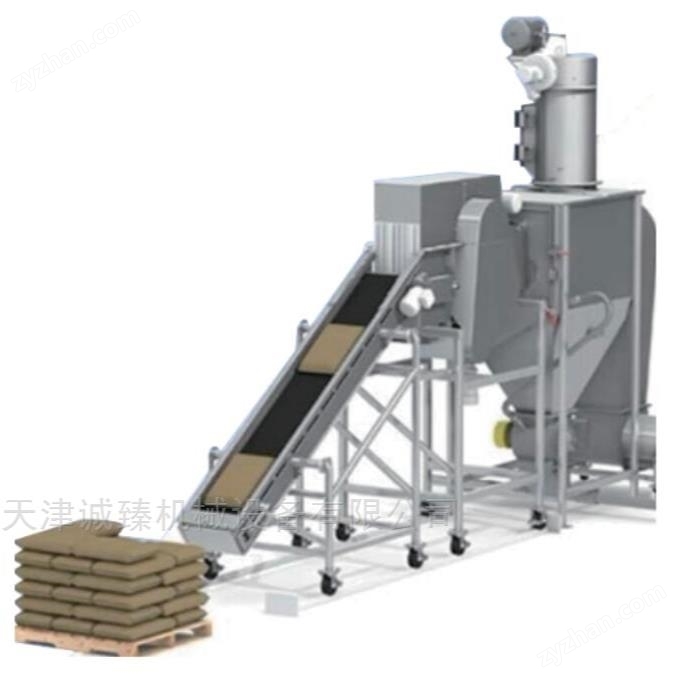
In terms of features, the small bag dust-free fully automatic unpacking machine has multiple advantages. Widely applicable, capable of handling bags made of various materials such as aluminum-plastic, fiber woven lining, PE film, etc., suitable for single-sided or double-sided sealing. The dust-free and environmentally friendly design effectively collects dust, reduces environmental pollution, and ensures operational health. Efficient automation replaces manual labor, improves unpacking efficiency, and significantly reduces labor intensity and labor costs. Safe and reliable, with built-in protective devices to prevent splashing and dust, low residue levels, and stable performance. Widely used in industries such as chemical, food, and pharmaceutical, it is a key equipment for modern intelligent factories.