-
E-mail
13920369716@139.com
-
Phone
13920369716
-
Address
11th Floor, Building D, Science and Technology Building, Binhai High tech Zone, Tianjin
Tianjin Jingtuo Instrument Technology Co., Ltd
Guidelines for Choosing a Drug Stability Tester: Key Points for Temperature and Humidity Accuracy, Light Control, and Capacity Adaptation
Date: 2025-09-19Read: 3
The drug stability tester is a key equipment for evaluating the stability of drugs under different environmental conditions, widely used in drug research and development, production, and quality control. Choosing a suitable drug stability tester is of great significance for ensuring drug quality and extending drug shelf life. This article will provide important references for you to choose a drug stability tester from three aspects: temperature and humidity accuracy, light control, and capacity adaptation.
1、 Temperature and humidity accuracy: ensuring the stability of the experimental environment
(1) The Importance of Temperature Control
The stability of drugs is significantly affected by temperature, and high or low temperatures may accelerate the degradation of drugs. Therefore, the temperature control accuracy of the drug stability analyzer is crucial. A high-precision temperature control system can ensure the stability of the experimental environment, allowing drugs to undergo stability testing under specified temperature conditions, thereby accurately evaluating the stability of drugs.
(2) The Importance of Humidity Control
Humidity also has a significant impact on the stability of drugs, as excessively high or low humidity may lead to drug hygroscopicity, deliquescence, or drying loss. When purchasing, attention should be paid to the humidity control accuracy of the instrument to ensure that it can be accurately controlled within the set humidity range, providing a reliable environment for drug stability testing.
(3) Flexibility of temperature and humidity control
In addition to accuracy, the flexibility of temperature and humidity control cannot be ignored. Different drugs have different requirements for temperature and humidity. Some drugs need to be stored in low temperature and low humidity environments, while others require stability testing under high temperature and high humidity conditions. Therefore, the selected instrument should have flexible temperature and humidity adjustment functions, which can quickly adjust to the target temperature and humidity according to different testing needs.
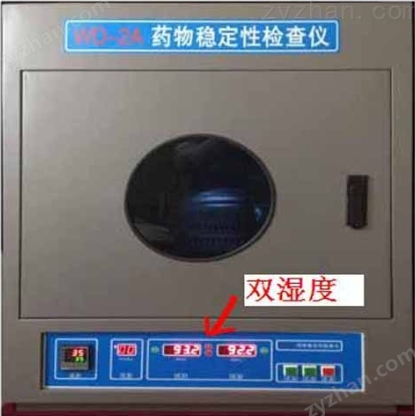
2、 Lighting control: simulate real environmental conditions
(1) The Importance of Light Intensity
Light is another important factor affecting drug stability, especially for drugs that are sensitive to light. Excessive light intensity may cause drug decomposition, affecting the quality and efficacy of the drug. The drug stability tester should have precise light intensity control function, which can simulate the light conditions that may be exposed during the actual use of drugs, and provide accurate light environment for drug stability testing.
(2) Control of illumination time
In addition to light intensity, light exposure time also has a significant impact on drug stability. Drugs may undergo slow degradation under long-term light exposure. Therefore, the instrument should have flexible lighting time control function, which can set different lighting times according to testing requirements to accurately evaluate the stability of drugs under different lighting conditions.
(3) Uniformity of illumination
Uniformity of lighting is also a factor to consider when making a purchase. Drug samples should be uniformly exposed to light during the testing process to ensure the accuracy of the test results. Therefore, the lighting system of the instrument should be designed reasonably to ensure the uniformity of lighting and avoid testing errors caused by uneven lighting.
3、 Capacity adaptation: meet different testing needs
(1) Sample capacity
Drug stability testing typically requires testing multiple samples simultaneously to ensure the reliability and reproducibility of the test results. Therefore, the selected instrument should have sufficient sample capacity to meet the testing needs of different scales. At the same time, sample placement should be convenient and reasonable, making it easy for operators to place and remove samples.
(2) Space utilization rate
In addition to sample capacity, the space utilization of the instrument is also worth paying attention to. Reasonable internal space design can improve the efficiency of instrument use and reduce the footprint. When choosing an instrument, one should consider whether the layout of its internal space is reasonable and whether it can fully utilize the limited space for sample testing.
(3) Scalability
With the continuous expansion of drug research and production scale, it may be necessary to upgrade or expand instruments in the future. Therefore, when purchasing, the expandability of the instrument should be considered, and devices with expandable functions should be selected so that they can be upgraded or expanded according to future needs to meet the growing testing demands.
4、 Summary
When choosing a drug stability tester, temperature and humidity accuracy, light control, and capacity adaptation are three key considerations. A high-precision temperature and humidity control system can ensure the stability of the experimental environment, precise lighting control can simulate real environmental conditions, and reasonable capacity design can meet the testing needs of different scales. Taking into account these factors, selecting a suitable drug stability tester can provide strong support for drug research and development, production, and quality control, ensuring the quality and stability of drugs.