-
E-mail
824921761@qq.com
-
Phone
13615776549
-
Address
No. 528 Binhai 8th Road, Xinghai Street, Wenzhou Economic and Technological Development Zone, Wenzhou City, Zhejiang Province
Wenzhou Jinze Pump Industry Co., Ltd
The principle and application scope of stainless steel fermentation tank
Date: 2025-08-20Read: 4
Stainless steel fermentation tank is an industrial grade bioreactor mainly made of stainless steel material, which has the advantages of corrosion resistance, good sealing, and easy cleaning. It is widely used to optimize microbial fermentation processes.
The core working principle of stainless steel fermentation tanks involves multiple key mechanisms to ensure an efficient and sterile fermentation environment:
1. Aseptic environment control: The tank body adopts a sealed design and steam sterilization technology. Before fermentation, the tank body and pipeline are treated with high temperature to effectively isolate contamination from miscellaneous bacteria and ensure the metabolic activity of purebred microorganisms.
2. Temperature precision control: Microbial growth is sensitive to temperature (such as the optimal temperature for yeast being 25-30 ° C), and the fermentation tank circulates hot or cold water through a jacket or coil structure to achieve dynamic temperature control and adapt to the needs of different fermentation stages.
3. Ventilation and stirring mechanism: During aerobic fermentation, sterile air is introduced and mixed with a stirring device to form tiny bubbles, increasing the gas-liquid contact area to enhance the dissolved oxygen content; The air lift fermentation tank utilizes the principle of reducing liquid density on the ventilation side to induce circulation and promote mixing and heat dissipation.
4. Dynamic pH adjustment: The system monitors the acidity and alkalinity of the fermentation broth in real-time, automatically adds acid or alkali solutions, and maintains a stable pH environment required for microbial metabolism.
5. Structural optimization and monitoring: Tank design reduces dead corners, improves material mixing uniformity, and reduces shear forces; Inject air or oxygen at the bottom to promote microbial growth, and equip sensors at the top to control the fermentation process in real-time.
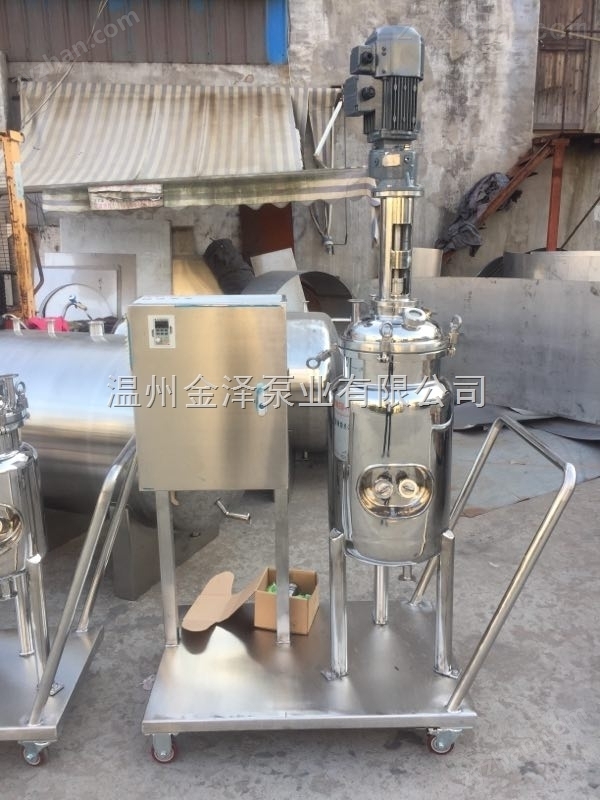
Stainless steel fermentation tanks have a wide range of applications in multiple industrial fields, supporting large-scale production and precision experiments
1. Brewing of alcoholic beverages: In the industrial production of beer, precise temperature control (15-20 ° C in the early stage to promote yeast reproduction, and 10-12 ° C to maintain fermentation in the later stage) and sealing ensure purebred fermentation.
2. Wine and fruit wine production: used for crushing, pressing, and fermentation stages, with precise temperature control to enhance flavor and quality.
3. Biopharmaceuticals and Bioengineering: Applied in the production of antibiotics, vaccines, and other drugs, as well as in the fields of synthetic biology and green biomanufacturing.
4. Food industry: covering fermentation processes such as dairy products and beverages, ensuring product quality through sterile environments.
5. Fine chemical industry: plays a core role in the production of chemical products such as enzyme preparations and biofuels.
6. Research and Laboratory: Suitable for research institutes and enterprise laboratories, used for microbial culture medium formula screening, precision fermentation experiments, etc.
Last Article: Process principle of pipeline emulsion pump