-
E-mail
safooculture@126.com
-
Phone
13921516406
-
Address
No. 61 Huairen Road, Donggang Town, Xishan District, Wuxi City
Wuxi Saifu Safety Equipment Co., Ltd
Industry Key Points | Safety Hazard Investigation Checklist for Hazardous Chemical Warehouses
Date: 2025-08-06Read: 7
The storage of hazardous chemicals is urgent and cannot be delayed
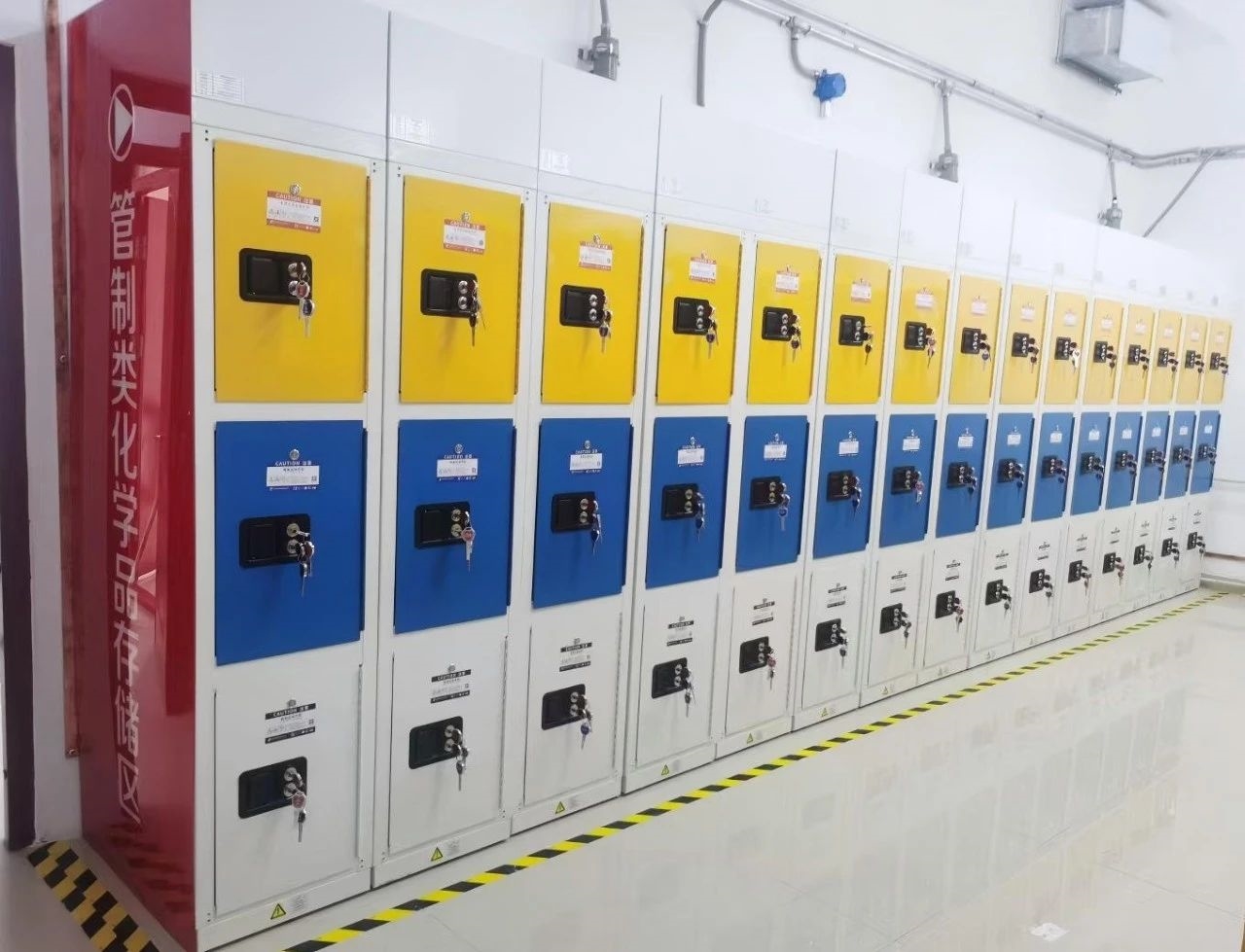
The hazardous chemical warehouse is a major safety risk source, and once an accident occurs, the consequences are unimaginable. In recent years, with the continuous improvement of national requirements for hazardous chemical safety management, enterprises have increasingly attached importance to warehouse safety. But facing the complex characteristics of hazardous chemicals and strict safety regulations, many companies are still confused: what should be investigated? How to find professional and effective?
Safety facility inspection
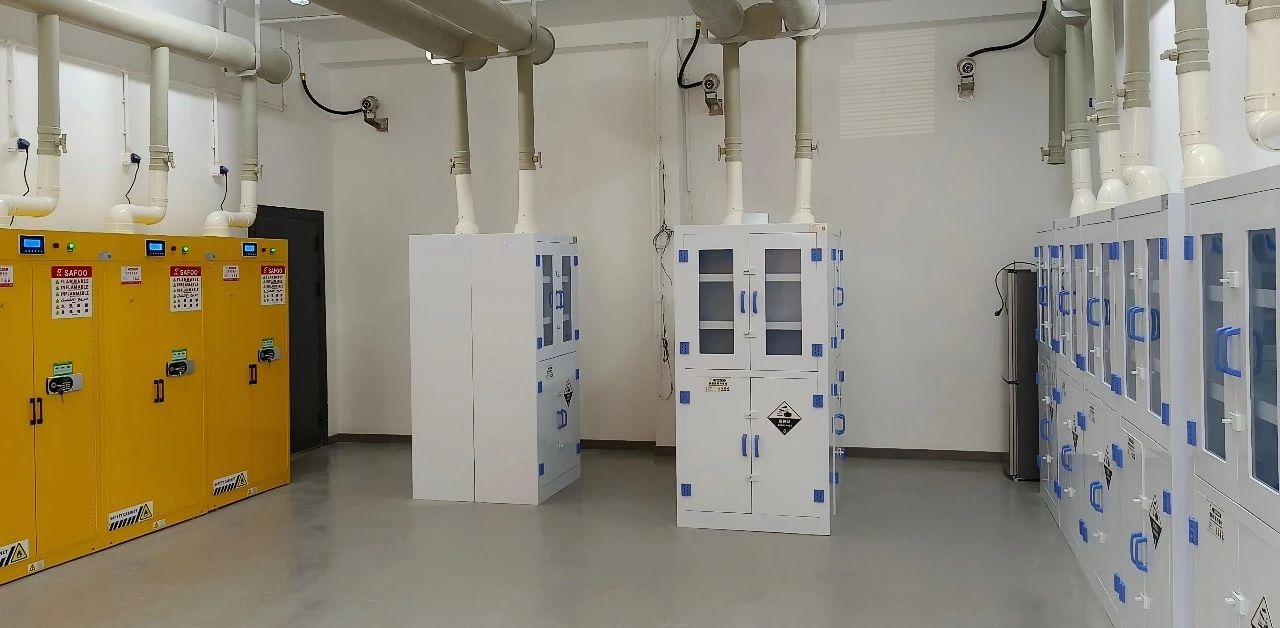
firefighting facilities
Check whether the types and quantities of fire-fighting equipment meet the requirements, and whether they are regularly inspected and maintained; Is the fire escape unobstructed; Are there personnel proficient in using firefighting equipment.
ventilation facilities
Confirm that the ventilation facilities are working properly, the air quality in the warehouse is qualified, and avoid the accumulation of toxic gases.
monitoring alarm
Check if the monitoring facilities are working properly; Whether combustible gas or toxic gas monitoring and alarm devices are installed and interlocked with accident ventilation facilities.
Lightning protection and anti-static measures
According to the latest standards of the China Meteorological Administration, check whether the lightning protection device meets the specifications and whether the grounding resistance is ≤ 4 Ω; Especially before the high incidence season of lightning, special inspections must be conducted.
Check compliance
Has the hazardous chemical warehouse undergone fire safety inspection.
Chemical storage inspection
Storage conditions
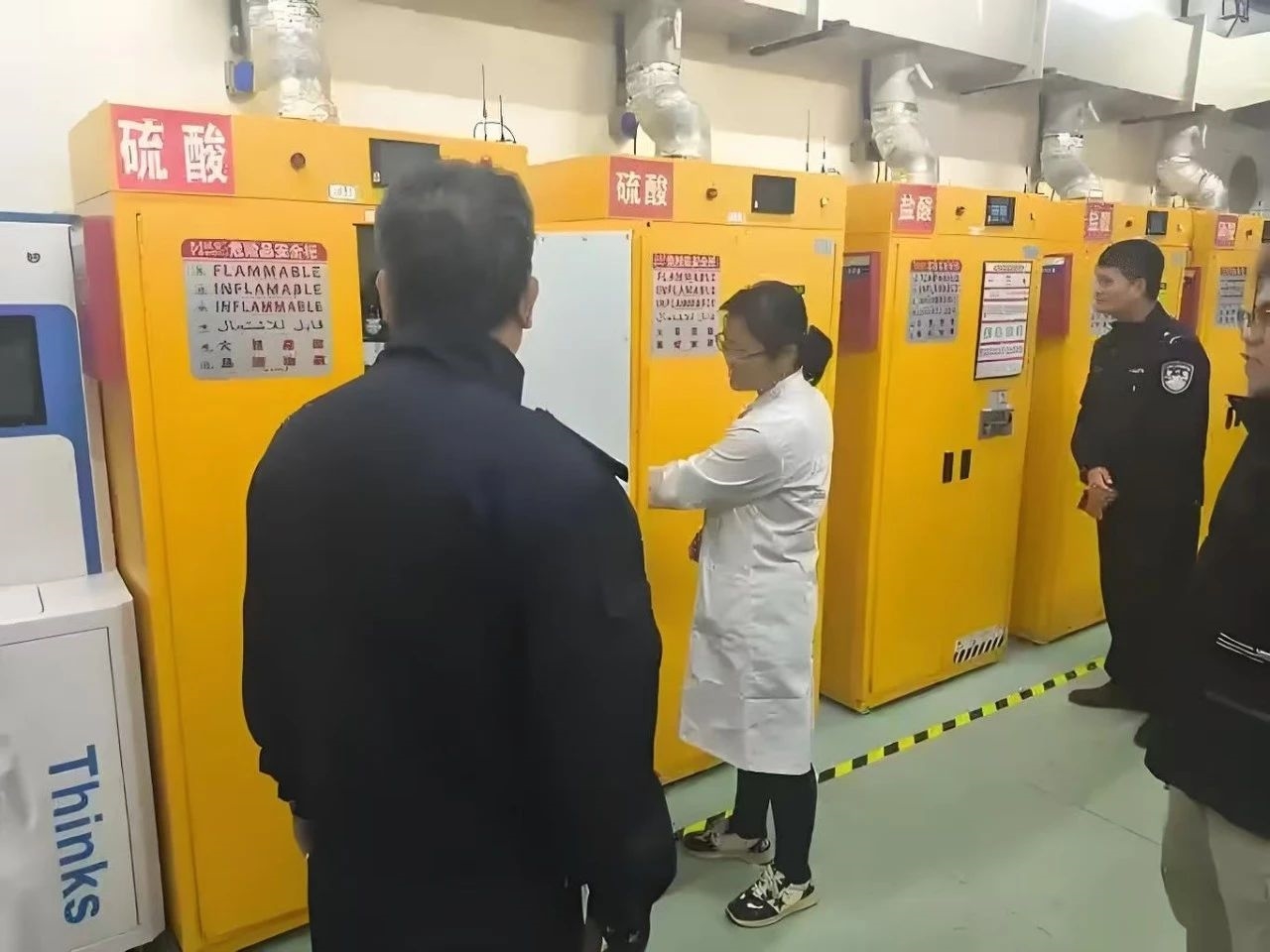
Check whether the warehouse is dry, ventilated, moisture-proof, and free of fire sources; Is there any leakage, water accumulation, or water seepage. Whether the temperature and humidity meet the requirements, especially whether flammable and explosive hazardous chemicals are stored in a cool, ventilated, and dry environment.
Classified storage
Confirm whether the storage is in accordance with regulatory requirements and whether it is classified and partitioned according to different hazardous characteristics; Are the conflicting properties strictly separated.
Packaging and labeling
Check whether the chemical packaging is intact (without leakage, expansion, etc.), and whether the label markings are clear and distinct.
Stacking and storage management
Whether the goods are neatly arranged and whether the stacking is too high; Is the shelf stable and free from rust and aging. Whether the types and stacking quantities of hazardous chemicals exceed the permitted quantity.
Building and Environmental Inspection

Warehouse building
Check if the building is sturdy and if there is any settlement; Whether the doors and windows are intact; Whether the moisture-proof and waterproof measures are effective.
Safety Passage
Whether the safety exit signs are clear and whether the evacuation routes are unobstructed.
surrounding environment
Check if safety fences or warning lines have been set up; Whether the outdoor equipment and facilities are stable; Have shelters, billboards, etc. been reinforced.
Check the fire separation distance
1. Whether the fire separation distance between the hazardous chemical warehouse and other buildings meets the requirements.
2. Is there any accumulation of flammable materials or unauthorized use of open flames in the storage area.
Investigation basis: The fire separation distance between Class A warehouses and high-rise civil buildings, as well as civil buildings with densely populated areas, should not be less than 50m, and the fire separation distance between Class A warehouses should not be less than 20m, according to the General Code for Building Fire Protection GB55037-2022 3.2.2.
Personnel and operation inspection

Qualification training
Verify whether the warehouse management personnel have received professional safety training and possess knowledge of chemical storage, use, emergency response, etc.
Check management
Check if the warehouse keeper regularly conducts inventory checks, recording in detail the names, categories, time, quantity, and other information of incoming and outgoing goods, and keeping the records for at least one year.
protective equipment
Check whether personal protective equipment (such as gas masks, protective clothing, etc.) is fully equipped and effectively applicable.
Operating Specifications
Focus on investigating the "repeated violations" issues such as special homework management, alarm handling, and illegal operations. Should hazardous operations such as outdoor high-altitude work, lifting and hoisting, and outdoor hot work be stopped during severe weather conditions such as thunderstorms and strong winds.
contractor management
Whether the management of vehicles for external personnel is standardized and whether a contractor admission and exit mechanism has been established.
Basis for investigation
General Rules for Storage of Hazardous Chemicals in Warehouses GB 15603-2022 4.3 Hazardous chemical storage information data should be backed up in real-time in different locations, and the data retention period should not be less than 1 year.
Article 24 of the Regulations on the Safety Management of Hazardous Chemicals stipulates that hazardous chemicals shall be stored in dedicated warehouses, dedicated sites, or dedicated storage rooms (hereinafter referred to as dedicated warehouses) and managed by dedicated personnel; Highly toxic chemicals and other hazardous chemicals that constitute major hazard sources in storage quantities should be stored separately in dedicated warehouses, and a dual person receiving and storage system should be implemented.
Article 28 of the Regulations on the Safety Management of Hazardous Chemicals stipulates that units using hazardous chemicals shall comply with the requirements of laws, administrative regulations, national standards, and industry standards in terms of their usage conditions (including processes), and establish and improve safety management regulations and safety operation procedures for the use of hazardous chemicals based on the types, hazardous characteristics, usage amounts, and usage methods of the hazardous chemicals used, to ensure the safe use of hazardous chemicals.
Article 4 of the Regulations on the Safety Management of Hazardous Chemicals stipulates that hazardous chemical units shall meet the safety conditions required by laws, administrative regulations, national standards, and industry standards, establish and improve safety management regulations and job safety responsibility systems, and provide safety education, legal education, and job technical training to employees. Employees should receive education and training, and only work after passing the assessment; For positions that require qualifications, personnel who have obtained corresponding qualifications in accordance with the law should be equipped.
Key focus: 2025 special governance requirements
According to the latest deployment of the State Council Safety Committee, hazardous chemical warehouses in 2025 need to pay special attention to:
1. Control of major hazard sourcesImplement the system of three types of responsible persons for insurance and improve the monitoring and early warning system.
2. Elimination of old equipment:Promote the elimination and renovation of "one device, two tanks" according to the plan.
3. Automation transformation:High risk process enterprises implement "two reductions and two improvements" (reduction, reduction of personnel, improvement of automation, and improvement of education level).
4. Special homework monitoring:Realize video monitoring of the entire process of special grade hot work and confined space operations.
5. Risk control in the park:A. B-level high-risk parks have suspended new project access, promoting the upgrading of park safety risk levels.
Secure Storage Solution: The Core Value of Professional Storage Cabinets
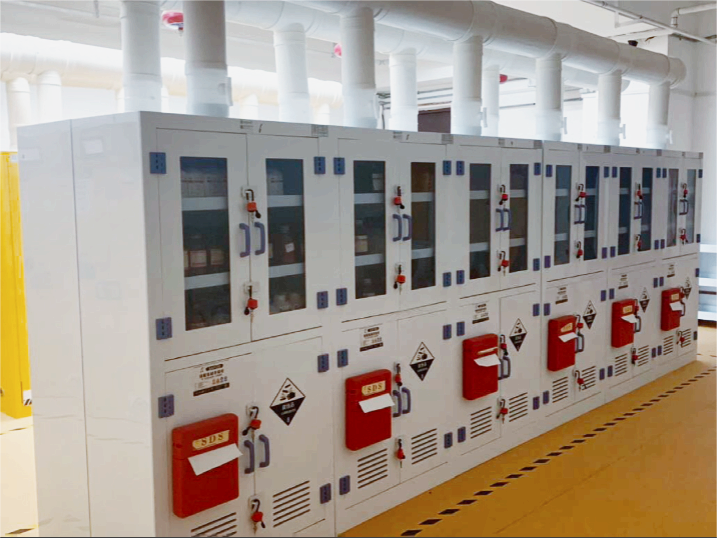
Faced with increasingly strict safety requirements, professional hazardous chemical safety storage cabinets have become a key choice for compliant storage for enterprises
Classification partition storage:Meet the classification and storage requirements of hazardous chemicals with different properties, and avoid the risk of contact with incompatible substances.
Leak proof design:Equipped with leak proof grooves and sealing systems to prevent chemical leakage and diffusion.
Fire and explosion prevention:Using refractory materials can effectively delay the spread of fire and buy time for emergency response.
Ventilation control:A professional ventilation system can be optionally selected to maintain air circulation inside the cabinet and prevent the accumulation of harmful gases.
Temperature and humidity management:Maintain a stable storage environment, especially suitable for chemicals that are sensitive to temperature and humidity.
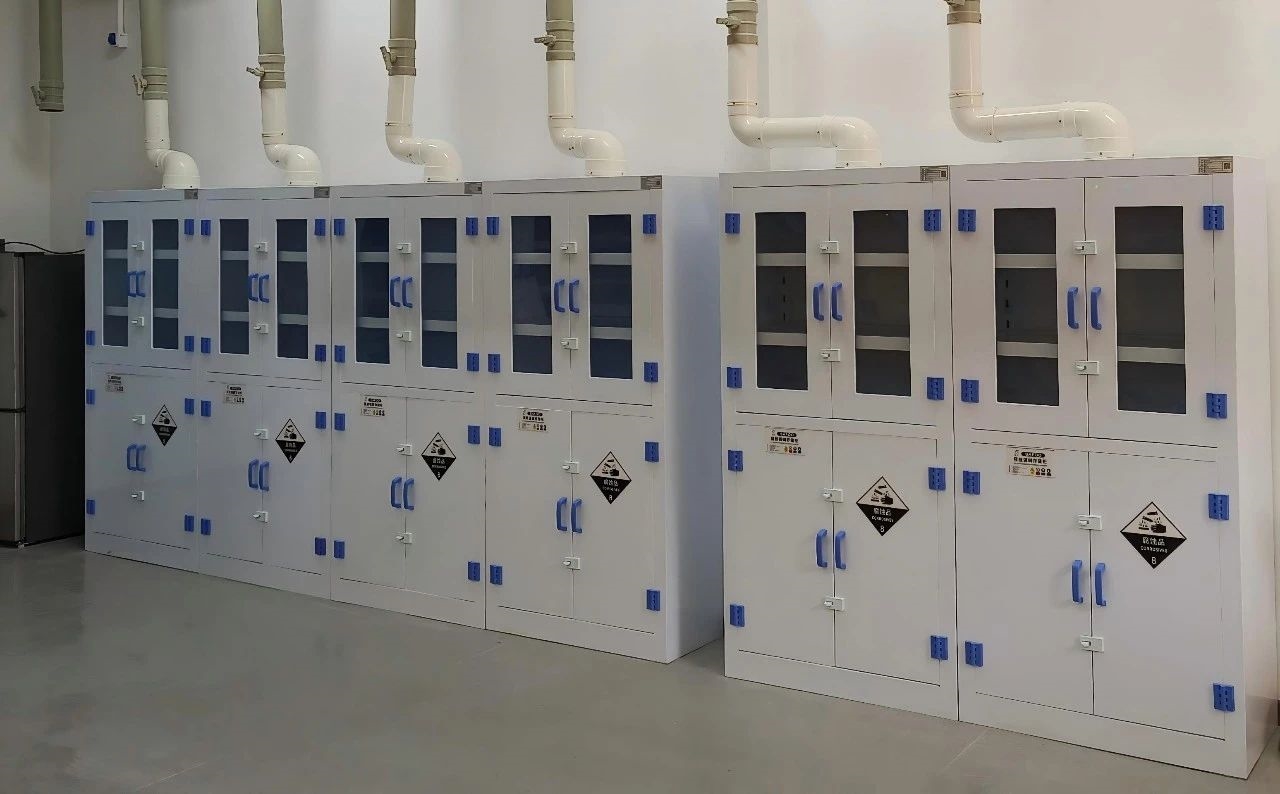
The safety management of hazardous chemical warehouses is a systematic project. Through effective rectification and professional storage methods, enterprises can establish a sound defense line for hazardous chemical safety. Every standardized inspection is a respect for life; Eliminating every hidden danger is a practice of responsibility. The road to safety cannot tolerate any carelessness, let us jointly build this safety barrier that concerns life and property!