-
E-mail
2109676989@qq.com
-
Phone
15961853932
-
Address
No.1 Zhangjingjingshi Road, Xibei Town, Xishan District, Wuxi City
Video
Wuxi Shenyu Environmental Protection Equipment Co., Ltd
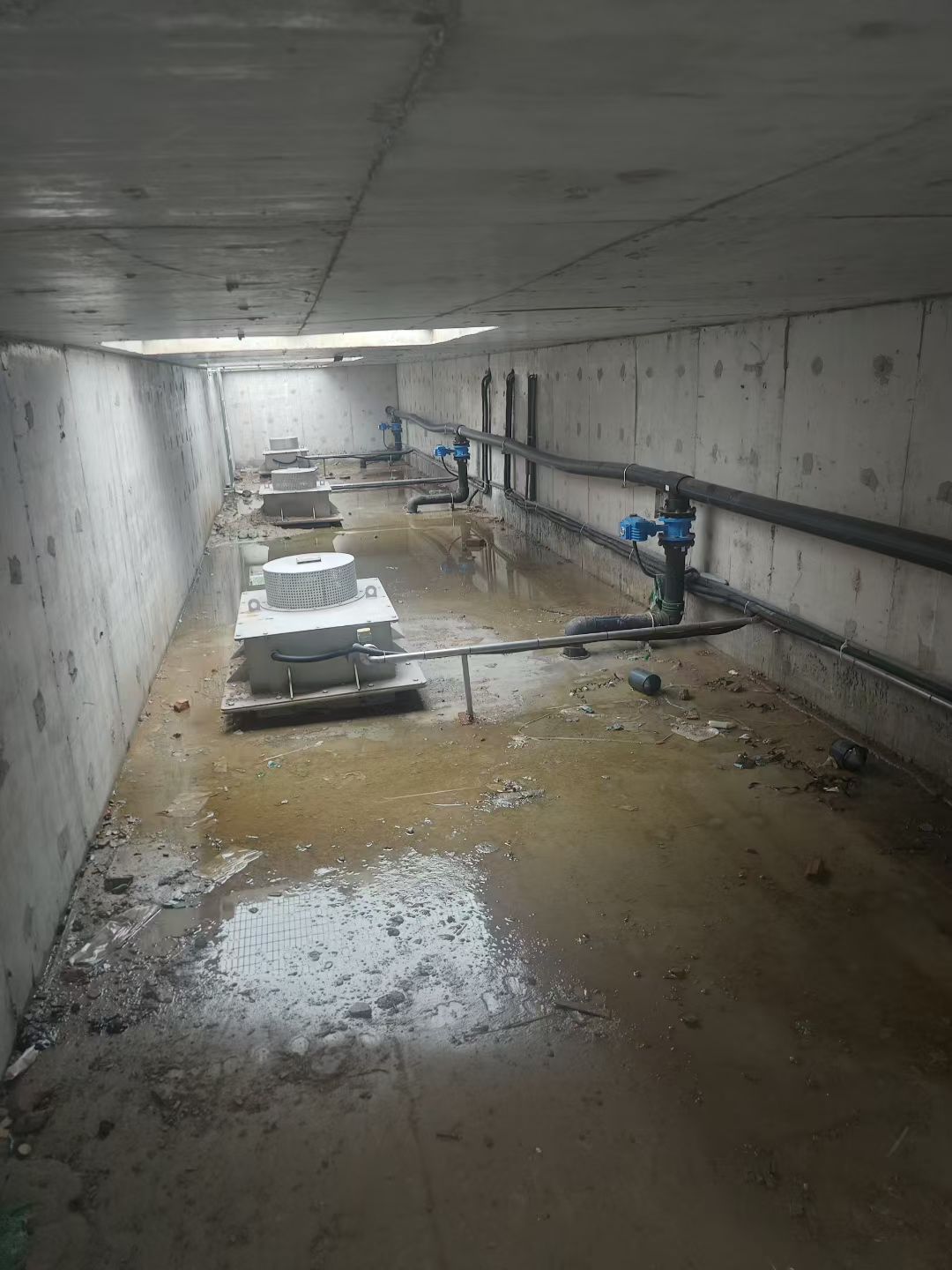
Debugging and operation of vacuum flushing equipment for Shijiazhuang Baigou storage tank
07.15,20252
Brief Introduction
As a key facility in urban drainage systems, the debugging and operation effect of the regulating tank vacuum flushing equipment directly affects the efficiency of sewage treatment, energy consumption control, and equipment service life. Based on the analysis of actual test data and operational experience from multiple domestic project cases, the debugging of the vacuum flushing system should focus on three core aspects: airtightness testing, vacuum stability, and flushing cycle optimization. Its operational effectiveness is ultimately reflected in quantitative indicators such as energy consumption ratio, cleanliness compliance rate, and failure rate.
1、 Airtightness debugging: the foundation for stable system operation
In a storage tank project in Hefei, the commissioning team used a helium mass spectrometer leak detector to scan the whole section of the vacuum pipeline, and found that there was a micro leak point at the flange connection. After the corrosion resistant seal ring was replaced, the system vacuum degree increased from -85 kPa to the design value of -92 kPa. It is worth noting that the welds of the vacuum tank need to undergo 100% penetration testing. In a certain project, the vacuum maintenance time was shortened by 30% due to weld porosity. After repair welding treatment, the system restored its design performance. It is recommended to conduct a 72 hour pressure holding test during the debugging phase, and the pressure fluctuation should be controlled within ± 2%, which has a decisive impact on the subsequent flushing effect
2、 Dynamic parameter optimization: balancing energy consumption and cleaning efficiency
The operating data of a sewage treatment plant in Nanjing shows that when the vacuum flushing cycle is adjusted from 30 minutes to 45 minutes, the suspended solids removal rate still remains above 92%, while the daily electricity consumption decreases by 18%. This adjustment needs to be combined with the actual sedimentation characteristics of the storage tank, and dynamically corrected through feedback data from the turbidity online monitoring instrument. The Shanghai Hongqiao Hub project innovatively adopts the 'pulse flushing' mode, changing the single continuous suction to multiple short-term suction with intervals of 0.5 seconds, which increases the sludge stripping rate at the bottom of the tank to 97%, while avoiding the problem of filter blockage caused by one-time large flow impact. Special attention should be paid during the debugging process: the start stop frequency of the vacuum pump should not exceed 6 times per hour, otherwise the temperature of the motor winding will exceed the limit for operation.
3、 Intelligent Control System Debugging: From Automation to Intelligence
A project in Guangzhou has introduced an AI algorithm optimization system, and a prediction model established through historical data training can predict sedimentation trends 2 hours in advance and automatically adjust flushing parameters. During debugging, it is necessary to verify the coordination between PLC and sensors. Common problems include: vacuum pump idling caused by signal delay of liquid level sensor, or flushing blind spots caused by electromagnetic valve response deviation. During a debugging process, the checksum setting of the RS485 communication protocol was modified to shorten the device's response time from 1.2 seconds to 0.3 seconds. It is recommended to simulate more than 20 abnormal operating conditions during the acceptance stage to test the system's fault tolerance capability.
4、 Multi dimensional evaluation system for operational effectiveness
After three months of tracking and monitoring, the vacuum flushing equipment of a project in Chengdu has shown the following typical data: energy consumption per ton of water flushing is 0.18kW · h (67% energy-saving compared to traditional water flushing), residual thickness at the bottom of the pool is ≤ 3mm (100% compliance rate), and equipment operating time has exceeded 4000 hours. But at the same time, it also exposed the problem of vacuum fluctuation of ± 8% during the high load period of the rainy season, which was later solved by adding buffer tanks. It is worth noting that the operating parameters under different water quality conditions need to be set differently. For example, when treating oily wastewater, the flushing temperature needs to be raised to above 40 ℃ to ensure the effectiveness of oil pollution removal.
5、 Technical points for long-term operation and maintenance
The 'three checks and two maintenance' system summarized by a certain operation and maintenance team in Beijing is worth promoting: daily inspection of vacuum gauge reading fluctuations, weekly inspection of pulse valve diaphragm status, and monthly detection of pipeline wall thickness; At the same time, we insist on maintaining the vacuum pump bearings every quarter and replacing the defogger filter element every six months. Practice has shown that projects that strictly implement this system can achieve a stable overall equipment efficiency (OEE) of over 92%. For vulnerable parts such as rubber seals, it is recommended to establish an inventory warning mechanism to avoid system downtime caused by delayed replacement of parts.
The current industry is developing towards the direction of 'digital twin+vacuum flushing'. Shenzhen has tested mapping equipment 3D models with real-time operating data to achieve fault simulation and prediction. Debugging work is no longer a one-time task, but a continuous optimization process that runs through the entire lifecycle of the equipment. In the future, with the application of new nano hydrophobic materials in vacuum pipelines, system energy consumption is expected to be further reduced by 15% -20%, which requires debugging personnel to continuously update their knowledge system and master interdisciplinary technology integration capabilities.