-
E-mail
wuxishuangrui@163.com
-
Phone
13861731823
-
Address
North Qifang Industrial Park, Qianzhou Town, Huishan District, Wuxi City
Wuxi Shuangrui Machinery Co., Ltd
Briefly describe the standardized operation process of the cone filter washing and drying machine
Date: 2025-09-01Read: 6
The cone filter washing and drying machine is a multifunctional pharmaceutical and fine chemical equipment that integrates filtration, washing, and drying. It is widely used in the post-treatment of wet materials such as sterile raw materials, pharmaceutical intermediates, and high value-added chemicals. The fully enclosed design of the cone filter washing and drying machine avoids pollution and loss during material transfer, meeting GMP requirements. To ensure the safe and efficient operation of the equipment, it is necessary to follow standardized operating procedures.
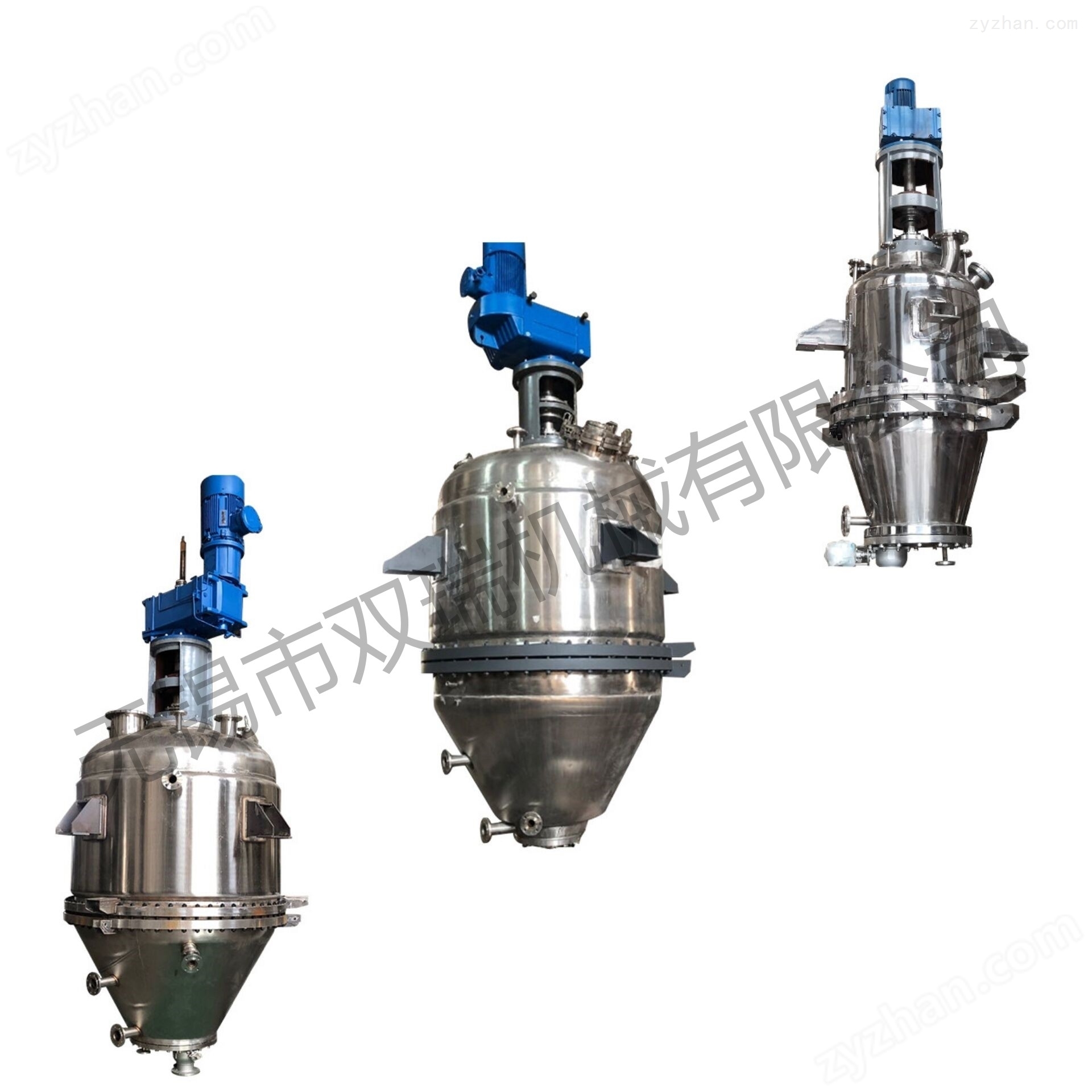
1、 Preparation before use
1. Equipment inspection: Confirm that all components of the equipment (cylinder, mixing blade, filter base plate, jacket, seal, etc.) are intact and free of residue. Check if the hydraulic system, vacuum system, heating/cooling system, and electrical control are functioning properly.
2. Cleaning and sterilization: Perform CIP (online cleaning) and SIP (online sterilization) according to SOP. Rinse the inner wall and filtration system with suitable solvents, ensure that the temperature (usually 121 ℃) and pressure meet the standards during steam sterilization, and maintain them for the specified time.
3. Install filter element or filter cloth: Select a metal sintered filter element or filter cloth with a suitable aperture according to the material characteristics, install it firmly, ensure good sealing, and prevent leakage.
2、 Feeding and pressure filtration
1. Feeding: Inject the wet material to be processed into the cylinder through a closed pipeline or feeding port, controlling the feeding amount not to exceed 70% of the equipment volume to avoid overflow.
2. Pressure filtration: Close the discharge valve, introduce inert gas (such as nitrogen) or compressed air, apply pressure (0.2-0.4MPa) to the material, and discharge the mother liquor through the filter plate to achieve solid-liquid separation. The drainage process should be smooth to avoid sudden pressure rise that may cause damage to the filter material.
3、 Washing operation
1. Add washing solution: Spray washing solvent (such as water, ethanol, etc.) evenly onto the filter cake through a spray device to ensure sufficient wetting.
2. Stirring and washing: Start the stirring blade (low-speed operation) to fully mix the filter cake with the washing solution, improving washing efficiency. Note that the mixing speed should not be too high to prevent filter material wear or material breakage.
3. Secondary pressure filtration: After washing is completed, apply pressure again, discharge the washing solution, and repeat 1-2 times to remove impurities.
4、 Vacuum drying
1. Open the vacuum system: Close all intake valves, start the vacuum pump, and pump the cylinder to the set vacuum degree (usually ≤ -0.095MPa).
2. Heating and drying: Hot water or thermal oil is introduced through a jacket (the heating temperature is set according to the material characteristics, generally 40-80 ℃), and stirring is turned on to promote uniform heat transfer and accelerate water evaporation.
3. Monitoring the drying process: Measuring the moisture content through temperature, pressure, and sampling ports to determine the drying endpoint.
5、 Discharge and Clearance
1. Relieve pressure and break the air: After drying is completed, slowly introduce nitrogen or air to break the air and avoid dust flying.
2. Discharge: Open the bottom discharge valve and push or discharge the dry powder by gravity through the mixing blade. For sterile products, they should be discharged in a sealed manner under laminar flow.
3. Cleaning equipment: promptly remove residual materials, perform CIP/SIP again, and prepare for the next batch.