-
E-mail
964647774@qq.com
-
Phone
15920950837,13660093526
-
Address
21 Maqian Road, Dagang Town, Nansha District, Guangzhou City
Xiaohan Industrial Development (Guangzhou) Co., Ltd
Structural characteristics of emulsified glass reaction kettle
Date: 2025-12-26Read: 12
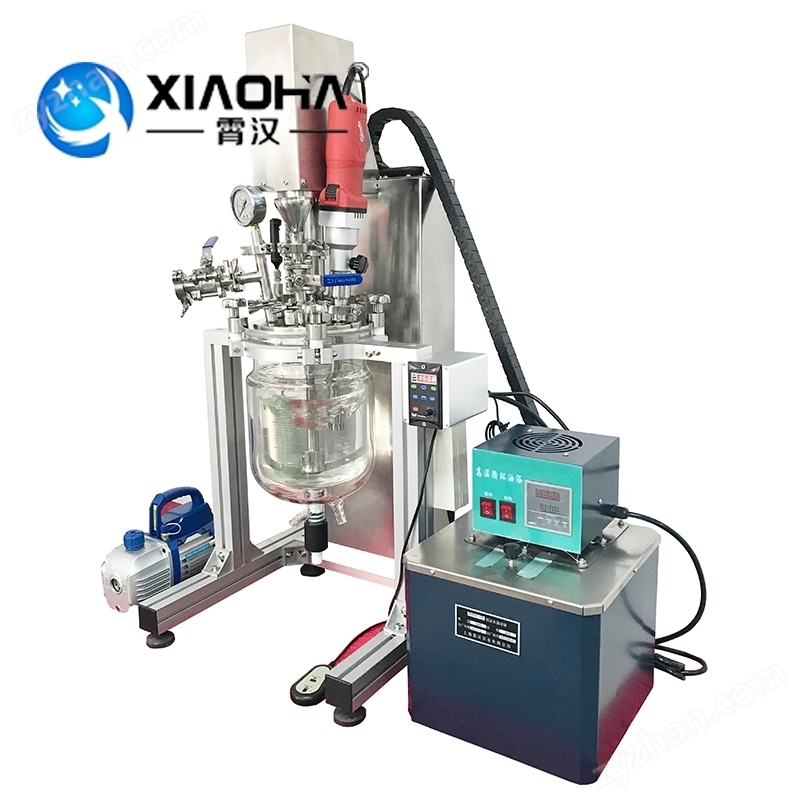
Emulsified glass reaction kettle is an important equipment in chemical experiments and industrial production, designed specifically for efficient emulsification, homogenization, and mixing reactions. Its structure combines the transparency, corrosion resistance, and advanced mechanical design of glass to ensure the safety and controllability of the reaction process. The following provides a detailed analysis of the structural characteristics of emulsion glass reaction vessels from two aspects: main components and key design features.
1、 Main components
The emulsified glass reactor is composed of multiple precision components that work together, each optimized for the specific requirements of the emulsification reaction
1. Cauldron body and jacket:
The kettle body is usually made of high borosilicate glass (GG-17 material), which has excellent physical and chemical stability and can withstand a wide temperature range (from extremely low to high temperature) and corrosive media. The jacket is designed as a double-layer structure, and the middle layer can be filled with a constant temperature heating or cooling medium (such as hot water, hot oil, or freezing liquid) to achieve precise temperature control of the reaction materials, ensuring that the emulsification process is carried out at the optimal temperature. This design not only improves heat exchange efficiency, but also avoids problems of local overheating or uneven cooling.
2. Mixing system:
The stirring system is the core of the emulsification reaction, usually composed of multi-stage stirring devices, including low-speed agitators and high-speed homogenizers. Low speed mixers (such as frame or anchor type) are responsible for large-scale material circulation, preventing wall sticking and agglomeration; High speed homogenizers, such as high shear dispersing emulsifiers, generate strong shear forces through the high-speed rotation of precision rotors and stators, tearing materials into micrometer sized particles and achieving uniform emulsification. This combination design balances gentle mixing and efficient dispersion, making it suitable for materials of different viscosities.
3. Transmission and sealing device:
The transmission system consists of a motor, a reducer, and a magnetic coupling, providing smooth and adjustable speed control to ensure spark free and low-noise mixing process, especially suitable for flammable and explosive environments. The sealing device adopts PTFE material or alloy steel mechanical seal, which can maintain high-precision sealing under negative pressure or vacuum conditions, prevent leakage, and extend equipment life.
4. Auxiliary system:
The auxiliary system includes temperature monitoring (such as Pt100 sensors), vacuum system (for defoaming and improving safety), and control system (such as PLC or computer interface), supporting automated operation and parameter preset. In addition, the discharge port is designed with a polytetrafluoroethylene valve to ensure that there is no residue in the discharge of materials, making it easy to clean and maintain.
2、 Key design features
The structural design of the emulsified glass reactor reflects the combination of functionality and aesthetics, with the main features including:
1. Transparent visibility:
The transparent properties of high borosilicate glass make the reaction process clear at a glance, facilitating real-time observation of material status and emulsification effect, and timely adjustment of process parameters. This design not only enhances experimental controllability, but also reduces the risk of interruption caused by invisible issues.
2. Modularization and Customization:
Modern emulsion glass reaction vessels adopt modular interface design, such as standard flanges and functional covers, supporting flexible configuration of condensers, drip devices, or online monitoring ports to meet diverse scientific research and pilot testing needs. Users can quickly expand functions and improve equipment utilization based on specific reaction types, such as pharmaceuticals or chemicals.
3. Safety and durability:
The structural design emphasizes safety, and the outer glass surface temperature is relatively low to prevent operators from getting burned; At the same time, equipped with pressure sensors and temperature alarm devices to ensure timely response to abnormal situations. In terms of durability, high borosilicate glass and anti-corrosion coatings (such as PTFE coating) enhance the equipment's resistance to strong acids, alkalis, or organic solvents, extending its service life.
4. Efficient and energy-saving:
By optimizing the jacket fluid distribution and agitator design (such as anchor or turbine), the reactor achieves the best balance between energy consumption and mixing efficiency, reducing energy waste. In addition, the design of the kettle chamber and jacket ensures the discharge of the medium, avoids the problem of liquid accumulation, and improves overall efficiency.
Conclusion
The structural characteristics of the emulsified glass reactor reflect the integration of modern engineering and materials science. Its transparency, modularity, safety, and efficiency make it an ideal choice for fields such as biopharmaceuticals and fine chemicals. With the continuous emergence of innovative processes such as intelligent temperature control and IoT integration, this device will continue to drive scientific exploration and industrial production progress.