-
E-mail
linda.zhu@telstar.com
-
Phone
13918436367
-
Address
Building 7, Building 1, No. 1731 Xinyang Road, Lingang New Area, China (Shanghai) Pilot Free Trade Zone
Xingdeke Taishida Pharmaceutical Technology (Shanghai) Co., Ltd
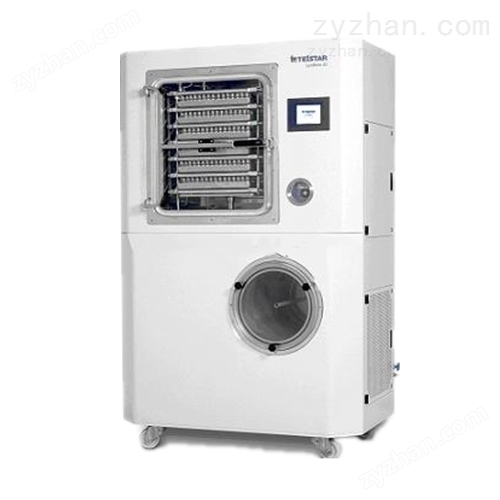
The process principle of laboratory research and development of freeze-drying machine
Date: 2025-07-23Read: 5
The core principle of laboratory research and development of freeze-drying machine (freeze dryer) is to directly raise the moisture (or other solvents) in the material from solid ice to gas state under low temperature and low pressure conditions, thereby achieving the purpose of drying while maximizing the preservation of the original structure and activity of the material. The process is mainly divided into three key stages:
1、 Pre freezing stage:
1. Purpose: Freeze all the materials to be dried (usually solutions, suspensions, or wet solids) into solid ice crystal structures. This is the foundation for the subsequent sublimation process.
2. Principle: The material is placed on the drying chamber shelf of the freeze dryer. By circulating refrigerant (or direct refrigeration) or cold trap radiation inside the shelf, the temperature of the material is rapidly reduced to below its eutectic point (for solutions) or eutectic point (for crystal mixtures), usually far below the freezing point of water (such as -40 ℃ to -50 ℃ or lower). The cooling rate at this stage (slow freezing or quick freezing) is crucial for the structure of the final freeze-dried product (such as ice crystal size, porosity) and the retention of active substances, and needs to be precisely controlled according to the material characteristics.
2、 One drying/sublimation drying stage:
1. Purpose: To directly convert solid ice into water vapor and remove it while maintaining the frozen state of the material.
2. Core principle:
Vacuum establishment: The vacuum pump is started to continuously evacuate the drying chamber, significantly reducing the system pressure (usually in the range of tens to hundreds of pascals).
Low temperature maintenance: The shelf temperature is maintained at a low level (usually between -30 ℃ to -10 ℃ or according to the material setting) to ensure that the core temperature of the material is below its collapse temperature or eutectic/melting point, and the material is always in a frozen state.
Sublimation occurs: In low temperature and low pressure environments (far below the triple point pressure of water at 610.5 Pa), ice molecules gain sufficient energy to sublime directly from the solid state to water vapor without going through the liquid water stage. This process requires the absorption of a large amount of heat (latent heat of sublimation).
Heat supply and balance: The shelf provides controllable heat (through internal heating medium circulation), accurately compensating for the heat absorbed by ice sublimation. Insufficient heat can lead to slow or even stagnant sublimation; Excessive heat may cause local melting or collapse of the material (damaging the porous structure). After the moisture sublimates inside the material, it diffuses out through the porous channels left by the drying layer of the material.
Water vapor capture: The large amount of water vapor generated by sublimation is efficiently captured by a cold trap (condenser) located between the drying chamber and the vacuum pump. The temperature of the cold trap is much lower than that of the drying chamber (usually below -50 ℃, up to -80 ℃ or even lower). When water vapor comes into contact with the surface of the cold trap coil, it quickly condenses into ice and adheres to it, thereby preventing water vapor from entering the vacuum pump and causing damage, and maintaining the low pressure environment and low vapor partial pressure difference required by the system (the key driving force for sublimation).
3. Key point: In this stage, the vast majority of free water in the material is removed (accounting for over 90% of the total moisture content of the material). The sublimation rate is determined by the heat provided to the sublimation interface, the conduction rate of water vapor through the drying layer, and the condensation ability of the cold trap. Usually the longest duration.
3、 Secondary drying/desorption drying stage:
1. Purpose: To remove the bound water that remains inside the dried material after one drying cycle and is tightly bound to the material molecules (such as proteins and polysaccharides).
2. Principle:
Temperature increase: Under the condition of maintaining high vacuum (which may be higher than a single drying), gradually (sometimes even step wise) increase the temperature of the shelf (from room temperature to 60 ℃ or even higher, depending on the heat resistance of the material).
Desorption occurs: The increased temperature provides sufficient energy to the bound water molecules, causing them to desorb from the material molecules and transform into a water vapor state.
Vacuum removal: The desorbed water vapor is also captured by the cold trap.
3. Key point: Although the total amount of moisture removed in this stage is relatively small (about 5-10% of the total moisture content of the material), it is crucial for the moisture content, long-term stability, and solubility of the final product. Accurate control of temperature and duration is required to avoid material denaturation or degradation caused by overheating.
Last Article: The structural composition of a biosafety cabinet
Next Article: The structural principle and application of ultra clean workbench