-
E-mail
linda.zhu@telstar.com
-
Phone
13918436367
-
Address
Building 7, Building 1, No. 1731 Xinyang Road, Lingang New Area, China (Shanghai) Pilot Free Trade Zone
Xingdeke Taishida Pharmaceutical Technology (Shanghai) Co., Ltd
The structural principle and application of ultra clean workbench
Date: 2025-10-30Read: 5
A super clean workbench is an air purification device that provides a locally high cleanliness working environment, based on aerodynamics and filtration technology. The work process is divided into three main steps:
1. Air intake and pre filtration: The fan system inside the ultra clean workbench draws in indoor air and performs preliminary filtration through a pre filter to remove larger particles and dust.
2. High efficiency air filtration: Pre filtered air enters a high-efficiency particulate air (HEPA) filter, which typically has a pore size of less than 0.3 microns and a filtration efficiency of over 99.97%, effectively blocking pollutants such as bacteria, viruses, and particles.
3. Clean air output: The filtered clean air is blown out from the workbench at a speed of 24-30m/min, forming a stable clean air flow barrier, removing the original air in the work area, and carrying away dust particles and biological particles.
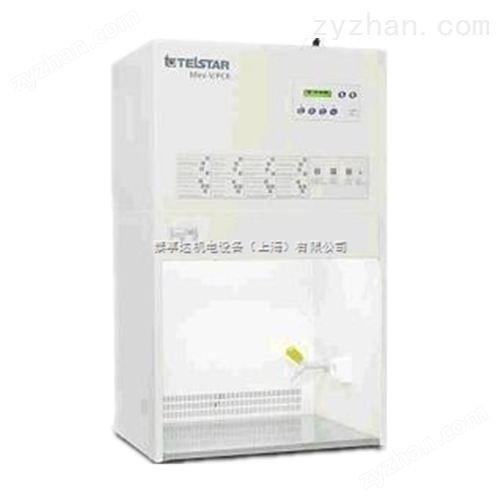
The ultra clean workbench consists of multiple key components:
1. Fan system: provides air flow power, with a power typically between 145-260W.
2. Pre filter: Preliminarily filters large particulate pollutants to protect the high-efficiency filter.
3. HEPA/ULPA: Core filtration component that removes particles larger than 0.3 μ m.
4. Front window/panel of workspace: forms the operating interface, with some models designed as sliding doors.
5. Lighting System: Provides workspace lighting
6. Control panel: adjust functions such as wind speed, lighting, and ultraviolet radiation.
7. UV lamp (some models): used for workbench disinfection.
8. Exhaust system (some models): Control pollution emissions.
Ultra clean workbenches are widely used in multiple industries that require strict control of environmental pollution:
1. Life science research: sterile operations such as cell culture and microbial experiments.
2. Biopharmaceuticals: processes such as drug production and sterile testing.
3. Medical and health services: hospital laboratories, preparation of surgical instruments, etc.
4. Food and cosmetics: microbiological testing, sterile packaging, etc.
5. Electronics industry: precision component assembly, hard disk manufacturing, etc.
6. Optical industry: assembly and testing of optical instruments.
7. Plant tissue culture: inoculation of plant tissue culture.