-
E-mail
13468450892@163.com
-
Phone
13468450892
-
Address
No. 88, No. 1 Huahai Road, Zhifu District, Yantai City
Yantai Haoming Microwave Equipment Co., Ltd
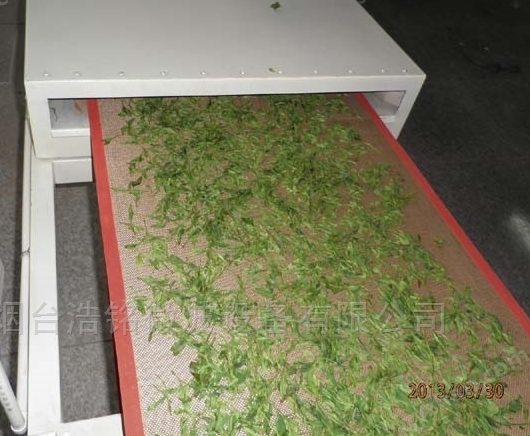
Appearance and structural integrity inspection of microwave tea dryer
Date: 2025-10-27Read: 6
The inspection work of microwave tea dryer before use is a key link to ensure the safe and efficient operation of the equipment, mainly including the following aspects:
1、 Appearance and structural integrity inspection
1. Confirmation of fastening of mechanical components
Verification of door lock device: Repeatedly open and close the equipment door, test whether the electromagnetic lock is engaged properly, and ensure effective microwave leakage protection. Pay special attention to whether the sealing rubber strip shows signs of aging and cracking, and replace it promptly if necessary.
Stability check of bracket: Shake the entire machine frame, check if the bottom support feet are level on the ground, adjust the anchor bolts to eliminate the vibration source. For models with conveyor belts, it is necessary to manually rotate the roller components to confirm that there is no jamming phenomenon.
2. Check the cleanliness inside the cavity
Use a flashlight to shine on the inner wall of the drying chamber, focusing on cleaning residual tea powder, dust, and foreign objects. The oxidation spots on the metal surface can be polished with fine sandpaper to avoid affecting the microwave reflection efficiency. At the same time, remove the clogged fluff on the exhaust filter screen to ensure smooth ventilation.
2、 Safety testing of electrical system for microwave tea dryer
1. Normative review of power connection
According to the voltage level indicated on the equipment nameplate (usually 380V three-phase five wire system), check whether the wiring terminals are correctly connected according to the color code. Use a multimeter to check the voltage balance phase by phase, and the deviation should be controlled within ± 5%. The grounding resistance must be less than 4 Ω, which can be verified through actual measurement of the grounding pile.
Check the status of each circuit breaker in the control cabinet and confirm that the leakage protector (operating current ≤ 30mA) is functioning properly. Attempt to simulate overload conditions and observe whether it can quickly trip and cut off power.
2. Insulation performance testing of power lines
Use a megohmmeter to measure the insulation resistance between the power line and the housing, with a standard requirement of not less than 2M Ω. Focus on checking for damage at the high-frequency cable joints, and ensure that the high-voltage capacitor cabinet door is closed and interlocked. For cables with severe aging, it is recommended to replace the entire cable.
3、 Special debugging of microwave tea dryer microwave system
1. Pre check of working status of magnetron
Start the generator with the load disconnected and observe with an oscilloscope whether the anode voltage waveform conforms to the sine law. Normally, it should present a stable and smooth curve. If burrs or distortions appear, it indicates that the magnetron is aging and needs to be replaced. At the same time, listen for any abnormal ignition sounds and immediately shut down for maintenance.
2. No load resonant cavity tuning
Place a standard load (such as a purified water bag) for cold testing, gradually adjust the position of the waveguide short-circuit piston until the maximum field strength indication is obtained. At this time, the power meter reading should reach over 90% of the design rated value, and the distribution uniformity error should not exceed ± 15%. Record the optimal parameters as the baseline values for subsequent production.
4、 Dynamic verification of transmission mechanism for microwave tea dryer
1. Synchronization adjustment of the conveying system
Control the forward and reverse rotation of the conveyor by jogging, and check whether the tension of the chain is appropriate (with a sag of about 20mm). The deviation of the conveyor belt shall not exceed one-third of the width of the idler roller, and the trajectory can be corrected by adjusting the angle of the correction roller. The feedback signal of the speed sensor needs to match the set value of the PLC, with an error controlled within ± 2rpm.
2. Verification of the effectiveness of the flipping device
Spread simulated tea leaves evenly on the material bed (green beans can be used as a substitute), turn on the vibration motor, and observe the frequency of material flipping. Ideally, 4-6 complete cycles should be completed per minute without any local accumulation. Adjusting the angle of the eccentric block can fine tune the vibration amplitude.