-
E-mail
13468450892@163.com
-
Phone
13468450892
-
Address
No. 88, No. 1 Huahai Road, Zhifu District, Yantai City
Yantai Haoming Microwave Equipment Co., Ltd
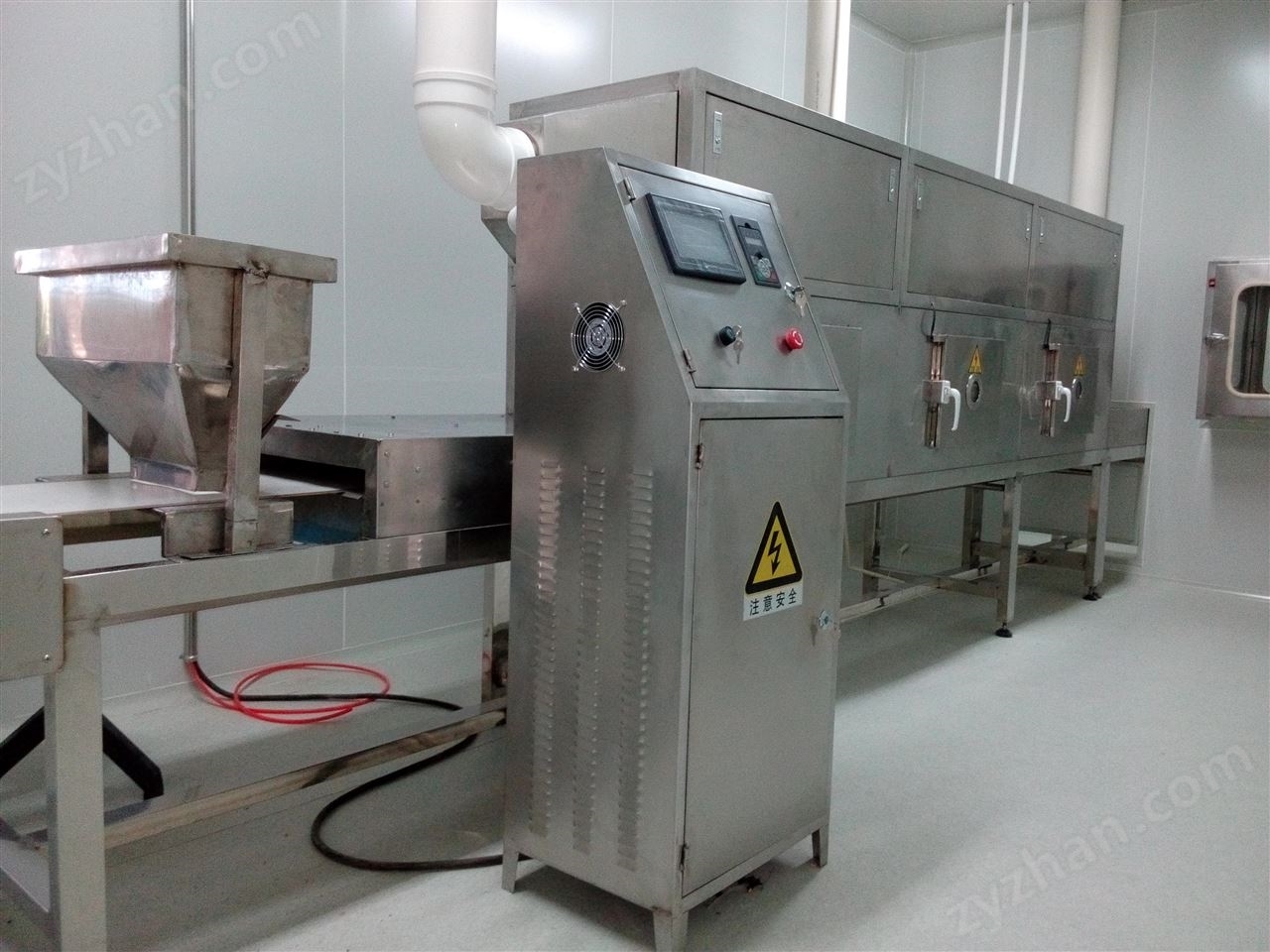
Detailed explanation of design requirements for chemical powder dryer
Date: 2025-08-25Read: 8
In the chemical industry, the drying of powder materials is a crucial process step. Effective drying can not only improve product quality, but also optimize production efficiency and energy consumption. In response to this demand, the design of chemical powder dryers must fully consider various factors such as material characteristics, process conditions, and safety and environmental protection. The following are specific design requirements:
1、 Basic design of chemical powder dryer to adapt to material characteristics
1. Efficient heat transfer and uniform heating mechanism
The particle size distribution, density differences, and moisture content of chemical powders vary, so the equipment needs to be equipped with an efficient heat exchange system to ensure that all particles can fully contact heat. By using multi-layer circulating conveyor belts or rotating drum structures, combined with airflow penetration technology, hot air and materials are fully mixed to achieve fast and uniform drying effects. For powders that are prone to agglomeration and clumping, a dispersing device can be introduced to prevent adhesion and ensure that each particle can be independently exposed to a heat source.
2. Selection of corrosion-resistant materials
Due to the acidic or alkaline corrosive properties of many chemical raw materials, the internal components of the dryer (such as the inner wall, spiral blades, distribution plate, etc.) should be made of stainless steel or other corrosion-resistant alloy materials. The surface treatment process also needs to enhance its anti-corrosion ability, such as spraying PTFE coating to resist chemical corrosion. In addition, the seals should be made of wear-resistant nitrile rubber or silicone material to extend their service life while reducing the risk of leakage.
3. Optimization of low wear structure
Under long-term operation, high-speed moving components are prone to damage due to friction. For this purpose, key components such as bearings and gears should be made of self-lubricating materials and equipped with an automatic refueling system to reduce the frequency of manual intervention. At the same time, mechanical simulation of the equipment is conducted through finite element analysis to identify stress concentration areas and strengthen them, reducing the probability of fatigue fracture.
2、 Intelligent configuration of precise control for chemical powder dryer
1. Multi parameter real-time monitoring and feedback adjustment
Integrate advanced sensor networks to monitor multiple indicators such as temperature, humidity, wind speed, and material level in real-time. The PLC control system automatically adjusts the heating power, ventilation volume, and feeding speed according to the preset program to ensure that the drying process is always in the best state. For example, when the moisture content of the material at the outlet is detected to be too high, the system will automatically increase the inlet air temperature or extend the residence time until it meets the standard.
2. Application of adaptive algorithms
Using artificial intelligence to learn the optimal drying curves for different batches of materials, gradually accumulating data to form an expert database. When a new task is launched, the system will refer to historical records to recommend appropriate combinations of operating parameters to shorten the debugging cycle. At the same time, it supports manual mode switching, making it convenient for experienced operators to adjust settings according to actual situations.
3. Remote diagnosis and maintenance support
Built in IoT module allows technicians to remotely view device operation status, download log files, and troubleshoot through the network. The warning system can notify relevant personnel in advance to take measures before an abnormality occurs, avoiding losses caused by sudden shutdowns. Regularly push software update packages and continuously improve device performance.
3、 Comprehensive guarantee of safety and reliability of chemical powder dryer
1. Explosion proof design and inert gas protection
For scenarios involving handling flammable and explosive substances, the entire machine should undergo explosion-proof modification according to the Ex d IIC T4 level standard. The motor adopts explosion-proof products, and the electrical circuit adopts intrinsic safety circuit design. If necessary, fill the internal space with inert gases such as nitrogen to eliminate the combustion hazard caused by the presence of oxygen. Install a flame arrester at the exhaust port to further prevent flame leakage.
2. Multiple interlocking protection mechanisms
A safety control system that integrates emergency stop button, over temperature power-off protection, overload automatic shutdown, and other functions. Once a certain indicator exceeds the safe range, immediately trigger an alarm signal and take corresponding actions. For example, if the temperature probe fails and the actual temperature is too high, redundant sensors working independently will take over control and forcibly shut down the heating element.
3. Ergonomic considerations for operating environment
The layout of the operation panel is reasonable, and important controls are within reach; The observation window adopts anti glare glass for easy observation of internal conditions without dazzling. Anti slip pedals and handrails are installed around the platform to reduce the risk of falling. In terms of noise control, the working environment volume is controlled within the specified range by installing mufflers and using low-noise fans.