-
E-mail
13468450892@163.com
-
Phone
13468450892
-
Address
No. 88, No. 1 Huahai Road, Zhifu District, Yantai City
Yantai Haoming Microwave Equipment Co., Ltd
Analysis of the reasons for slow drying speed of chemical powder dryer
Date: 2025-08-27Read: 6
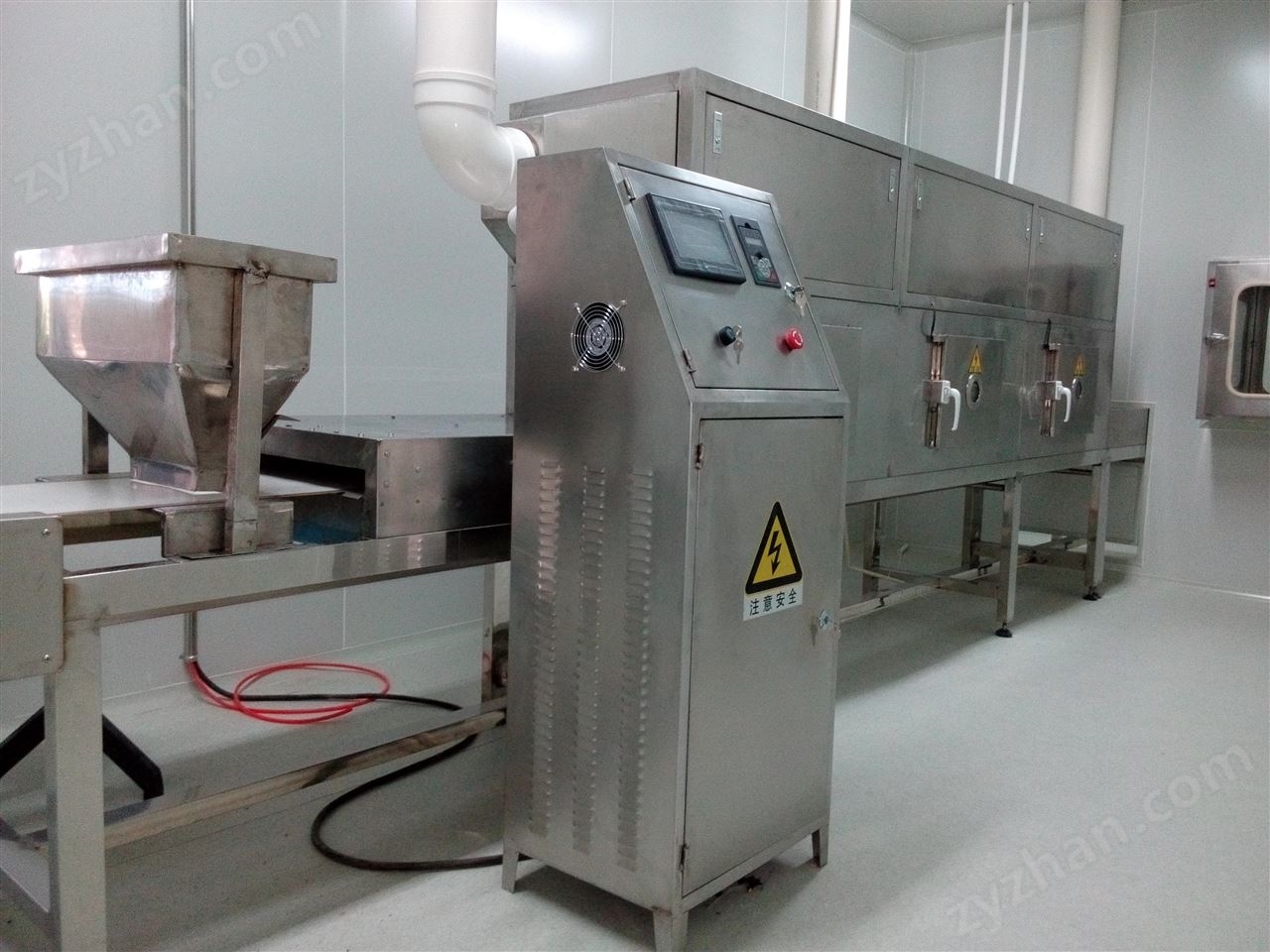
In the process of chemical production, efficient drying of powder materials is a key link to ensure product quality and production efficiency. However, when encountering the problem of insufficient drying speed of chemical powder dryers, it often involves the comprehensive influence of multiple factors. The following are the main reasons and detailed analysis for this phenomenon:
1、 Design and structural limitations of chemical powder dryer equipment
1. Poor mass transfer efficiency caused by uneven distribution of hot air
If the airflow organization inside the dryer is unreasonable (such as design defects in the air duct or insufficient fan power), it will cause significant differences in wind speed in different areas. Some materials may be in the low-speed or even stagnant zone, unable to fully contact hot air, resulting in a decrease in drying rate. For example, if the angle of the lifting plate in a rotary dryer is not reasonable, it can easily cause material accumulation and hinder uniform heating.
Solution: Optimize the layout of the air duct and use a guiding device to force the formation of a spiral upward airflow; Regularly clean the accumulated material on the distribution board to ensure smooth ventilation.
2. Imbalance between heating area and material processing capacity
The evaporation area provided per unit time is insufficient to support the simultaneous drying needs of a large amount of wet materials. Especially for indirect heating equipment with thermal oil, a small surface area of the heat exchange tube can seriously restrict the efficiency of heat transfer. At this point, even if the temperature of the medium is increased, it is difficult to compensate for the shortcomings caused by insufficient area.
Improvement measures: Calculate the optimal layer thickness (usually controlled at 5-10cm), and if necessary, increase the number of tubes or switch to thin-layer flash drying technology to improve gas-solid contact efficiency.
2、 Improper setting of process parameters for chemical powder dryer
1. The inlet air temperature is too low or fluctuates frequently
Energy supply issues, such as unstable steam pressure, may cause the actual heating temperature to be lower than the set value. Some thermosensitive materials require low-temperature drying, but overly conservative temperature settings can prolong the drying cycle. In addition, when the environmental humidity is too high, the pre dehumidification treatment of the incoming air is not carried out, which weakens the moisture carrying capacity.
Response method: Install real-time temperature control module to dynamically adjust heating power; Install dehumidification units to reduce the dew point temperature of fresh air and increase the moisture absorption capacity.
2. The synergistic failure of wind speed and dwell time
Excessive wind speed can enhance convective mass transfer but shorten the residence time of materials inside the machine; On the contrary, at low wind speeds, although the material stays for a long time, the mass transfer driving force is insufficient. Both imbalances can lead to excessive moisture content in the end. For example, when the atomization pressure in the spray drying tower is insufficient, the droplets are too large, and the surface crusts hinder the internal diffusion.
Optimization strategy: Determine the optimal wind speed gradient curve through CFD simulation, and use a graded discharge device to achieve on-demand discharge.
3、 The influence of material characteristic changes in chemical powder dryer
1. Drying differences caused by wide particle size distribution
When coarse and fine particles are mixed, the fine powder quickly loses water to form a dense layer that blocks the escape of moisture from the lower layer, while the larger particles still contain a high amount of free water inside. This phenomenon of "intercalation" is common in irregular fragmented systems of crystalline materials after crushing.
Processing method: Pre screen to remove ultrafine powder and process separately; Using pulsed airflow to break through the surface hard shell and promote balanced dehydration.
2. Adhesive aggregation caused by viscous substances
Materials containing sugar and resin components soften and adhere during the heating process, which not only reduces the effective evaporation area but also blocks the discharge port. This type of problem is particularly prominent in the production of food additives.
Preventive measures: Add inert fillers to improve fluidity; The periodic vibration equipment breaks the lumps on the inner wall.