-
E-mail
zzcc8162@zzgwsit.cn
- Phone
-
Address
1119 Science Avenue, Shangjie District, Zhengzhou City
Zhengzhou Changcheng Technology Industry and Trade Co., Ltd
Key points for checking before starting the glass reaction kettle: Multi dimensional operation standards help improve experimental safety
Date: 2025-12-09Read: 0
As a commonly used equipment in chemical, pharmaceutical and other fields, the standardized inspection of glass reaction vessels before startup has a significant impact on experimental safety and data stability. Although high borosilicate glass material has good corrosion resistance, attention should still be paid to avoiding sudden temperature changes, abnormal pressure, or sealing failure. The following introduces the suggested inspection process from four dimensions, and operators need to execute it based on specific equipment models and process requirements.
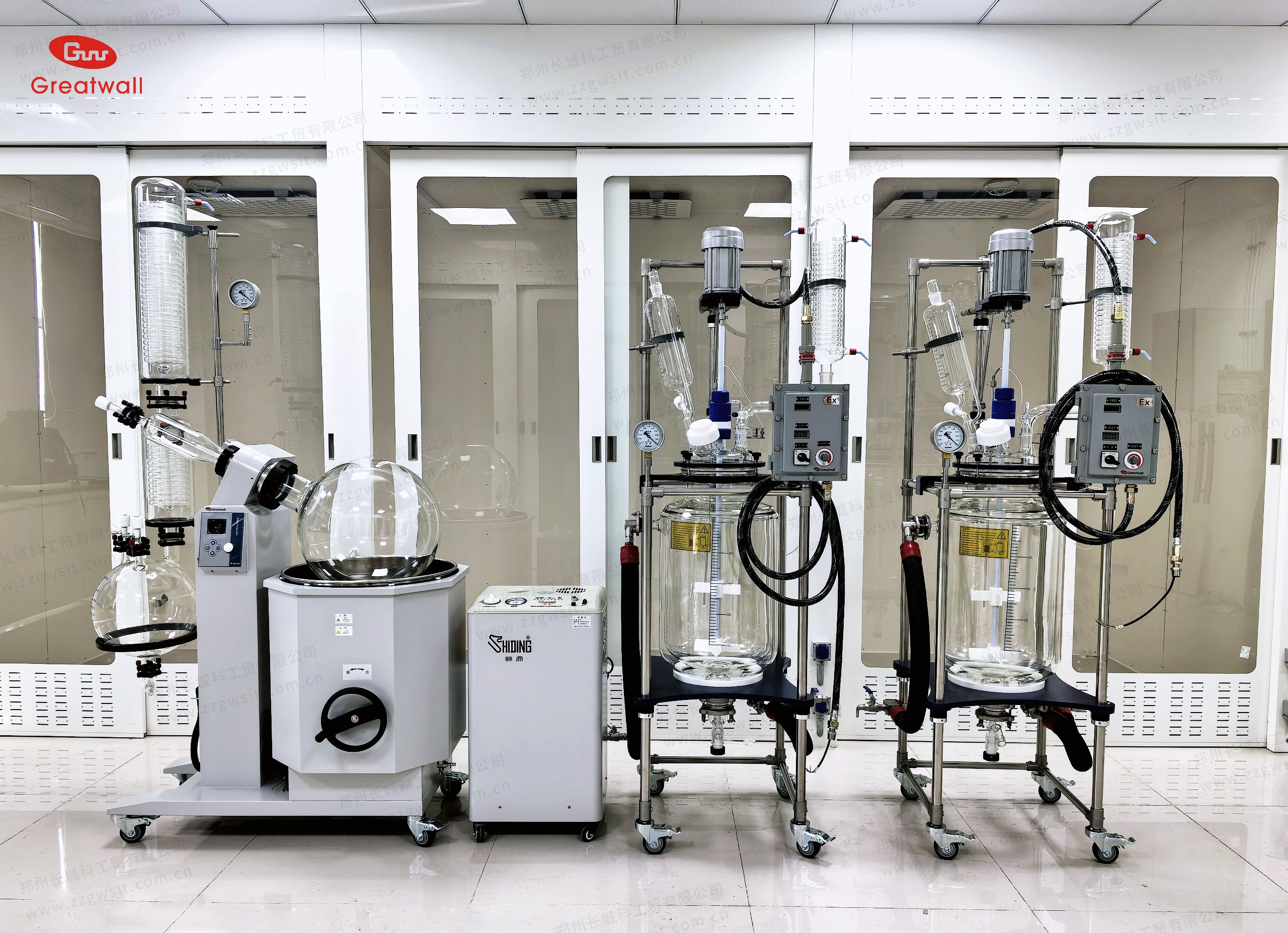
1、 Inspection of kettle body and glass components
It is recommended to visually inspect the high borosilicate glass kettle body for visible defects such as scratches and cracks, especially paying attention to stress prone areas such as the sealing surface of the kettle mouth and the corner of the kettle bottom. If cracks are found, it is recommended to suspend use and contact the equipment supplier for evaluation. The feeding port and other components should be kept clean and intact, and suitable solvents can be used to wipe them if necessary. For jacketed reactors, it is recommended to conduct a no-load pressure test to confirm that there are no signs of leakage.
2、 Sealing and vacuum system inspection
For different types of seals (such as magnetic seals and mechanical seals), it is recommended to confirm whether the component fit is normal and whether the sealing ring is intact. When conducting a vacuum test, the valve can be closed and the vacuum pump can be started to observe the changes in pressure readings (generally recommended)5The pressure drop within minutes shall not exceed0.005 MPa). Foam agent can be used to assist in leak detection at pipeline connections to ensure that the system meets the required vacuum conditions for the process.
3、 Mixing system inspection
It is recommended to manually rotate the mixing shaft to confirm that there is no jamming, and check whether the mixing blade is securely installed. When starting the motor without load, observe the stability of the speed and the running sound. If there is any abnormal noise, it is recommended to check the alignment of the bearings or shafts. For high viscosity materials, it is recommended to confirm in advance whether the motor load capacity matches.
4、 Temperature control and jacket system inspection
Suggest checking if the jacket circulation pipeline is unobstructed and if the heat transfer medium level is within the operating range indicated by the equipment. When conducting temperature calibration tests, the displayed values of temperature control instruments can be compared with the actual measured values. It is generally recommended to control the temperature difference within the allowable error range of the equipment. Before conducting experiments at higher or lower temperatures, it is recommended to conduct a no-load trial run to verify system stability.