-
E-mail
848186302@qq.com
-
Phone
15639761399
-
Address
No. 182 Industrial Road, Shangjie District, Zhengzhou City
Zhengzhou Huachen Instrument Co., Ltd
Glass reaction kettle vs stainless steel reaction kettle
Date: 2025-10-25Read: 6
Glass reaction vessels and stainless steel reaction vessels each have significant advantages in laboratory and industrial applications, and their selection should be based on a comprehensive consideration of reaction conditions, observation requirements, budget, and safety.
1、 Comparison of Material Characteristics
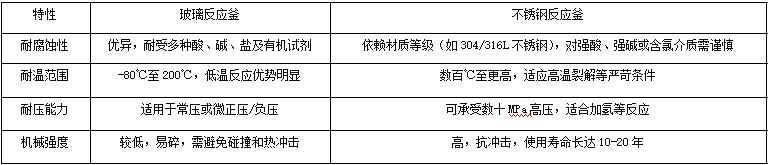
2、 Comparison of core advantages
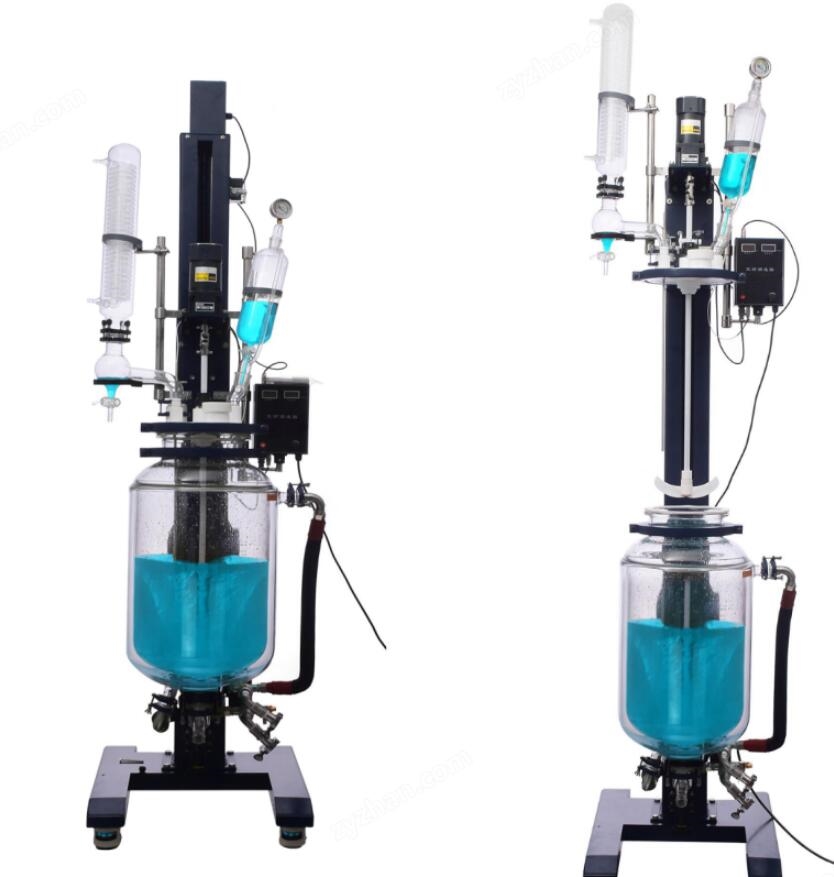
1. Glass reaction kettle
(1) Visual operation: Transparent design facilitates real-time observation of reaction phenomena (such as color changes, precipitation generation), suitable for teaching experiments and research and development debugging;
(2) Chemical inertness: High borosilicate glass material does not react with most chemicals, avoiding metal ion contamination and suitable for high-purity synthesis (such as pharmaceutical intermediates);
(3) Easy to clean and maintain: The surface is smooth and can be rinsed with distilled water or organic solvents, suitable for scenarios where reaction systems are frequently replaced;
(4) Cost effectiveness: Low initial procurement cost, suitable for laboratories or small-scale experiments with limited budgets;
2. Stainless steel reactor
(1) Suitable for special conditions: high temperature and high pressure resistance, suitable for harsh reactions such as refining and polymerization, such as heavy oil cracking (requiring above 500 ℃);
(2) Customization flexibility: The volume, heating method (electric heating/steam), mixing form, etc. can be customized according to the process requirements, adapting to the full scale needs from laboratory to industrial production;
(3) Health and Safety: Compliant with GMP standards, with a smooth and easy to disinfect surface, avoiding cross contamination, widely used in the food and pharmaceutical fields (such as vaccine production);
(4) Long term economy: Strong durability, low maintenance costs, and high cost-effectiveness for long-term use;
3、 Recommended application scenarios
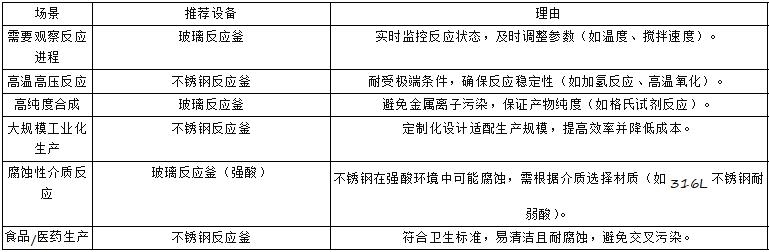
4、 Purchase suggestions
1. Laboratory research: glass reaction vessels are preferred for visual operation to improve research and development efficiency, with low cost and easy maintenance;
2. Industrial production: prioritize stainless steel reaction vessels: adapt to large-scale, high temperature and high pressure requirements, and have controllable long-term usage costs;
3. Special medium reaction: Compatibility between the medium and material needs to be tested (such as stainless steel not resistant to concentrated hydrochloric acid, glass not resistant to hydrofluoric acid);
4. When budget is limited: choose glass reaction vessels for small-scale experiments; Long term production investment in stainless steel reaction vessels to reduce maintenance costs;
5、 Maintenance points
1. Glass reaction kettle: Regularly check for cracks to avoid collisions and thermal shocks; Use a soft brush for cleaning.
2. Stainless steel reactor: Regularly check the wall thickness and sealing performance, and apply anti-corrosion coating if necessary; High viscosity materials require high-pressure water gun cleaning.