-
E-mail
15093177890@163.com
-
Phone
15093177890
-
Address
B06-1 Qidi Zhenghang Intelligent Manufacturing Industrial Park, Intersection of Xinxiang Road and Luoning Road, Shangjie District, Zhengzhou City, Henan Province
Zhengzhou Kewangda Biological Instrument Co., Ltd
How long does a freeze dryer typically freeze for
Date: 2025-10-16Read: 49
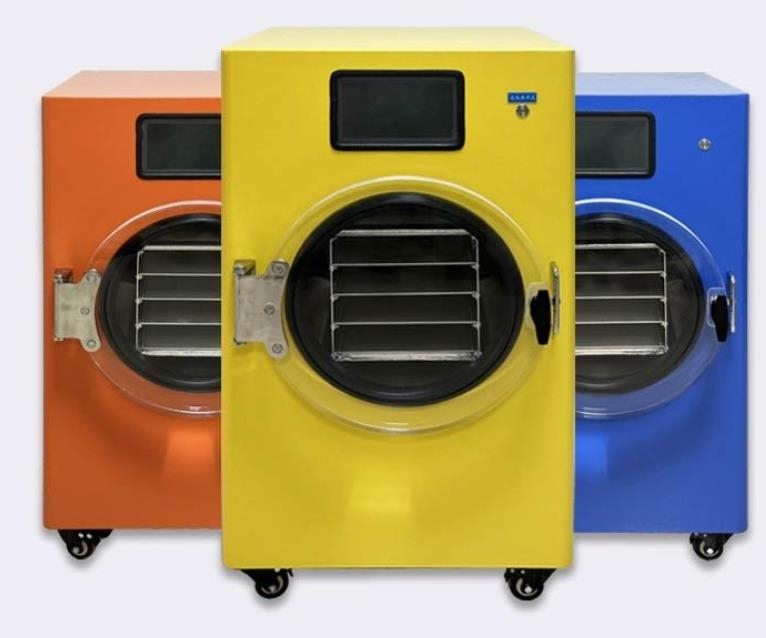
The freeze-drying time of a freeze dryer varies due to various factors, such as the properties, thickness, and temperature settings of the material.Normally, the freeze-drying time needs to be adjusted according to the specific freeze-drying process and equipment. The following is a detailed analysis and process overview of the freeze-drying time of a freeze dryer, hoping to help you understand the key factors in the freeze-drying process.
1. Overview of Freeze Drying Technology
Freeze drying technology, also known as freeze-drying, refers to a technique in which materials are frozen at low temperatures and then heated in a vacuum environment to remove moisture from the materials through sublimation (direct conversion from solid to gas). Different from traditional drying methods (such as hot air drying, spray drying, etc.), freeze-drying can retain nutrients, color, flavor and active substances in materials.
2. Various stages during the freeze-drying process
The freeze-drying process can be divided into three main stages:
2.1 Freezing Stage
During the freezing phase, the material is rapidly cooled to below its freezing point. The purpose of this stage is to convert the moisture of the material into ice crystals and reduce the presence of liquid water. The duration of the freezing phase depends on the type, thickness, and freezing conditions of the material.
2.2 Initial drying stage (sublimation stage)
This stage is the core of freeze-drying. The temperature of the material is slightly increased, and at the same time, the moisture in the vacuum environment begins to transform directly from solid to gas through the sublimation process. The duration of this stage directly affects the drying effect. Rapid sublimation may cause surface cracking of the material, while slow sublimation may affect production efficiency.
2.3 Final drying stage
At this stage, most of the material has been dehydrated, but it may still contain a small amount of residual moisture. By slightly heating and continuing to vacuum, further remove these moisture to ensure the material is dry.
3. Factors affecting freeze-drying time
3.1 Properties of Materials
Different types of materials have different freeze-drying characteristics. Liquid or high moisture materials require longer freeze-drying times for juices, soups, etc., while solid or low moisture materials require relatively shorter freeze-drying times. For example, the freeze-drying time of vegetables, fruits, and meat is usually longer, while the freeze-drying time of drugs or chemical reagents is relatively shorter.
3.2 Thickness and surface area of materials
The freeze-drying time is closely related to the thickness of the material. Thicker materials require longer freezing and sublimation time, while thinner materials can complete the drying process faster. Increasing the surface area of materials (such as slicing, powdering, etc.) can help shorten the freeze-drying time.
3.3 Working conditions
The temperature setting, vacuum degree, and condenser temperature of the freeze-drying machine will directly affect the freeze-drying time. The adjustment of parameters can be optimized through experiments to ensure the completion of freeze-drying in a shorter period of time.
3.4 Initial moisture content
The initial moisture content of the material can also affect the freeze-drying time. Materials with high initial moisture require more time for sublimation, as the removal of moisture is a gradual process.
3.5 Capacity and Production Scale
During large-scale production, the capacity is usually larger and requires more time to ensure uniform freeze-drying of all materials. Small scale laboratory freeze dryers may achieve faster freeze drying under the same process conditions.
4. Freeze drying time of common materials
The time required for freeze-drying of different types of materials varies greatly. Here are some reference values for freeze-drying time of common materials:
4.1 Food related materials
Fruits (such as strawberries and blueberries): The freezing stage takes about 2-4 hours, the sublimation stage takes about 12-24 hours, and the final drying stage takes about 6-12 hours.
Vegetables (such as carrots and onions): The freezing stage takes about 3-6 hours, the sublimation stage takes about 12-20 hours, and the final drying stage takes about 4-6 hours.
Meat (such as beef and chicken): The freezing stage takes about 6-8 hours, the sublimation stage takes about 24-36 hours, and the final drying stage takes about 8-12 hours.
4.2 Drugs and Biological Products
The freeze-drying time of drugs or biological products is usually short, but requires very precise process control. For example, the freeze-drying time for biological agents such as vaccines and antibodies may be 10-12 hours, and the specific time needs to be adjusted according to the properties of the substance and production requirements.
5. How to optimize freeze-drying time
5.1 Choose an appropriate freeze dryer
Using a freeze-drying machine suitable for production scale and material characteristics can effectively shorten the freeze-drying time. For example, a freeze dryer with strong condensation ability and temperature control system can improve sublimation rate and shorten drying time.
5.2 Improving the efficiency of material pretreatment
Proper pretreatment of materials, such as cutting, crushing, or adjusting moisture content, can significantly improve freeze-drying efficiency. In this way, the moisture content of the material can be more evenly and quickly converted from solid to gas.
5.3 Optimizing Freeze Drying Conditions
By adjusting parameters such as temperature and vacuum degree, the freeze-drying curve can be found, thereby improving production efficiency. Laboratories usually determine the freeze-drying time through experiments under different process conditions.
Freeze drying time is one of the key factors in the freeze-drying process, and its length is influenced by various factors. Reasonable control of freeze-drying time can not only ensure the quality of materials, but also improve production efficiency and reduce costs. In practical applications, adjusting appropriate process parameters for different materials will help achieve freeze-drying effects.