-
E-mail
zhongsilifu@163.com
- Phone
-
Address
Intersection of Sanshui Road and Fenglin Road, Hexi District, Tianjin
Zhongsilifu (Tianjin) Biotechnology Co., Ltd
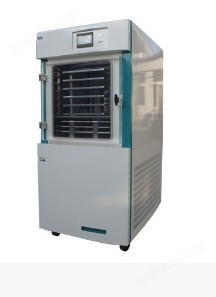
What is the working principle of soil freeze dryer?
Date: 2025-12-30Read: 13
The working principle of a soil freeze dryer is simply to use low-temperature vacuum to directly turn ice in the soil into water vapor and escape, thereby drying the soil while largely preserving its original structure and composition. The entire process is mainly divided into three stages:
1. Pre freezing stage
The soil sample will be rapidly cooled to an extremely low temperature (usually between -50 ° C and -80 ° C), causing the moisture inside to freeze into ice and form a porous structure. This step is crucial because the smaller the ice crystals, the less likely the soil structure is to collapse during subsequent drying.
2. Sublimation drying stage
In a vacuum environment, when the pressure drops below the triple point of water (about 611 Pa), ice directly sublimates into water vapor. At the same time, the condenser (cold trap) will capture these water vapors, preventing them from re condensing back into the soil. This stage will remove most of the free water.
3. Analyze the drying stage
The temperature will slightly increase (usually between 20 ℃ and 50 ℃), while maintaining a vacuum to remove the water that stubbornly binds to the surface of soil particles. The final soil moisture content can be reduced to 1% -5%, achieving a long-term stable preservation state.
The entire process is precisely regulated by an intelligent control system to adjust temperature, vacuum degree, and time, ensuring efficient and stable drying effect.
Last Article: March 13th Freeze Drying Training Camp Preview
Next Article: The structural principle of laboratory freeze dryer