-
E-mail
zhongsilifu@163.com
- Phone
-
Address
Intersection of Sanshui Road and Fenglin Road, Hexi District, Tianjin
Zhongsilifu (Tianjin) Biotechnology Co., Ltd
The structural principle of laboratory freeze dryer
Date: 2025-09-23Read: 7
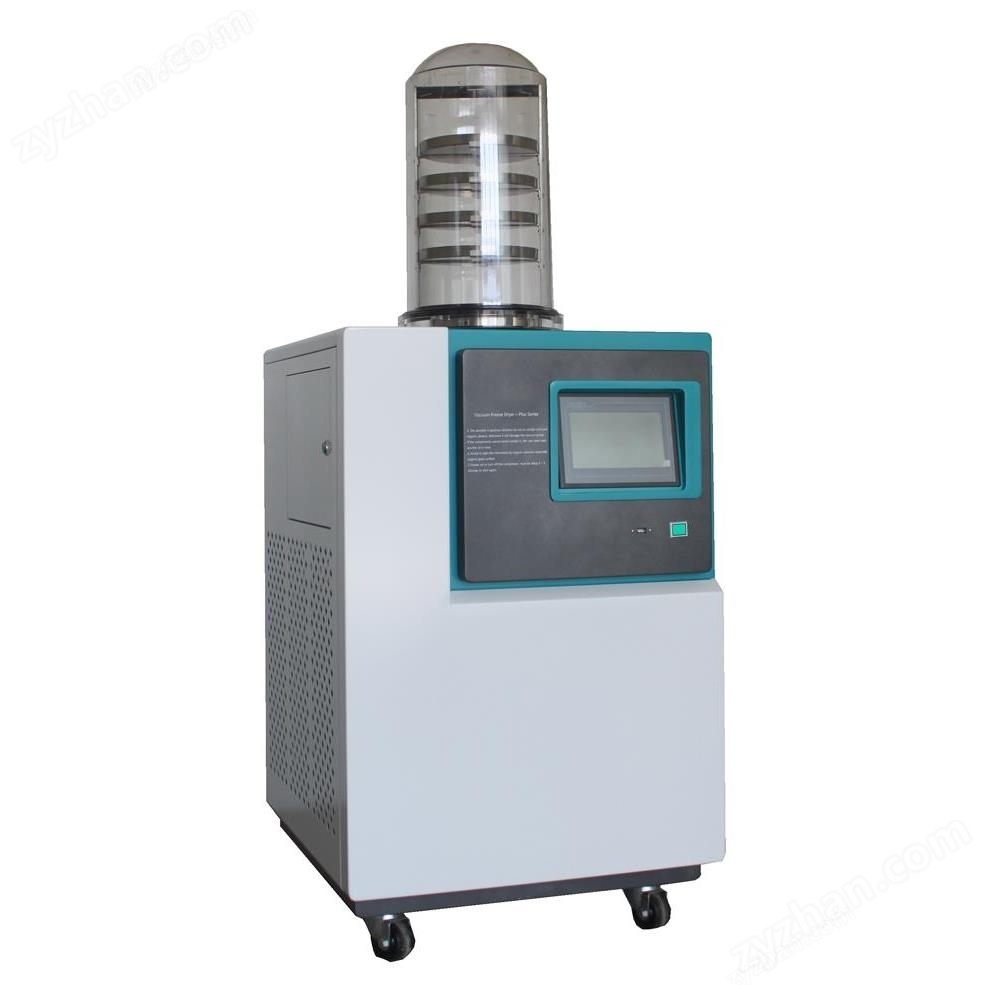
A laboratory freeze dryer (also known as a freeze dryer) is a device that uses the principles of freezing and vacuum sublimation to remove moisture from substances, and is widely used in fields such as biomedicine and food processing. Its core structure and working principle are as follows:
1、 Main structural components
1. Freezing system: including a freezing chamber and a refrigeration unit, used to provide a low-temperature environment (usually below -50 ℃) to freeze the moisture in the sample into a solid state. Refrigeration systems usually use compressor refrigeration or liquid nitrogen refrigeration methods.
2. Vacuum system: composed of a vacuum pump and a sealed chamber, used to remove air and maintain a low-pressure environment (usually below 0.1mbar), allowing moisture to sublime directly at low temperatures.
3. Heating system: Typically, electric heating elements or heat exchangers are used to provide controlled heat to the sample in a vacuum environment, promoting the direct sublimation of solid moisture into a gaseous state.
4. Condenser (water trap): a low-temperature component (-40 ℃ to -80 ℃) located in the vacuum system, used to capture water vapor sublimated from the sample, preventing it from returning to the sample or contaminating the vacuum pump.
5. Control system: including temperature sensors, pressure sensors, and microprocessors, used for precise monitoring and adjustment of freezing, vacuum, heating, and other parameters to ensure stable freeze-drying process.
2、 Working principle
The freeze-drying process is mainly divided into three stages:
1. Pre freezing stage: The refrigeration system rapidly freezes the sample below the eutectic point, completely freezing the moisture in the sample into ice crystals. This stage determines the physical structure of the final product.
2. One stage drying (sublimation drying): The vacuum system establishes a low-pressure environment, and the heating system provides sublimation latent heat, allowing ice crystals to directly sublime into water vapor and be captured by the condenser. At this stage, about 90% of the moisture is removed.
3. Secondary drying (analytical drying) stage: By increasing the temperature, residual adsorbed water in the sample is further removed, resulting in a final moisture content of 1-4%.
3、 Technical features
1. Low temperature operation can effectively preserve the activity of thermosensitive substances.
2. Vacuum environment prevents oxidation and deterioration.
3. The porous structure maintains the original shape of the sample.
4. After drying, the product is easy to store for a long time and has good rehydration properties.
The freeze dryer achieves the technical goal of efficiently removing moisture at low temperature and low pressure while preserving sample characteristics to a greater extent through the collaborative work of various systems. Different models of freeze-drying machines may have differences in structural details, but the basic principles are the same.