08,21,2026 22 views
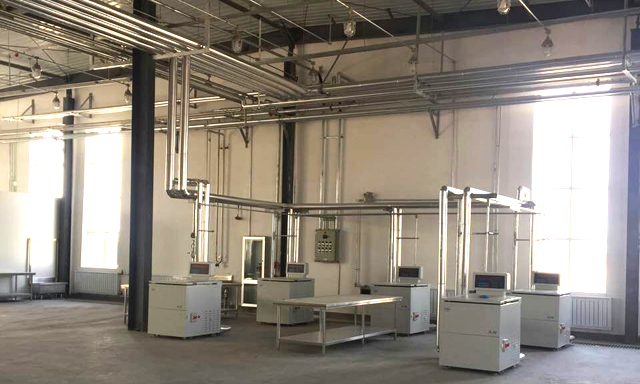
【Pharmaceutical Network Enterprise News】On the production lines of biomedicine and new materials,refrigerated centrifugeIt is an indispensable separation device. However, when multiple freezers are installed in the workshopCentrifugeSimultaneously starting work often encounters challenges such as indoor heat accumulation, machine roar and noise disturbance, and high long-term energy consumption. Many companies have attempted to adjust ventilation and install exhaust systems, but have been unable to solve the problem at its root. Especially in old factories or enclosed clean workshops, due to limited infrastructure conditions, it is impossible to retrofit water-cooled pipelines, and traditional solutions are in a dilemma.
In the face of pain points in this industry, Lu Xiangyi breaks away from the inherent idea of standardized products and provides solutions ranging from air and water cooling to ethylene glycol coolingcompressorCustomized selection of complete cooling modes for external wall mounted devices, truly starting from the working conditions of the workshop site, matching and adapting cooling solutions for each production line.

Air cooling and water cooling: each has its own strengths and weaknesses, difficult to call omnipotent
At present, the mainstream refrigerated centrifuges on the market are mainly divided into two cooling methods: air cooling and water cooling. Both have their own applicable scenarios, but also have their own shortcomings.
The air-cooled centrifuge is easy to install and does not require additional pipelines, making it easy to use in ordinary laboratories. But once multiple machines are concentrated in the same closed workshop for simultaneous operation, the shortcomings will be exposed. Each device is equipped with a built-in compressor that continuously dissipates heat into the room, accumulating heat and causing the workshop temperature to rise steadily, directly interfering with the temperature control accuracy of the centrifuge; The noise generated by the simultaneous operation of multiple devices will continue to stay inside the factory, and long-term operation will greatly reduce the working environment of the workshop and affect the mood of the staff.
Many people will think of using water-cooled models to solve heat dissipation. However, although water-cooled models have strong heat dissipation capabilities and are suitable for large-scale continuous production, they have strict requirements for factory infrastructure, requiring supporting cooling water units and laying pipelines. A large number of old factories and clean workshops did not reserve water cooling facilities in the early stage, resulting in high construction costs for later renovation, and many sites simply do not have the conditions for implementation.
On one hand, the production process cannot do without large capacity cryogenic centrifuges, and on the other hand, the hardware conditions in the workshop are limited, making it difficult for traditional solutions to find a balance point between these two ends.
Two new paths: ethylene glycol cooling and external installation of compressor walls
In response to the real production pain points mentioned above, Lu Xiangyi breaks away from the inherent idea of standardized products and brings two customized refrigeration ideas, namely ethylene glycol cooling and compressor wall external circulation, in addition to traditional air and water cooling.
The ethylene glycol cooling solution eliminates the traditional built-in compressor refrigeration architecture and achieves higher temperature control accuracy. The heat emitted by the equipment into the workshop, operating noise, and overall energy consumption are significantly reduced. The heat is directly exported to the outside through pipelines, without causing heat storage in the workshop. This solution has been implemented and put into operation in multiple biopharmaceutical factories, especially suitable for operating in closed clean workshops and multiple equipment clusters, balancing energy conservation and environmental protection.
The external hanging circulation scheme of the compressor wall preserves the original refrigeration performance of the compressor and installs the compressor body outside the wall. The vast majority of heat and noise are directly released outdoors, leaving only the centrifuge mainframe in the workshop. This solution not only retains the strong refrigeration capacity of the cryogenic centrifuge, but also improves the noise and high temperature problems in the workshop from the source, making it suitable for the original production line renovation project.
Four modes, customized as needed
No refrigeration solution can be adapted to all factories. Lu Xiangyi will provide complete customized refrigeration mode selection based on the customer's on-site factory conditions, production scale, and temperature control requirements:
1. Air cooled centrifuge: a conventional laboratory scenario with good ventilation conditions and no centralized heat dissipation pressure;
2. Water cooled centrifuge: a factory that has built a water cooling infrastructure and requires long-term uninterrupted production;
3. Ethylene glycol cooled centrifuge: a pharmaceutical and new material enterprise that pursues low noise and low energy consumption in a closed clean workshop without water cooling transformation conditions;
4. Customized models for external hanging of compressor walls: a renovation project that requires compressor cooling performance and aims to isolate workshop heat and noise.

After more than 40 years of deep cultivation, Lu Xiangyi has been able to evaluate and match different refrigeration schemes for on-site conditions, ranging from small desktop cryogenic centrifuges to DL-8M 6 × 2400ml high-capacity cryogenic centrifuges. The company not only delivers equipment, but also provides on-site installation and commissioning services. From the perspective of actual production line use, it outputs a complete set of separation solutions.
Those who have worked in production are aware that when selecting a cryogenic centrifuge, one cannot only focus on paper parameters such as speed and capacity. The key to whether the equipment can produce stably is the working conditions in the workshop. A useful centrifuge not only has good parameters, but also needs to adapt to the workshop environment and provide stable and reliable services for daily production. Lu Xiangyi has achieved "one factory, one solution" by customizing the selection of four refrigeration modes, solving the problems of heat generation, noise, and high energy consumption in the centralized operation of multiple centrifuges for biopharmaceutical and new material enterprises.