08,21,2026 22 views
Quantitative feeder is a mechanical equipment that integrates conveying, weighing, metering, and quantitative control. It adopts advanced weighing sensors and speed sensors, which can achieve high-precision weighing and continuous conveying of materials. This equipment is widely used in industries such as cement, mining, building materials, grain, and chemical, providing efficient and accurate material measurement and transportation solutions for enterprises.
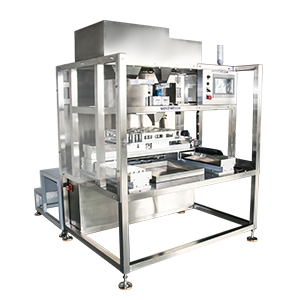
Main characteristics of quantitative feeder
►Easy to maintain: The design of the quantitative feeder is simple and easy to use, and daily maintenance and upkeep are relatively simple. After regular inspection and maintenance, the long-term stable operation of the equipment can be ensured.
►Strong adaptability: The quantitative feeder is suitable for various forms of materials, such as particles, powders, liquids, etc. This makes it have a wide range of application prospects in different industries.
►Intelligent control: The quantitative feeder is equipped with an advanced control system, which can achieve automated operation and remote monitoring. This provides enterprises with a more convenient and efficient way of production management.
►High precision weighing: The quantitative feeder adopts advanced weighing sensors, which can accurately measure the weight of materials passing through the belt, effectively ensuring weighing accuracy. By comparing with the set flow rate, high-precision quantitative feeding of materials can be achieved.
►Continuous conveying: The equipment adopts a belt conveying method to continuously and stably transport materials. This not only improves production efficiency, but also reduces labor intensity.