
06,01,2026 37 views
The process principle of vacuum depressurization concentration tank is based on the physical characteristics of boiling point changing with pressure, and achieves low-temperature and high-efficiency concentration by reducing system pressure. The following is a detailed explanation of its core process principle:
1、 Core principle
1. Pressure boiling point relationship: According to the Clausius Clapeyron equation, the boiling point of a liquid decreases exponentially with decreasing pressure. By using a vacuum pump to reduce the pressure inside the tank to below 1/10 of normal pressure (such as 0.09MPa), water can be boiled at 40-60 ℃ to avoid the decomposition of heat sensitive components.
2. Heat transfer enhancement: After decompression, the temperature difference of heat transfer increases by 3-5 times, and the evaporation efficiency is improved. However, it should be noted that the latent heat of vaporization increases by 12-18%, and the energy consumption is 25-40% higher than that of atmospheric evaporation.
2、 Process steps
1. Heating stage: Electric heating or steam heating of the liquid material to the target temperature.
2. Vacuum establishment: The vacuum pump unit is started to create a negative pressure environment (-0.08~-0.095MPa).
3. Solvent vaporization: The solvent evaporates at low temperatures, and the secondary steam is recovered through a condenser.
4. Concentrated liquid discharge: After reaching the target density, the concentrated liquid is discharged from the bottom conical structure to reduce dead corner residue.
3、 Equipment structure and process correlation
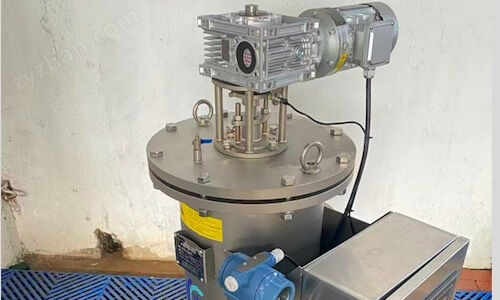
1. Concentrator tank: designed with a jacket or coil, with an increased heating area to improve efficiency.
2. Condensation system: A combination of tubular condenser and serpentine cooler ensures efficient steam recovery.
3. Vapor liquid separation: Install an air filter screen or extend the separation section at the top to prevent the entrainment of mist and foam.
4、 Key process parameters
1. Pressure range: industrial grade -0.05~-0.08MPa, experimental grade -0.08~-0.095MPa.
2. Temperature control: 40-60 ℃ (depending on the material) to avoid deactivation of thermosensitive components.
5、 Applicable materials and adjustments
1. Thermally sensitive materials: traditional Chinese medicine extracts, enzyme preparations, fruit juice, etc., require strict temperature control.
2. High viscosity materials: When the viscosity is greater than 500mPa · s, forced circulation is required to prevent coking, and when the solid content is greater than 30%, the process needs to be switched.