-
E-mail
1341262349@qq.com
-
Phone
13355171428
-
Address
No. 0101, Floors 1-2, Building B2-2, Jining Jinke Life and Health Technology City Project Phase I, Huangtun Street, High tech Zone, Jining City, Shandong Province
Product Categories
Shandong Kerite Medical Equipment Co., Ltd


2025 medical oxygen concentrator, a must-have oxygen equipment for primary hospitals
NegotiableUpdate on 02/13
- Model
- Nature of the Manufacturer
- Producers
- Product Category
- Place of Origin
Overview
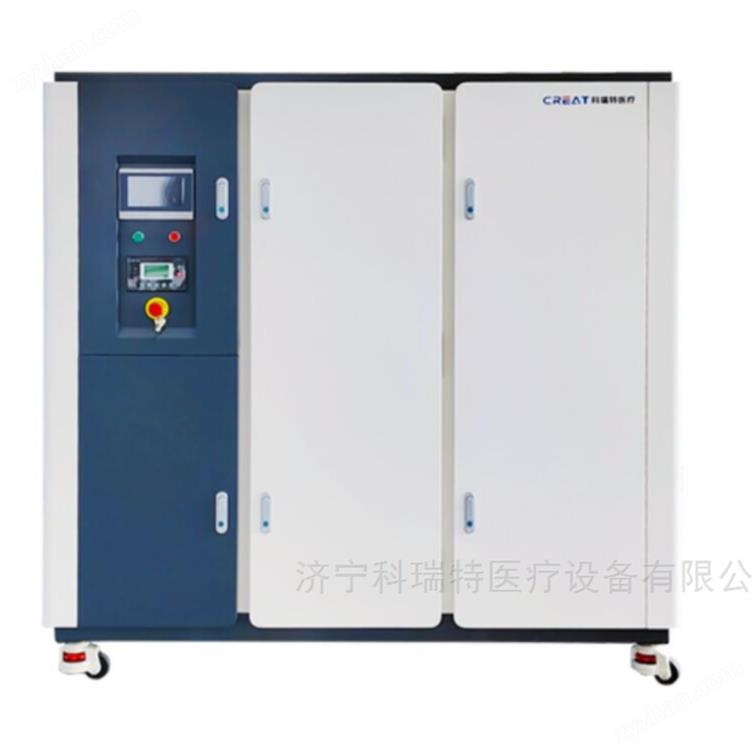
The 2025 medical oxygen concentrator is a must-have oxygen equipment for primary hospitals. The oxygen manufacturing principle of the CREAT scientific research oxygen concentrator is PSA technology; $r$n$r$n2、 The physical and chemical indicators of oxygen meet the requirements of YY/T298-1998 "General Technical Specification for Scientific Molecular Sieve Oxygen Production Equipment" standard; $r$n$r$n3、 The oxygen concentration of the oxygen generator system reaches 90% or above within 5 minutes of each start-up; $r$n$r$n4、 No need for boosting auxiliary oxygen output pressure of 0.4-0.5MPa; $r$n$r$n5、 The oxygen production equipment is equipped with an oxygen meter for real-time monitoring of oxygen production flow rate;
Product Details
2025 medical oxygen concentrator, a must-have oxygen equipment for primary hospitals
The core technology of KRT series scientific research molecular sieve oxygen production system is to separate oxygen and nitrogen in the air through molecular sieve pressure swing adsorption (PSA) to obtain oxygen.
Molecular sieve zeolite has the characteristics of high pressure adsorption and low pressure desorption of nitrogen gas. Therefore, by alternating high and low pressure program control of the adsorption tower containing zeolite molecular sieves, oxygen can be directly produced from the air. This process is a physical process, and molecular sieves are not consumed.
Technical parameters of CREAT scientific research molecular sieve oxygen concentrator:
Oxygen flow rate: 1-30Nm3/h
Oxygen concentration: 93% ± 3%
Water content: ≤ 0.07g/m3
Oxygen output pressure: 0.3~0.5Mpa
Maximum working pressure: 0.75Mpa
Power supply: 380V/220V, 50Hz
Operating noise: ≤ 80Db (A)
The CREAT scientific research molecular sieve oxygen concentrator can produce oxygen with a purity of 93% ± 3% using only air as raw material, and the remaining less than 7% is neutral gas that is harmless to the human body. A research molecular sieve oxygen production system is a stable, low investment, and low-energy research oxygen production equipment; In recent years, more and more central oxygen supply systems in hospitals at all levels have adopted CREAT scientific research molecular sieve oxygen concentrators, and other indicators of oxygen have met national standards.
2025 medical oxygen concentrator, a must-have oxygen equipment for primary hospitals
Scientific research oxygen generator, molecular sieve oxygen equipment, scientific research molecular sieve oxygen generator equipment, central oxygen supply system equipment manufacturer, Coretech professional scientific research oxygen generator, scientific research molecular sieve oxygen equipment, central oxygen supply system equipment manufacturer, the company's scientific research oxygen generator products adopt American microfluidic control technology, innovative four tower process, multi-stage molecular sieve retention technology, and select products from Fortune 500 companies as the main components of the oxygen generator products, providing 24-hour uninterrupted oxygen for medical institutions with cost savings and high safety performance.


Working principle of medical oxygen concentrator:
According to the principle of pressure swing adsorption, zeolite molecular sieve is used as the adsorbent. Due to the selective adsorption property of zeolite molecular sieve, nitrogen is adsorbed in large quantities by zeolite molecular sieve, and oxygen is enriched in the gas phase, achieving nitrogen oxygen separation under the action of pressure swing adsorption. Using two adsorption tower processes, one tower adsorbs to produce oxygen and the other tower desorbs to regenerate, throughThe PLC intelligent program controls the opening and closing of the pneumatic angle seat valve, allowing the two towers to cycle alternately and continuously produce high-quality oxygen.
The PSA oxygen generator is based on the principle of pressure swing adsorption, using high-quality zeolite molecular sieves as adsorbents to produce oxygen from the air under a certain pressure. Purified and dried compressed air is subjected to pressurized adsorption and depressurized desorption in an adsorber. Due to aerodynamic effects, the diffusion rate of nitrogen in the micropores of zeolite molecular sieves is much higher than that of oxygen. Nitrogen is preferentially adsorbed by zeolite molecular sieves, while oxygen is enriched in the gas phase to form finished oxygen. Then, after decompression to atmospheric pressure, the adsorbent desorbs impurities such as nitrogen adsorbed, achieving regeneration. Generally, two adsorption towers are set up in the system, one tower adsorbs and produces oxygen, and the other tower desorbs and regenerates. The opening and closing of the pneumatic valve is controlled by a PLC program controller to alternate the circulation of the two towers, in order to achieve continuous production of high-quality oxygen.
Similar Product Recommend